
HEPA Air Filtration for Pet Owners: Benefits & Real Results
Last Updated: October 23, 2026
Quick Summary
HEPA air filtration pet owners rely on captures airborne particles like pet dander, dust mites, pollen, and mold spores with 99.97% efficiency, reducing allergen circulation through your home. When combined with regular cleaning and grooming, it provides meaningful relief for pet allergies and respiratory sensitivities, especially during sleep.
- HEPA filters capture particles as small as 0.3 microns but cannot eliminate odor-causing gases, which require activated carbon layers.
- In homes with pets, replace HEPA filters every 6-12 months with continuous use, costing $50-200 per filter.
- Position air purifiers 3-5 feet from your bed in bedrooms for maximum allergen reduction during the 6-8 hours you sleep.
- HEPA filtration prevents airborne hair particles from resettling but does not capture hair already on furniture or floors.
- Run the purifier 8-12 hours daily for mild allergies or continuously for severe allergies and multiple pets.
Table of Contents
- How HEPA Air Filtration Works for Pet Owners
- What HEPA Filters Actually Remove From Your Home
- Using an Air Purifier for Pet Allergies
- Does an Air Purifier Help With Pet Hair
- Best Place to Put an Air Purifier in Your Home
- How Long to Run an Air Purifier Daily
- Filter Maintenance and Total Cost of Ownership
- Realistic Expectations: What HEPA Filtration Cannot Do
- Frequently Asked Questions
How HEPA Air Filtration Works for Pet Owners
HEPA air filtration pet owners rely on operates through a multi-stage mechanical process designed to capture microscopic particles that standard filters miss. The technology doesn’t rely on electricity or chemical reactions, instead, it uses dense fiber layers to physically trap particles as air passes through.
Here’s what happens inside a HEPA filter: air enters the unit and flows through pre-filters that catch larger debris like pet hair and dust. Next, activated carbon layers absorb odor-causing gases and volatile compounds that HEPA alone cannot eliminate.
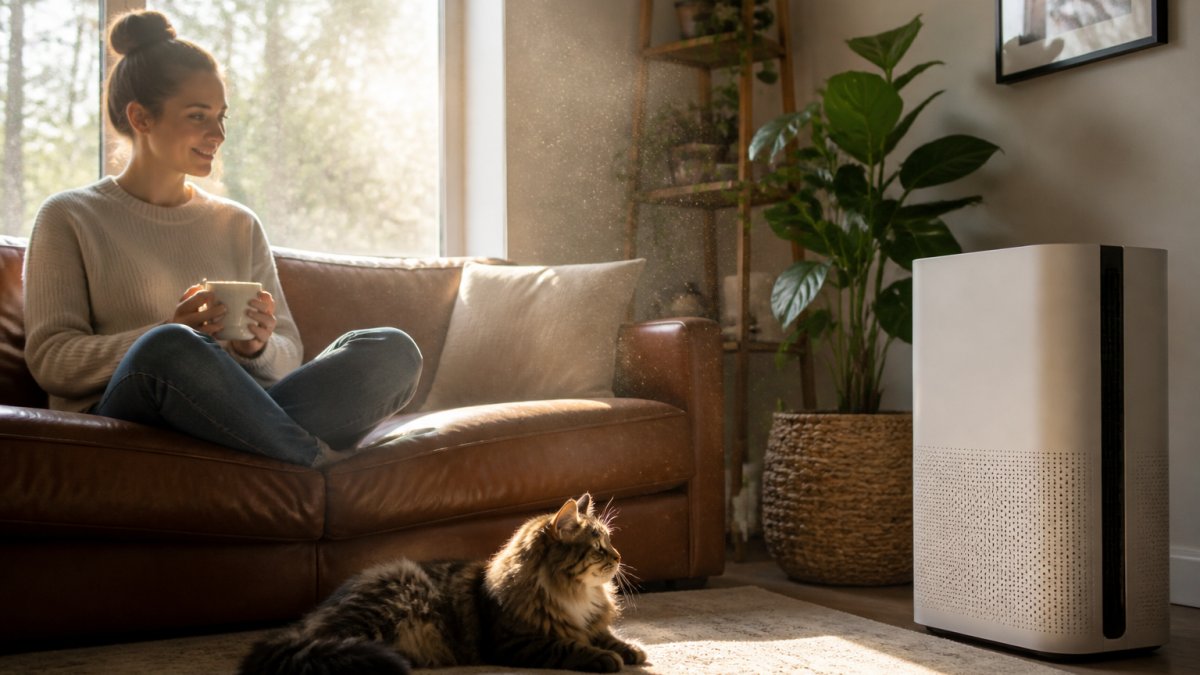
The efficiency rating matters more than you might think. According to research from the Journal of Allergy and Clinical Immunology, HEPA air cleaners reduced airborne dog allergen in homes with pets.
The key to HEPA effectiveness is air circulation. A filter only works on air that actually passes through it. If your purifier sits in a corner and air doesn’t flow through it efficiently, you’re wasting the technology.
What HEPA Filters Actually Remove From Your Home
HEPA filtration excels at capturing specific airborne particles, but understanding what it removes, and what it doesn’t, prevents disappointment after purchase. The technology is highly effective against particulates but has clear limitations with gases and settled contaminants.
Pet dander represents the primary concern for most pet owners. Dander particles are microscopic skin flakes shed by dogs and cats, invisible to the naked eye but potent allergens. HEPA filters trap these particles with exceptional efficiency, preventing them from recirculating through your home.
Pollen, mold spores, and other environmental allergens are similarly sized to pet dander, all within the 0.3-micron capture range. This is why HEPA filtration helps during wildfire season or high pollen counts.
However, HEPA filters cannot eliminate odors completely. As Sanuvox explains in their analysis of air purification, odor-causing gas molecules are far smaller than the particles HEPA captures, allowing them to pass through the filter untouched.
If you buy an air purifier expecting it to eliminate pet odors entirely, you’ll be disappointed. HEPA filtration removes airborne particles but not gaseous odor molecules. Activated carbon helps, but source control, regular cleaning and grooming, remains essential.
HEPA filters excel at capturing specific airborne particles, but their effectiveness varies by contaminant type.
| Contaminant | HEPA Captures | Notes |
|---|---|---|
| Pet dander | Yes | Microscopic skin flakes, primary allergen concern |
| Dust mites | Indirectly | Reduced by removing dander that feeds them |
| Pollen | Yes | Within 0.3-micron capture range |
| Mold spores | Yes | Within 0.3-micron capture range |
| Smoke particles | Yes | Useful during wildfire season |
| Odor-causing gases | No | Molecules too small; requires activated carbon |
| Pet hair on surfaces | No | Only captures airborne particles, not settled hair |
Using an Air Purifier for Pet Allergies
Pet allergies stem from exposure to allergens like dander, saliva proteins, and urine compounds. An air purifier addresses one part of this equation: preventing airborne dander from circulating continuously through your home.
Research indicates that HEPA filtration during sleep significantly reduced biomarkers of inflammation, suggesting physiological benefits beyond symptom perception. If you’re experiencing sneezing, itchy eyes, or respiratory irritation when your pet is in the same room, running an air purifier, especially in your bedroom, can provide relief.
However, an air purifier is not a complete allergy solution. Research from Dyson describes HEPA filters as trapping pet hair and dander, preventing some from settling on surfaces. The word “some” is critical: it’s not “all.” Pet allergens still settle on bedding, furniture, and clothing.
For people with asthma triggered by pet allergens, the stakes are higher. Reducing airborne dander can prevent asthma attacks, but consistency matters. Running the purifier only occasionally won’t deliver the protection needed. You need continuous operation, especially during sleeping hours when exposure matters most.
An air purifier reduces airborne pet allergens but doesn’t eliminate them entirely. It’s most effective when combined with cleaning, grooming, and source control, not as a standalone solution.
Does an Air Purifier Help With Pet Hair
Pet hair presents a unique challenge because most of it settles on surfaces rather than remaining airborne. This is where air purifier marketing often misleads pet owners. The technology addresses airborne hair particles but not the visible hair accumulating on your couch or floors.
HEPA filters do capture fine hair particles suspended in the air, the microscopic fragments that break off as your pet sheds. By preventing these particles from recirculating, an air purifier reduces the overall amount of hair settling on surfaces over time. This is a real benefit, but it’s incremental, not transformative. You’ll still vacuum regularly. You’ll still find hair on furniture.
The most effective use case is preventing hair particles from becoming airborne again after settling. When you vacuum or your pet moves around, hair particles get disturbed and temporarily float in the air. An air purifier captures these particles before they settle elsewhere in your home.
Best Place to Put an Air Purifier in Your Home
Location determines whether your air purifier works efficiently or underperforms dramatically. A unit in the wrong spot might clean a small zone while leaving the rest of your home untouched.
Bedrooms represent the highest-priority location for HEPA air filtration pet owners. You spend 6-8 hours sleeping in one room, making it the ideal place to reduce allergen exposure. Position the purifier 3-5 feet away from your bed, never directly beside it.
Living rooms work as secondary locations, especially if that’s where your pet spends most time. Central placement works better than corners, which can create dead zones where air doesn’t circulate effectively. Avoid placing the unit against walls or in closets, which blocks intake and reduces coverage.
Basements and laundry rooms benefit from air purifiers too, particularly if you store pet items there or if mold growth is a concern. Many pet owners overlook these spaces, but they’re often where allergen and moisture problems concentrate.
For open-concept homes, one central location won’t cover all areas adequately. You might need multiple units or accept that some zones receive better air cleaning than others. View our guide on where to place an air purifier for maximum efficiency for detailed placement strategies specific to your home layout.
How Long to Run an Air Purifier Daily
Running time depends on your home’s air quality, pet density, and allergy severity. Most pet owners benefit from continuous operation, but the reality is more nuanced than that simple answer.
For homes with one or two pets and mild allergen concerns, running the purifier 8-12 hours daily, typically during waking hours, provides noticeable improvement. This approach balances energy consumption against allergen reduction. Many people run their units during the day and turn them off at night, then restart them in the evening.
For homes with multiple pets, severe allergies, or asthma, continuous 24/7 operation delivers better results. The constant air circulation prevents allergen buildup during sleeping hours when symptoms often worsen. If you’re running the unit constantly, ensure your filter replacement schedule accounts for increased dust load.
A practical middle ground: run the purifier continuously in your bedroom during sleeping hours (8-10 hours) and 4-6 hours in living spaces during peak activity times. This targets the hours when allergen exposure matters most while managing energy costs.
Monitor your symptoms. If you’re still experiencing allergy symptoms after two weeks of consistent operation, either your placement is suboptimal or you need a unit with greater coverage capacity for your room size. Adjust placement before assuming the technology isn’t working.
Filter Maintenance and Total Cost of Ownership
HEPA filters don’t last forever. Understanding replacement schedules and costs prevents unexpected expenses and ensures your system maintains effectiveness. A clogged filter reduces airflow and defeats the purpose of running the purifier.
Filter replacement timing depends on air quality and usage. In homes with pets, expect to replace HEPA filters every 6-12 months. If you run the unit continuously, expect the shorter end of that range. Homes with multiple pets or high dust levels may need replacement every 4-6 months.
The total cost of ownership extends beyond the initial purchase price. A quality air purifier costs between several hundred and a few thousand dollars depending on capacity and features. Add filter replacement costs, typically $50-200 per filter depending on the model, multiplied by 1-2 replacements annually.
Learn about air purifier maintenance tips to extend your system’s lifespan and optimize your investment. Regular maintenance, vacuuming pre-filters, checking airflow, extends filter life and maintains efficiency.
Don’t replace filters on a schedule alone. Check your filter monthly. If it looks dark or clogged, replace it earlier. A filter that looks clean can still function well, saving you money.
Realistic Expectations: What HEPA Filtration Cannot Do
Pet owners frequently approach air purifiers with inflated expectations, imagining them as complete solutions to allergen problems.
HEPA filtration cannot eliminate pet allergies entirely. It reduces airborne allergen concentration, but traces remain. People with severe allergies might still experience symptoms even with continuous purification.
Air purifiers cannot solve existing mold problems.
Pet odor elimination remains incomplete. As discussed earlier, HEPA captures particles but not gases.
Air purifiers also cannot capture settled allergens. Do Air Purifiers Help With Allergies: What Science Shows provides research-backed evidence on what air purifiers can and cannot accomplish for allergy sufferers.
Read our guide on pet dander and why it causes allergies to understand the full scope of allergen sources beyond what air filtration addresses.
Pet owners face a genuine problem: invisible allergens that trigger symptoms and degrade indoor air quality. HEPA air filtration addresses this problem meaningfully but incompletely.
The SR100 from Aero Essence LLC handles nine distinct types of pollutants while providing visual confirmation that purification is actively occurring. This transparency matters because air quality improvements aren’t always obvious, you need to see the system working to trust it. Combined with proper placement, consistent operation, and regular filter maintenance, HEPA filtration becomes a valuable component of a comprehensive allergen management strategy. Shop Now and experience cleaner air designed specifically for homes with pets.
Frequently Asked Questions
Can HEPA air filtration actually reduce pet dander and allergens?
Yes. Research published in the Journal of Allergy and Clinical Immunology found that HEPA air filtration reduces airborne dog allergen (Can f 1) in homes with pets. HEPA filters capture particles as small as 0.3 microns with 99.97% efficiency, trapping pet dander before it settles on surfaces. However, HEPA filtration works best when combined with other strategies, keeping pets out of bedrooms and maintaining regular cleaning also helps reduce overall allergen exposure.
Does an air purifier help with pet hair?
Air purifiers capture airborne pet hair and dander, preventing some particles from settling on furniture and floors. However, they do not capture hair that has already settled or remove all pet hair from the air. Regular vacuuming and brushing remain essential. Think of an air purifier as one part of a complete pet hair management strategy, not a standalone solution.
How often should I run an air purifier if I have pets?
For homes with pets, running an air purifier continuously or at least 8-12 hours daily delivers the best results for allergen reduction. Continuous operation maintains consistent indoor air quality and prevents dander and hair from accumulating. If energy costs are a concern, running it during peak pet activity hours (morning and evening) and while sleeping offers a practical middle ground.
Will a HEPA air purifier eliminate pet odors?
HEPA filters trap particles like dander and hair, but they do not eliminate odor-causing gas molecules. Odors pass through the filter because they are gaseous, not particulate. Activated carbon filters or combination systems that include carbon layers are more effective for odor reduction. For complete odor control, combine air filtration with source control, regular cleaning, litter box maintenance, and proper ventilation.
