
What Is Pet Dander and Why Does It Cause Allergies?
Table of Contents
- What Is Pet Dander and Why Does It Cause Allergies?
- Pet Dander Allergy Symptoms You Should Not Ignore
- How to Remove Pet Dander from House Surfaces and Air
- Best Air Purifier for Pet Dander Allergies: What to Look For
- The Hypoallergenic Pet Reality Check
- When to See a Doctor for Pet Allergies
- Frequently Asked Questions
Last Updated: September 14, 2026
What Is Pet Dander and Why Does It Cause Allergies?
Pet dander is the microscopic blend of shed dead skin cells, saliva proteins, and urine proteins that warm-blooded animals continuously release into their environment (Pets, Dog and Cat Allergies | Symptoms & Treatment). Those proteins, not the fur itself, are what trigger the immune system response behind most pet allergies.
This guide from Aero Essence LLC breaks down the biology, the symptoms, and the practical steps that actually reduce allergen exposure at home.
Here’s the part most people get wrong: the visible hair on your couch is not the problem. The real culprits are particles small enough to stay airborne for hours and to travel deep into the respiratory tract. According to the American College of Allergy, Asthma & Immunology, proteins found in pet saliva, urine, and dander are the primary allergens, and they are carried on particles far smaller than a strand of hair.
The Microscopic Proteins Behind Allergic Reactions
When a sensitive person inhales these proteins, the immune system mistakes them for a threat and produces immunoglobulin E antibodies (Recent Understandings of Pet Allergies). On the next exposure, those antibodies trigger histamine release, which produces the familiar symptoms of allergic rhinitis and, in some people, asthma triggers.
Particle size decides where the trouble lands. Larger particles settle on surfaces quickly. The smallest ones, which can be a fraction of the width of a human hair, stay suspended and reach the mucous membranes of the nose and lungs.
Pet Dander Allergy Symptoms You Should Not Ignore
Pet dander allergy symptoms usually appear within minutes of exposure, but a delayed pattern, symptoms that build over 8 to 12 hours and peak overnight, is just as common and far more often misdiagnosed. That delay is why many people blame seasonal pollen, a new laundry detergent, or a lingering cold instead of the animal sleeping at the foot of the bed.
Respiratory and Skin Reactions
The respiratory cluster is the most familiar: sneezing, a runny or stuffy nose, postnasal drip, itchy or watery eyes, and a dry cough. In people with asthma, dander exposure more often shows up as chest tightness, wheezing, or shortness of breath than as sneezing, a pattern that can escalate into an asthma flare without any nasal warning signs at all.
Skin reactions tend to follow direct contact rather than inhalation. Hives, contact dermatitis, and eczema flare-ups commonly appear on the face, neck, forearms, and hands, the areas that touch a pet during petting or holding. Cat scratches can produce a localized reaction that is partly dander protein and partly the scratch itself, which is why the two are easy to confuse.
The Timing Clue That Points to Dander
A useful diagnostic pattern is the away-and-return test. Symptoms that improve after two or three nights away from home and return within hours of coming back point strongly toward an indoor allergen rather than an outdoor one. The reverse pattern, worse outdoors, better indoors, points toward pollen or mold instead.
A second clue is the room-specific pattern. If symptoms are consistently worse in the bedroom, on upholstered furniture, or after vacuuming, the trigger is likely settled dander being stirred back into the air rather than a constant airborne load.
The Part Most Guides Skip: The Emotional Toll
Living with a pet you are allergic to is not a clinical problem alone. Most people who develop symptoms after years of living with a cat or dog face a genuinely difficult choice, and the standard advice to “just rehome the pet” ignores how attached households are to their animals. The result is a common and rarely discussed pattern: people quietly tolerate chronic congestion, poor sleep, and reduced activity rather than give up the pet.
That trade-off has real consequences. Chronic nasal congestion disrupts sleep, and disrupted sleep affects mood, focus, and daytime energy. People who are allergic to their pets often report that the symptoms are manageable in isolation but exhausting in aggregate, a low-grade burden that never fully resolves.
The practical takeaway is not that you must choose between your pet and your health. It is that the goal is reduction, not elimination. A bedroom kept pet-free, a HEPA purifier running where the pet spends most of its time, and weekly hot-water washing of bedding can cut the daily allergen load enough that symptoms become background noise rather than a constant problem. For households that want to keep the pet, that is the realistic target, and it is worth naming out loud rather than pretending the choice is binary.
If symptoms improve when you travel and return within hours of coming home, dander is the likely trigger, not pollen. The away-and-return pattern is one of the most reliable at-home clues you can gather before seeing a clinician.
How to Remove Pet Dander from House Surfaces and Air
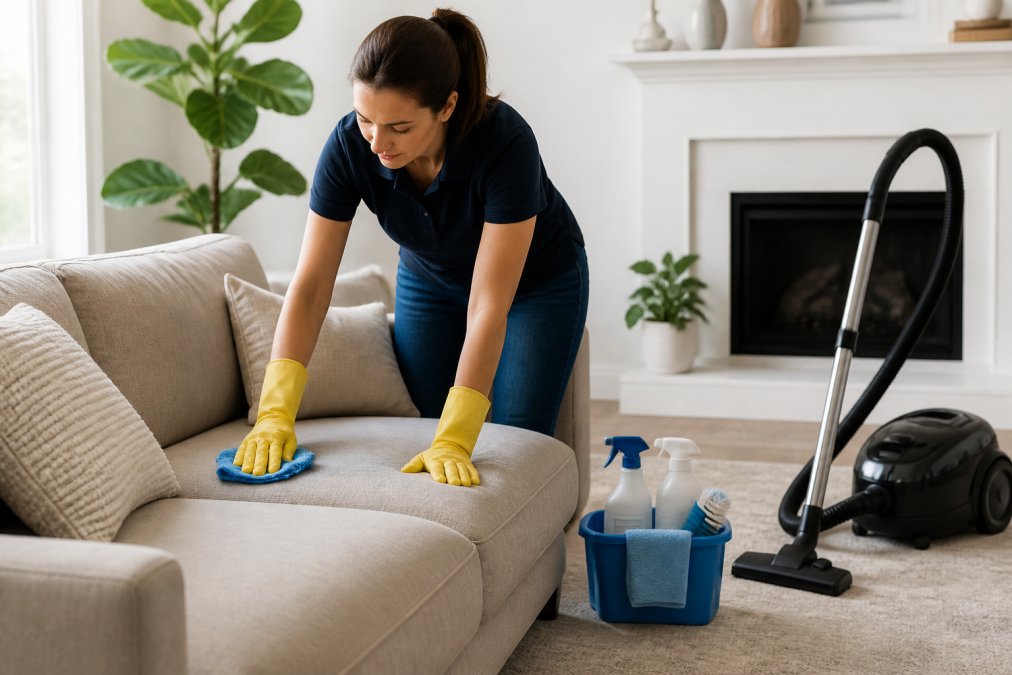
Learning how to remove pet dander from house surfaces comes down to three habits: frequent washing, targeted surface cleaning, and filtration that captures what cleaning stirs up. No single step is enough on its own.
Surface Cleaning Protocols That Actually Work
Start with the surfaces people touch most. Damp-wipe hard surfaces instead of dry-dusting, because dry methods push particles back into the air. Wash bedding, pet beds, and throws weekly in hot water.
For soft furnishings, a vacuum with a HEPA filter matters more than vacuuming frequency. Carpet holds dander accumulation like a reservoir, so hard flooring in bedrooms genuinely helps. Keep pets out of the bedroom entirely, and groom them outdoors when possible.
Dry-dusting and sweeping spread airborne particles rather than removing them. If you skip damp methods, you simply redistribute the allergen across the room and worsen indoor air quality.
Best Air Purifier for Pet Dander Allergies: What to Look For
The best air purifier for pet dander allergies uses a true HEPA filter, which captures the smallest airborne particles that standard filters miss. Look for a unit rated for the square footage of your room, and check the filter replacement cost before buying.
Here is what separates a unit that works from one that does not:
| Feature | Why It Matters | Look For |
|---|---|---|
| Filtration type | Captures fine particles | True HEPA |
| Room rating | Undersized units underperform | Matches your space |
| Filter cost | Drives yearly spend | Predictable, reasonable |
| Airflow | Moves air through the filter | Higher clean air delivery rate |
| Performance feedback | Confirms it is working | Visual confirmation |
This is where Aero Essence LLC’s SR100 stands out. It targets nine kinds of pollutants, including pet dander, dust mites, pollen, mold spores, and smoke, and it provides visual confirmation that purification is actively working. For households that want proof a device is doing its job, that feedback removes the guesswork.
Place the purifier where the pet spends the most time, not in a corner. Airflow blocked by furniture cuts real-world performance even when the unit is correctly sized.
The Hypoallergenic Pet Reality Check
No breed is truly hypoallergenic. That is not a marketing opinion, it is a direct consequence of where the allergens actually come from. The proteins that trigger reactions are produced in the sebaceous glands of the skin, the salivary glands, and the urinary tract. Every cat and dog has all three, which means every cat and dog produces the allergens regardless of how much hair it sheds.
The proteins most often implicated are Fel d 1 in cats and Can f 1 in dogs. Fel d 1 is the dominant cat allergen, and it is produced primarily in saliva and sebaceous glands, not in fur. A hairless cat still grooms itself, still sheds skin cells, and still deposits Fel d 1 on every surface it touches. The lack of fur reduces how much dander sticks to the animal, but it does not reduce how much the animal produces.
Why “Low-Shedding” Is Not the Same as “Low-Allergen”
Breed marketing tends to conflate two different things. Shedding describes how much hair falls out and lands on surfaces. Allergen production describes how much protein the animal makes. A low-shedding breed like a poodle or a hairless sphynx may leave less visible hair on the couch, but the protein load in the air and on upholstery can still be substantial, sometimes comparable to a heavily shedding breed, because the allergen is carried on particles far smaller than hair.
Individual variation matters more than breed. Within the same litter, cats can produce meaningfully different amounts of Fel d 1, and a person’s sensitivity can vary just as widely. Two households with the same breed can have completely different allergen loads depending on the individual animal, the home’s ventilation, and cleaning habits.
What the “Hypoallergenic” Label Actually Means
In practice, the term is unregulated for pets. It is a marketing descriptor, not a medical or regulatory standard, and it does not carry a defined threshold for allergen production. A breeder or a pet store can apply it to any breed or mix without meeting any measurable criteria.
That does not mean the label is useless. Some breeds do shed less, and less shedding means less dander settling on surfaces, which can reduce the total allergen reservoir in a home. But reduced is not the same as absent, and for a sensitized person, a “hypoallergenic” breed can still trigger the same symptoms as any other animal. Misconceptions regarding the specific dander production of various hypoallergenic dog breeds often lead families to underestimate the persistent nature of these proteins in their living environment.
The Realistic Path
If someone in the home is already sensitized, the breed is not the lever that solves the problem. The levers that actually move the needle are environmental: keeping the bedroom pet-free, running a true HEPA purifier where the pet spends the most time, washing bedding and pet beds weekly in hot water, and damp-wiping hard surfaces instead of dry-dusting. Those steps reduce the airborne and settled allergen load regardless of which animal is in the house.
For households considering a new pet, the honest framing is this: spend time with the specific animal before committing, not the breed. Individual protein production varies enough that a single cat or dog can be a better or worse fit than its breed label suggests, and that is a far more useful test than any “hypoallergenic” claim on a breeder’s website.
The term “hypoallergenic” is not regulated for pets. Treat it as a shedding descriptor, not a guarantee of reduced allergen exposure.
When to See a Doctor for Pet Allergies
See a doctor when symptoms interfere with sleep, breathing, or daily life, or when over-the-counter remedies stop working. A clinician can confirm the cause through a clinical diagnosis and rule out other environmental triggers.
Seek care promptly if you experience wheezing, shortness of breath, or chest tightness. These can signal asthma triggers that need proper treatment rather than home management alone.
Reducing allergen exposure at home helps, but it does not replace medical care for respiratory symptoms. Use both together.
Living with pets and allergies is a balancing act, and the honest challenge is that dander never fully disappears. What you can control is how much stays airborne and how much settles where you breathe. Aero Essence LLC built the SR100 to handle nine kinds of pollutants, including pet dander, dust mites, pollen, mold spores, and smoke, with visual confirmation that it is working. If you want cleaner air without guessing whether your purifier is doing anything, shop the SR100 from Aero Essence LLC and take the guesswork out of your indoor air quality.
Frequently Asked Questions
How do you get rid of pet dander?
Removing pet dander requires a multi-layered approach. Vacuum carpets and upholstery weekly with a HEPA-filter vacuum, wipe hard surfaces with a damp cloth, and wash pet bedding in hot water every week. Bathing pets regularly reduces dander accumulation. Running a HEPA air purifier in living spaces captures airborne particles that settle between cleanings. Consistent surface cleaning and air filtration together make the biggest difference in reducing allergen exposure.
How can I tell if I’m allergic to pet dander?
Pet dander allergy symptoms typically appear within minutes to hours after contact with an animal. Watch for nasal congestion, sneezing, itchy or watery eyes, wheezing, and skin irritation after petting or being near a pet. Symptoms that improve when you leave the pet’s environment suggest a dander allergy. A doctor can confirm with a skin prick test or blood test measuring immunoglobulin E antibodies specific to pet proteins.
Does pet dander go away?
Pet dander does not simply disappear. These microscopic proteins from dead skin cells, saliva, and urine persist in carpets, upholstery, and air ducts for months, even after a pet leaves the home. Without consistent cleaning and HEPA filtration, dander accumulation continues. Removing pet dander from house surfaces requires regular vacuuming, damp wiping, and air purification. Even then, trace amounts can remain in soft furnishings for extended periods.
What are the most common symptoms of a pet dander allergy?
The most common pet dander allergy symptoms include sneezing, runny or stuffy nose, nasal congestion, itchy and watery eyes, and skin irritation where a pet has touched you. Some people experience wheezing, chest tightness, or difficulty breathing, especially those with asthma. Symptoms can range from mild to severe and often worsen with longer allergen exposure. If respiratory problems persist, a doctor can provide a clinical diagnosis and treatment plan.