
Air Quality and Filter Lifespan: How Pollution Shortens Filter Life
Last Updated: November 12, 2026
Quick Summary
Air quality shortens filter lifespan by increasing particle load, the total mass of airborne particles a filter must trap. A filter is a fixed-capacity trap, so dirtier air fills it faster, and a single heavy smoke event can consume months of capacity in days.
- Low-quality pleated filters often need replacement every three months, while premium pleated filters can last nine months to a year or longer.
- Pressure drop climbs slowly at first, then accelerates once the media is roughly half loaded.
- Vacuum the pre-filter every two to four weeks to keep the main filter’s capacity available for fine particles.
- When outdoor AQI is unhealthy at 151-200, shorten the replacement interval by about 30-40%.
- Most true HEPA media cannot be washed, so clean the pre-filter and replace the main filter.
Table of Contents
- How Air Quality Changes Filter Lifespan
- Air Purifier Filter Replacement Frequency: What the Intervals Actually Say
- Signs an Air Purifier Filter Needs Replacing
- Air Purifier Filter Maintenance That Extends Service Life
- Wildfire Smoke Air Purifier Filter Replacement: When Smoke Season Resets the Clock
- Adjusting Your Replacement Schedule to Measured Air Quality
- Choosing a Purifier Built for Your Air
- Frequently Asked Questions
How Air Quality Changes Filter Lifespan
Air quality affects filter lifespan through one number: how much particulate matter the filter must trap. A filter is a fixed-capacity trap, so dirtier air fills it faster and shortens filter lifespan.
The same filter in clean air and heavy smoke does very different jobs. The air decides how long it lasts.
Particle Load: The Real Driver of Filter Wear
Particle load is the total mass of airborne particles passing through a filter over time. It is the single biggest factor in how long any filter lasts.
Consider what fills a filter:
- Dust and lint from daily living
- Pet dander and shed skin cells
- Pollen during allergy season
- Smoke from wildfires or cooking
A home with three pets and a busy kitchen loads a filter far faster than a single occupant with windows closed. Outdoor pollution drifts indoors too. Research from the Environmental Pollution study by E. Cooper and colleagues found that portable air purifiers cut indoor PM2.5 by roughly 50%, which shows how much particulate matter these units are actually pulling from the air.
More particles in the air means the filter works harder and clogs sooner.
Air Purifier Filter Replacement Frequency: What the Intervals Actually Say
Air purifier filter replacement frequency depends on filter grade, product, and the pollutant mix the filter sees, not a single universal rule. Published intervals vary widely, and that gap tells you more than any one number.
According to Camfil’s guidance on filter replacement and sustainability, low-quality pleated filters often need replacement every three months. Premium pleated filters can last nine months to a year or longer. Because pollution can make even premium pleated filters wear out sooner than expected, monitor air quality at home to spot changing conditions and judge when replacement may be needed.
Purifier filters follow the same pattern: pollution levels and runtime set the clock.
| Filter Type | Typical Interval | What Shortens It |
|---|---|---|
| Low-quality pleated | About 3 months | Heavy dust, pets, smoke |
| Premium pleated | 9 months to 1 year+ | High particle load, long runtime |
| Purifier filter set | 12 to 36 months | Pollution level, continuous operation |
For a fuller breakdown of what replacement runs, see our air purifier filter replacement cost guide.
Why Pollutant Type Changes the Clock
The intervals above assume a typical household particle mix. Change the mix and the loading rate changes with it. Particle size and concentration determine how quickly the media’s open area fills and how deep particles travel.
- Coarse dust and lint. Captured on the surface and in the pre-filter. They load visibly and quickly, but much is removable by pre-filter cleaning, so the main media outlasts the surface color.
- Pollen. Seasonal and bursty. Larger than fine particulate matter but arriving in high concentrations, it can load a filter heavily over a few weeks, then stabilize.
- Smoke and soot. Wildfire and cooking smoke carry very fine particles that travel deep into the media and resist removal. A smoke event can consume months of capacity in days, often invisibly.
- Fine particulate matter (PM2.5). The smallest particles penetrate deepest and are hardest to dislodge. High PM2.5 shortens filter life even when the filter looks clean.
A home with heavy smoke exposure replaces filters on a smoke-event schedule; a home with pets and dust replaces on a pre-filter cleaning schedule. Same filter, same calendar interval, very different actual loading.
Matching the Interval to Your Pollutant Mix
Use the table above as a starting point, then adjust for the dominant pollutant in your air:
- If smoke is your main concern, inspect after every heavy smoke event rather than waiting for the calendar.
- If pollen is seasonal, expect faster loading in spring and fall and slower loading in winter.
- If dust and pets dominate, pre-filter cleaning frequency matters more than main-filter replacement frequency.
- If fine particulate matter is persistently high, shorten the interval even if the filter looks clean.
This pollutant-by-pollutant view is what most published schedules leave out. The manufacturer’s range is a baseline for a typical mix; your actual mix sets the real date.
Signs an Air Purifier Filter Needs Replacing
The clearest sign is visible loading: a filter turned gray or dark is holding a heavy particle load. Other signals appear before you open the unit.
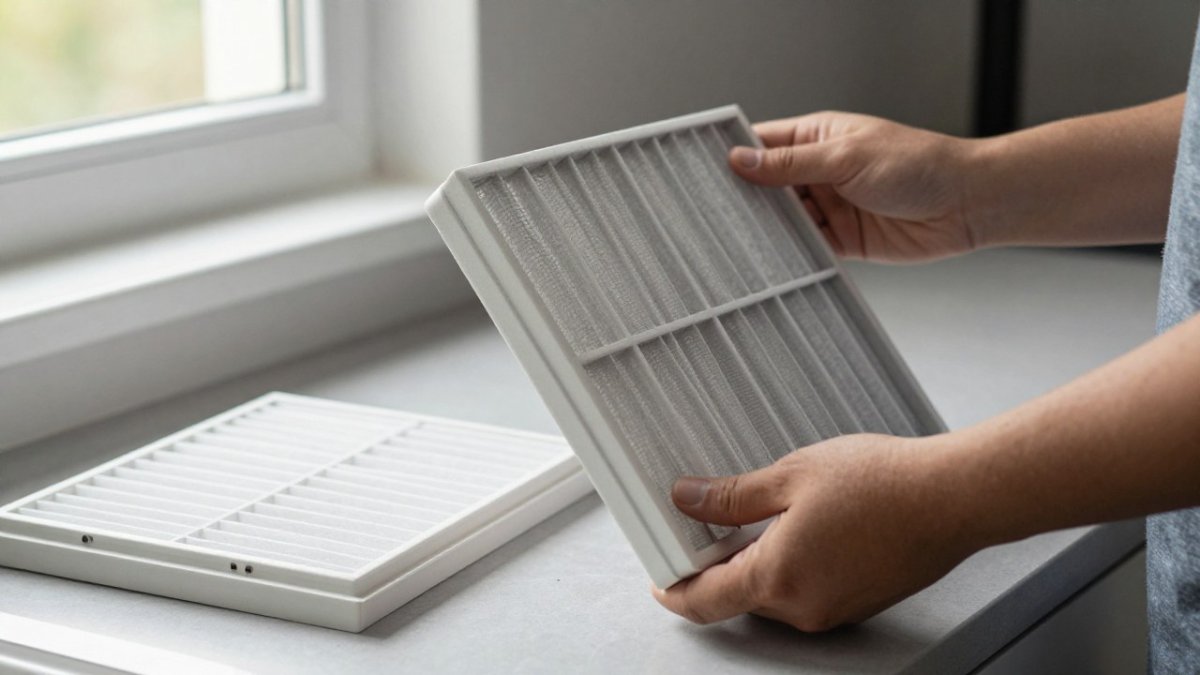
Watch for these signs an air purifier filter needs replacing:
- The filter looks gray, brown, or matted
- Airflow from the unit feels weaker
- Odors linger longer than they used to
- The unit runs louder than normal
A dirty filter does more than stop cleaning. It restricts airflow, raising pressure drop across the media.
Watch out: running a loaded filter “just a little longer” is the most common mistake we hear about.
Air Purifier Filter Maintenance That Extends Service Life
Good air purifier filter maintenance will not make a filter last forever, but it protects the interval you paid for. The goal is to keep particle load manageable between replacements and to keep pressure drop from climbing faster than it has to.
Why Maintenance Works: The Loading and Pressure-Drop Curve
A filter does not load at a constant rate. As media collects particles, open area shrinks, resistance rises, and the fan works harder to move the same air. Pressure drop climbs slowly at first, then accelerates once the media is roughly half loaded.
That is why the pre-filter matters more than most owners realize. It captures lint, hair, and large dust before they reach the HEPA or pleated media.
A Maintenance Routine Built Around Loading Rate
- Vacuum the pre-filter every two to four weeks. A clogged pre-filter starves the main filter of airflow and forces higher fan speed, raising energy use without improving filtration.
- Check the main filter monthly with a visual look and an airflow check at the outlet. A noticeable drop at the same fan setting is an early pressure-drop signal.
- Keep return vents and grilles clear of furniture, curtains, and boxes. Blocked returns recirculate the same dust and raise the particle concentration the unit sees.
- Run the unit on a lower speed when outdoor air is clean. Runtime hours and fan speed both consume filter capacity, so matching speed to particle load stretches the interval.
For a full routine, our guide to air purifier maintenance tips to extend lifespan walks through each step. If you are weighing cleaning versus replacing, our article on DIY air purifier filter cleaning and real savings covers whether it pays off.
What Maintenance Cannot Fix
One honest limit: most true HEPA media cannot be washed. Rinsing a pleated filter can damage the fibers, open gaps in the media, and cut efficiency, and the filter may never return to its rated performance.
Watch out: vacuuming a HEPA filter with a brush attachment can push dust deeper into the media or tear the pleats. If the manufacturer does not explicitly allow vacuuming the main filter, do not do it.
Diagnosing Short Filter Life: Air Quality or Something Else?
If your filter loads faster than the manufacturer’s interval suggests, the cause is not always outdoor air. Several indoor sources often stack up: pets, cooking, smoking, construction dust, high occupancy, and a fan running continuously on high. Before shortening your schedule, check these causes in order:
- Pets and occupancy. Dander and shed skin cells add a steady particle load that a monitor shows as elevated indoor counts even when outdoor AQI is good.
- Cooking and smoking. Frying and broiling generate fine particles and grease aerosol that load media quickly and coat the filter surface.
- Construction or renovation dust. Drywall dust and sawdust are heavy loaders; a filter may need replacement after a single project.
- Fan settings. Running a purifier on high 24/7 uses capacity faster than auto or low when air is clean.
- Filter fit and bypass. A poorly sealed filter lets air slip around the media, so the unit runs longer and the filter appears to last less time while filtering less.
If indoor particle counts stay high after addressing these sources, outdoor air is the likely driver and the AQI adjustment method below applies. If counts drop but the filter still loads fast, check fit and fan settings before buying more filters.
Wildfire Smoke Air Purifier Filter Replacement: When Smoke Season Resets the Clock
Wildfire smoke air purifier filter replacement follows a different schedule than routine household dust.
Smoke particles are tiny and travel deep into filter media. During a smoke event, a filter that would normally last a season may load up in days.
- Inspect the filter after any heavy smoke event
- Replace it if it looks dark or airflow has dropped
- Run the unit on high during smoke, then drop to low after
- Keep windows closed and seal gaps while smoke is thick
Filter type matters here too. Our comparison of HEPA vs carbon filters for smoke removal explains which layer handles smoke particles and which handles odor.
Adjusting Your Replacement Schedule to Measured Air Quality
A fixed calendar is a guess.
Step 2: Note indoor particle readings. A low-cost particle monitor shows what actually reaches your rooms.
Step 3: Log your runtime hours. Continuous operation uses filter capacity faster than occasional use.
Step 4: Set a baseline interval. Start with the manufacturer’s range for your filter type.
Step 6: Check monthly and adjust. Let filter condition, not just the calendar, set the date.
| Outdoor AQI Level | Particle Load | Adjustment to Interval |
|---|---|---|
| Good (0-50) | Low | Use the full manufacturer interval |
| Moderate (51-100) | Medium | Check monthly, expect normal wear |
| Unhealthy for sensitive groups (101-150) | Elevated | Shorten by about 20% |
| Unhealthy (151-200) | High | Shorten by about 30-40% |
| Very unhealthy and above (201+) | Very high | Inspect weekly, replace early |
Real-time monitoring makes this far easier. Our article on the benefits of real-time air quality monitoring explains how live data turns guesswork into a schedule.
Choosing a Purifier Built for Your Air
The best defense against a short filter lifespan is a purifier designed for heavy particle loads from the start.
That is the thinking behind the SR100 from Aero Essence LLC.
If your air is heavy with pets, pollen, or smoke, choose a purifier that matches that load.
Dirty air is the quiet reason filters fail early, and most homeowners never connect the two.
Frequently Asked Questions
How does poor air quality affect an air purifier filter’s lifespan?
Higher pollutant concentrations mean more particles hit the filter media per hour, so it loads up faster. Dirtier air shortens filter lifespan.
What is the 2/3 rule for air purifiers?
The 2/3 rule is a sizing guideline, not a filter rule: a purifier’s clean air delivery rate should be about two-thirds of the room’s square footage for solid performance. It matters here because an undersized unit runs at maximum fan speed constantly, pushing more air through the filter and shortening its useful life. Size the unit to the room, then follow the manufacturer’s replacement interval and check the filter monthly during heavy pollen or smoke season.
Can wildfire smoke shorten the life of an air purifier filter?
Yes. Wildfire smoke delivers a concentrated burst of fine PM2.5 and ash, and a filter working through weeks of smoke accumulates particles far faster than one cleaning normal household dust. If you run a purifier through a smoke event, inspect the filter afterward and expect to replace it sooner than the standard interval. Check the pre-filter weekly during smoke season, and replace the main filter when airflow drops or odor persists after cleaning.
Do pets and dust make air purifier filters wear out faster?
They do. Pet dander, hair, and household dust add continuous particle load, so a home with three cats pushes more material through the filter every day than a pet-free home. Vacuuming and brushing pets outdoors reduce the load, and a washable pre-filter catches hair before it reaches the main media. Inspect the filter monthly in pet households and replace it at the earlier end of the manufacturer’s range rather than the later end.
