
What Are the Signs of Pet Dander Allergies at Home?
Last Updated: November 1, 2026
Quick Summary
Pet dander allergies usually show up as a steady pattern tied to time spent in rooms where your pet sleeps, sits, or plays. Common signs include sneezing, a runny or itchy nose, itchy or watery eyes, and skin itching. Symptoms often ease when you leave the house and return once you are back indoors.
- Symptoms often start soon after entering a room where your pet spends time.
- Symptoms that fade when you are away from home point toward a pet trigger.
- Track symptoms in a two-week log noting room, activity, and how you felt.
- Dust mites can cause similar symptoms, so a pet allergy and mite allergy can coexist.
- Only allergy testing by a clinician can confirm which allergen is responsible.
Table of Contents
- How Pet Dander Allergies Show Up in the Home
- Pet Allergy Symptoms: Nasal, Eye, Skin, and Breathing Signs
- Telling Pet Dander Apart From Other Indoor Triggers
- How Long Pet Dander Stays in a House
- Room-by-Room Allergen Hotspots and a Home Assessment Checklist
- How to Reduce Pet Allergens in the Home
- When to Get Pet Allergy Testing and See a Doctor
- Choosing Your Next Step for Cleaner Indoor Air
- Frequently Asked Questions
How Pet Dander Allergies Show Up in the Home
Pet dander allergies often show up as a steady pattern, not a single event. Symptoms tend to appear when you spend time in rooms where your pet sleeps, sits, or plays. If you developed these symptoms as an adult, learn why cat allergies can suddenly appear in adults.
This guide is designed to help you spot the signs and understand what to do next. Many people assume a cold or seasonal allergy is to blame, but a pet is often the real trigger.
Watch for these patterns at home:
- Symptoms that start soon after you enter a room with your pet
- Symptoms that fade when you spend time away from home
- Symptoms that are worse in bedrooms, couches, or areas where the pet rests
- Symptoms that persist year-round rather than peaking in one season
Pet Allergy Symptoms: Nasal, Eye, Skin, and Breathing Signs
Pet allergy symptoms fall into a few groups. To understand what dander is and why it sets these reactions off, read what pet dander is and why it causes allergies.
Nasal symptoms include sneezing, nasal congestion, a runny nose, and an itchy nose. These are often the first signs people notice.
Eye symptoms include itchy eyes, watery eyes, and red eyes.
Skin reactions can include itching, redness, or a rash, especially where the pet has touched the skin.
Breathing symptoms such as coughing, wheezing, or shortness of breath need closer attention. Anyone with asthma or COPD should take these seriously and talk with a doctor.
Telling Pet Dander Apart From Other Indoor Triggers
Pet dander is not the only indoor allergen, and the symptoms it causes overlap heavily with dust mites, mold spores, and pollen tracked in from outdoors. That overlap is why symptoms alone cannot confirm a pet allergy.
Use this comparison to sort out the likely trigger:
- Pet dander: Symptoms tend to start within minutes to a few hours of entering a room where the pet spends time, and they often ease within a short time after you leave the house. They are usually worst in rooms the pet uses most, and they persist year-round rather than tracking a season. Dander particles are small and sticky, so they stay airborne and settle onto soft surfaces long after the animal has left the room.
- Dust mites: Symptoms are often worst in the bedroom and flare when you make the bed, fluff pillows, or vacuum, because those actions lift mite particles from bedding and carpet. Dust mite symptoms also tend to be year-round, which makes them easy to confuse with pet dander.
- Mold: Symptoms may be worse in damp areas such as basements, bathrooms, and rooms with visible water damage, and they often worsen after rain or in humid weather. A musty odor is a useful clue.
- Pollen: Symptoms usually follow a seasonal pattern, are often worse on dry, windy days, and improve after rain. They may be worse outdoors and ease after you come inside and change clothes.
A common pattern that points to pets rather than dust mites: symptoms improve when you are away from home for a day or more and return within hours of coming back, even after the house has been cleaned.
Keep a two-week log. For each entry, note the time, the room, what you were doing (making the bed, vacuuming, sitting on the couch, petting the animal), and how you felt. Patterns across the log are more useful than any single bad day.
A few cautions matter here. Symptoms alone cannot confirm a diagnosis, and more than one trigger can be active at once. A home with a pet often also has dust mites in the bedding and carpet, so a pet allergy and a mite allergy can coexist. Only allergy testing by a clinician can confirm which allergen is responsible (Allergy Testing | Skin Testing). If you are trying to decide whether to pursue testing, bring your log to the appointment; it gives the clinician useful exposure history to work from.
The article compares how each common indoor trigger tends to look, which helps sort out the likely cause of symptoms.
| Trigger | Typical pattern | Clue |
|---|---|---|
| Pet dander | Starts within minutes to hours near the pet; eases after leaving | Year-round; worst where the pet spends time |
| Dust mites | Flares when making the bed or vacuuming | Often worst in the bedroom; year-round |
| Mold | Worse in damp areas and after rain or humidity | Musty odor |
| Pollen | Follows a seasonal pattern | Worse on dry, windy days; eases after rain |
How Long Pet Dander Stays in a House
Pet dander can linger for months after a pet has moved out. It settles into carpets, upholstery, bedding, and air ducts, then gets stirred up again by walking, cleaning, or moving furniture.
Symptoms may ease after a thorough cleaning and a period of steady air filtration. Symptoms that continue long after a pet has left may point to dander stored in the home.
Room-by-Room Allergen Hotspots and a Home Assessment Checklist
Dander does not distribute evenly through a house. It concentrates where the pet rests, where soft materials trap particles, and where air moves. A room-by-room inspection tells you where to focus cleaning and filtration instead of treating the whole house the same.
Where dander accumulates:
- Bedroom: Bedding, pillows, mattresses, and carpet are the highest-risk surfaces, especially if the pet sleeps in the room. Dander settles into the filling of pillows and comforters and is difficult to remove by vacuuming alone.
- Living room: Upholstered sofas and chairs, area rugs, curtains, and throw blankets trap dander. Fabric-covered furniture holds more than leather or hard surfaces.
- Entryways and hallways: Dander is tracked in on clothing and shoes and collects near doors and along baseboards.
- Kitchen and pet feeding areas: Pet food bowls, floors, and nearby cabinets collect dander and hair.
- HVAC system: Return grilles, filters, and ductwork collect dander and redistribute it when the system runs. A dirty filter is both a symptom and a source.
How to inspect each area:
- Use a bright flashlight at a low angle across bedding, upholstery, and carpet to catch hair and fine dust you would miss in normal light.
- Press a damp white cloth into upholstery and carpet, then check the cloth for gray or tan residue; this gives you a rough visual read on accumulated particulate.
- Pull the HVAC filter and hold it up to the light. A filter that is visibly loaded with gray fuzz is overdue for replacement, and the return grille behind it should be wiped down.
- Check curtains and blinds near where the pet rests; fabric window treatments hold dander and are easy to overlook.
- Note which rooms trigger symptoms within the first 30 minutes of entry, and compare that list to where the pet actually spends time.
Turn the inspection into a decision:
- If symptoms cluster in the bedroom and the pet sleeps there, bedroom exclusion and bedding washing are the highest-value changes.
- If symptoms are worst in the living room, focus on upholstery vacuuming, washable covers, and a HEPA air purifier sized for the room.
- If symptoms appear in every room and worsen when the HVAC runs, start with filter replacement and duct inspection before buying more equipment.
- Repeat the inspection two to four weeks after changes. If the visible load drops but symptoms do not, the trigger may be dust mites, mold, or a second allergen, and a clinician visit is the next step.
Do not rely on visible hair as your only measure. Dander particles are much smaller than hair and can be present in a room that looks clean. Visible hair is a useful clue, not a complete assessment.
::: Persistent microscopic particles necessitate a more comprehensive strategy to manage pet allergies effectively throughout your living space.
This inspection is a practical way to prioritize effort, not a diagnostic test. It tells you where to clean and where to focus filtration; it cannot tell you which allergen is causing your symptoms.
How to Reduce Pet Allergens in the Home
Reducing dander takes steady habits. No single step solves the problem, but several together make a real difference.
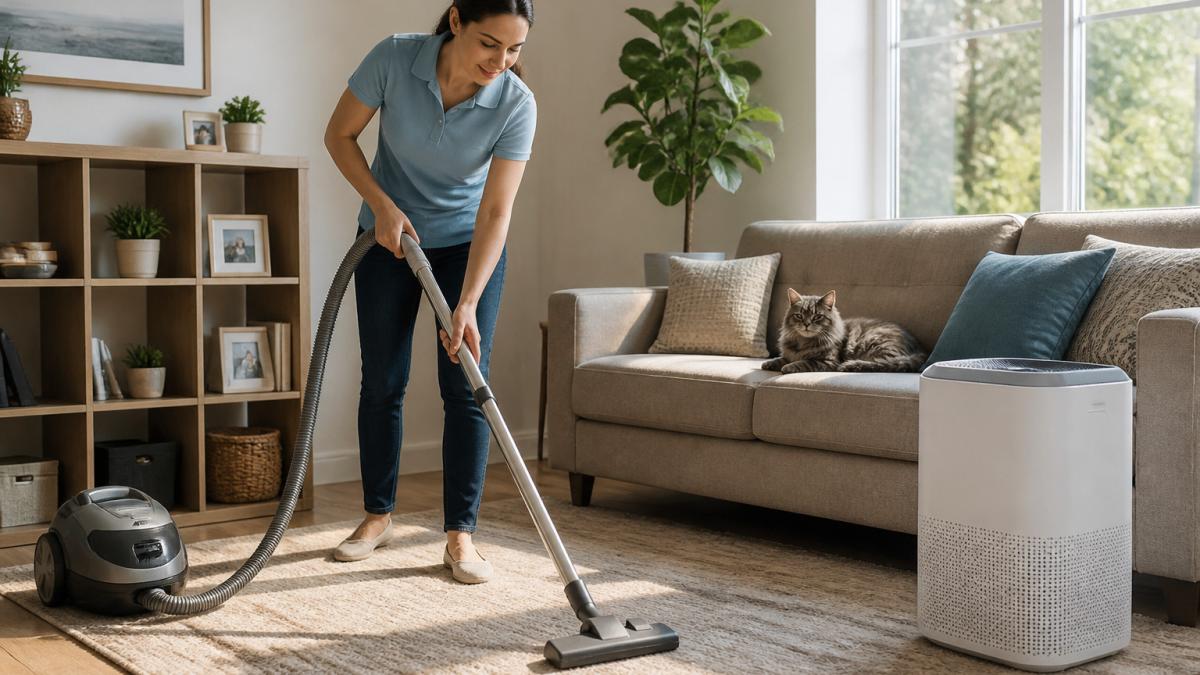
Start with these steps:
- Vacuum floors and upholstery with a HEPA-filter vacuum at least once a week
- Wash pet bedding and your own bedding in hot water regularly
- Keep the pet out of the bedroom if possible
- Run an air purifier in the rooms you use most
- Wipe down hard surfaces with a damp cloth instead of dry dusting
For more practical tips, see 10 Tips Living With Dog Allergies, or for cat households, read Living with Cats and Allergies: 7 Lifestyle Changes That Work.
For more detail on indoor allergen reduction, read How Do You Reduce Pet Allergens Indoors?.
When to Get Pet Allergy Testing and See a Doctor
See a doctor if symptoms are severe, last for weeks, or interfere with sleep or daily life. Get urgent care if you have trouble breathing, chest tightness, or swelling of the face or throat.
Allergy testing can confirm whether a pet is the trigger. A doctor may use skin prick tests or blood tests, and results help guide treatment. Medical providers can also discuss options such as antihistamines, nasal sprays, or other treatments. Do not start or stop medication based only on this article.
Choosing Your Next Step for Cleaner Indoor Air
Start by tracking your symptoms and checking the rooms where you spend the most time. Then take steady steps to reduce dander, such as regular vacuuming, washing bedding, and using air filtration. If symptoms continue, talk with a doctor about testing and treatment.
Visit our website to learn more about the SR100 and current pricing.
Frequently Asked Questions
How can I tell if my symptoms are caused by pet dander?
Pay attention to when symptoms start and stop. If sneezing, itchy or watery eyes, congestion, or skin itching get worse around your pet, in its bedroom, or on upholstery it uses, and ease when you spend time away from it for several days, pet dander is a likely cause. Symptoms that persist even when the pet is out of the house suggest that allergens have settled into carpets and fabrics. An allergist can confirm the cause through skin or blood testing, which is the most reliable way to separate pet dander from dust mites, pollen, or mold.
Can pet dander cause symptoms even when the pet is not in the room?
Yes. Pet dander is light and sticky, so it travels on clothing, hair, and air currents and settles on sofas, bedding, and carpets. Allergen proteins can remain on surfaces for months after a pet has left or been rehomed. This is why some people react when they enter a home where a pet used to live, or when they visit a friend’s house that has animals. Regular cleaning of soft surfaces and air filtration help reduce this lingering exposure.
How long can pet allergens remain in a home?
Pet allergens can stay in a house for months, and in some cases longer, particularly in carpet, upholstery, mattresses, and curtains. Hard floors release less allergen once cleaned, but dust that settles on shelves and vents keeps returning allergens to the air. Thorough vacuuming with a HEPA filter, washing bedding in hot water weekly, and running an air purifier with a true HEPA filter all shorten the time allergens remain at levels that trigger symptoms.
When should I see a doctor about possible pet allergies?
See a doctor if you have persistent nasal symptoms, wheezing, chest tightness, or shortness of breath that interferes with sleep or daily activity, especially if you have asthma or COPD. Seek urgent care for severe difficulty breathing, lip or face swelling, or symptoms that worsen quickly. A primary care provider or allergist can discuss allergy testing, medication options such as antihistamines or nasal sprays, and whether your symptoms may signal asthma rather than a simple allergy.
