
Why Cat Allergies Suddenly Appear in Adults
Table of Contents
- Why Cat Allergies Suddenly Appear in Adults
- Symptoms of Cat Allergies in Adults
- How to Reduce Cat Dander in the Home
- Best Air Purifier for Allergy Relief: What to Look For
- Cross-Reactivity and Other Triggers That Worsen Cat Allergies
- When to See an Allergist and What Testing Involves
- Living With a Cat When You Are Allergic: Your Options
- Frequently Asked Questions
Last Updated: September 11, 2026
Why Cat Allergies Suddenly Appear in Adults
Cat allergies adults experience often appear suddenly because allergic sensitization is cumulative, not immediate. You can live with cats for years, then one day your immune system crosses a threshold and starts reacting to proteins it previously tolerated. This guide from Aero Essence LLC explains why that happens, what your symptoms mean, and how to keep living with your cat.
The mechanism is well documented. Fel d 1 protein, the primary cat allergen, builds up in your environment over months and years (peer-reviewed research). Your immune system quietly registers each exposure. At some point, the accumulated load tips you into allergic rhinitis or urticaria territory, and suddenly you’re sneezing every time your cat walks into the room.
Here’s what most people get wrong: they assume the cat changed. It didn’t. Your immune response changed. What follows is a practical breakdown of the threshold effect, the Fel d 1 protein itself, and the home strategies that actually reduce allergen exposure.
The Threshold Effect: Why Symptoms Show Up After Years
The threshold effect explains why long-time cat owners develop allergies in their 30s, 40s, or 50s. Your body tolerates a certain level of allergen exposure before symptoms start. Once that threshold level is crossed, even brief contact triggers a reaction.
Several things push you over that line:
- Moving into a smaller home with less ventilation
- Adding a second cat, doubling protein accumulation
- Adopting a new grooming habit that spreads dander further
- Developing cross-reactivity to pollen or dust that compounds your total allergen load
This is why a person can share a bed with a cat for a decade and then suddenly react. The cat didn’t become more allergenic. The cumulative load finally exceeded what their immune system would tolerate.
The Fel d 1 Protein and How Sensitization Builds Over Time
Sensitization is the process by which your immune system learns to recognize an allergen and produce immunoglobulin E antibodies against it (aaaai.org). Fel d 1, produced mainly in cat saliva and sebaceous glands, is the protein responsible for most cat allergies.
Cats spread Fel d 1 constantly. They groom, depositing saliva on their fur. They shed dander and urine particles that become airborne particles small enough to stay suspended for hours. Those particles land on sofas, bedding, curtains, and walls.
Each exposure trains your immune system a little more. Eventually, mast cells release histamine, and you get the classic symptoms: sneezing, itchy eyes, respiratory symptoms, and sometimes chronic inflammation in your airways. Sensitization can take years. That’s why adult-onset allergies feel like they come out of nowhere.
Symptoms of Cat Allergies in Adults
Symptoms of cat allergies adults notice typically include sneezing, nasal congestion, itchy or watery eyes, coughing, wheezing, and skin reactions. Most people notice them within minutes of contact, though delayed reactions can appear hours later.
Watch for these specific signs:
- Allergic rhinitis: runny nose, sneezing, postnasal drip
- Urticaria: raised, itchy welts on skin after contact
- Respiratory symptoms: wheezing, chest tightness, shortness of breath
- Mucous membranes: itchy, red, watery eyes and irritated throat
- Chronic inflammation: persistent congestion that doesn’t clear
Some adults develop asthma-like symptoms even without a prior asthma diagnosis. If your symptoms escalate from mild sneezing to breathing difficulty, that’s a signal to seek medical evaluation rather than manage it at home.
How to Reduce Cat Dander in the Home
Reducing cat dander at home requires attacking the problem on three fronts: source control, surface cleaning, and air filtration. No single step eliminates allergens, but combining them meaningfully lowers the threshold level you’re exposed to.
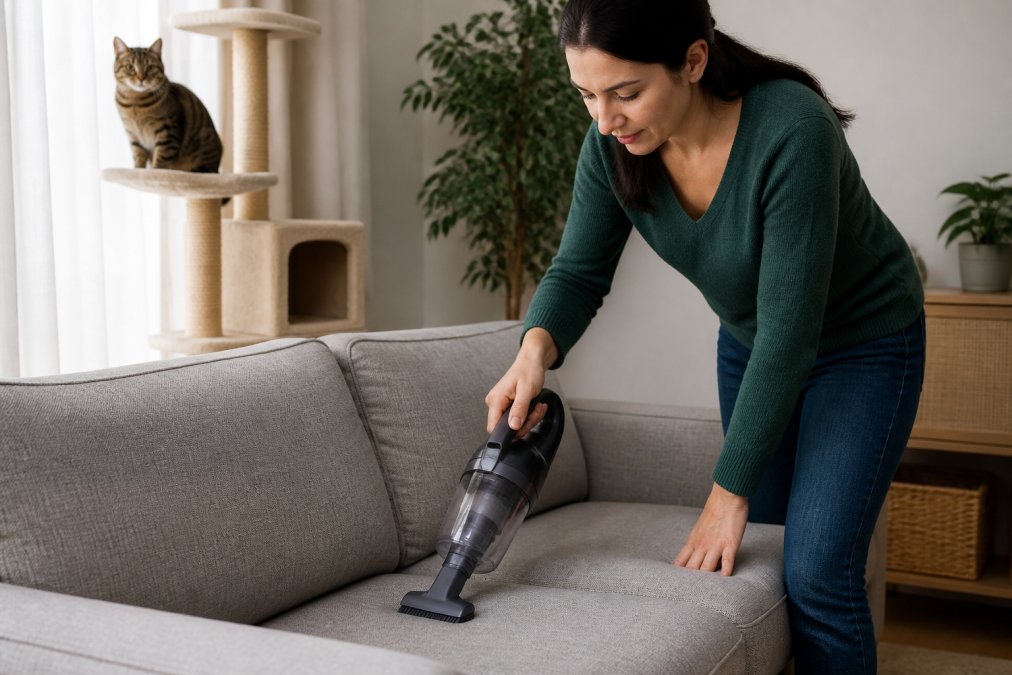
Start with these steps:
- Wash bedding weekly in hot water to remove accumulated dander and saliva proteins.
- Vacuum with a HEPA filter two to three times per week, including upholstery and curtains.
- Groom your cat regularly, ideally outdoors or by a non-allergic household member.
- Replace fabric curtains with washable blinds where possible.
- Run air purification continuously in the rooms where you and your cat spend the most time.
What most guides miss is that protein accumulation happens on vertical surfaces too. Walls, baseboards, and door frames collect airborne particles that get stirred up every time you walk past. Wiping these surfaces monthly makes a measurable difference.
Keep a dedicated microfiber cloth and spray bottle in each room your cat frequents. Wiping one surface per day takes under two minutes and prevents dander from settling into a permanent layer.
Best Air Purifier for Allergy Relief: What to Look For
The best air purifier for allergy relief combines a true HEPA filter, adequate room coverage, and a design that lets you confirm it’s actually working. Filtration matters more than marketing claims about being hypoallergenic.
When evaluating units, prioritize:
| Feature | Why It Matters | What to Avoid |
|---|---|---|
| True HEPA filter | Captures dander and airborne particles | “HEPA-like” or “HEPA-type” labels |
| CADR rating | Confirms real filtration speed | Unverified airflow claims |
| Sealed system | Prevents particles bypassing the filter | Loose filter housing |
| Visual confirmation | Shows the unit is actively cleaning | Units with no status indicator |
| Multi-pollutant coverage | Handles dander, dust, pollen, smoke, mold | Single-purpose filters |
This is where Aero Essence LLC’s SR100 stands out. It handles nine distinct types of pollutants, including pet dander, dust mites, pollen, mold spores, and smoke, and it provides visual confirmation that purification is actively happening. For households juggling a cat, seasonal pollen, and occasional wildfire smoke, that combination addresses the real problem: multiple allergen sources stacking up at once.
Buying an undersized purifier for a large open-concept space is the most common mistake. A unit rated for a small bedroom won’t keep up in a 500-square-foot living area, and you’ll conclude purification doesn’t work when the real issue was coverage.
Cross-Reactivity and Other Triggers That Worsen Cat Allergies
Cross-reactivity means your immune system reacts to proteins from other sources because they resemble Fel d 1. If you’ve developed a cat allergy, you may find you’re suddenly sensitive to things that never bothered you before. This is not coincidence, it is your immune system’s immunoglobulin E antibodies binding to structurally similar proteins across species and sources.
The mechanism works like this: when your immune system first builds IgE antibodies against Fel d 1, those antibodies are shaped to recognize a specific protein sequence. Other allergens with similar sequences, called panallergens, can fit the same antibody. The result is a reaction without direct cat contact.
Common cross-reactive triggers include:
- Dog dander, particularly from breeds that produce Can f 1 and Can f 2 proteins with structural similarities to Fel d 1
- Pollen from birch, grass, and ragweed, which share protein families with cat allergens
- Dust mites and their waste particles, which contain proteins that can bind the same IgE antibodies
- Certain foods in rare cases, due to shared protein structures, most notably pork, which contains albumin proteins similar to those in cat dander
Environmental triggers compound the problem. Wildfire smoke, high humidity that encourages mold growth, and poor ventilation all raise your total allergen load. If your baseline exposure is already high, adding a cat to the equation pushes you past your threshold level faster.
This is why some people report their cat allergy “getting worse” over time. It isn’t the cat. It’s the accumulating total of everything they’re breathing. A person who develops a cat allergy in their 40s often discovers dust mite or pollen sensitivities within the same year, not because those allergies are new, but because their immune system is now primed to react to a broader set of proteins.
The threshold effect and cross-reactivity work together. Each new sensitivity raises your baseline allergen load, which means the same cat exposure that was tolerable five years ago now pushes you over the edge. Managing one allergen without addressing the others rarely solves the problem.
If you suspect cross-reactivity, track your symptoms against environmental factors. An allergist can test for multiple allergens at once to identify which proteins are driving your reactions, and that distinction changes your treatment strategy entirely.
When to See an Allergist and What Testing Involves
See an allergist if your symptoms interfere with sleep, breathing, or daily function, or if over-the-counter antihistamines stop working. An allergist can confirm whether you’re reacting to cats specifically or to multiple allergens.
Allergy testing typically involves one of two methods:
- Skin prick test: A small amount of allergen is placed on your skin, and results appear within 15-20 minutes (acaai.org)
- Blood test: Measures immunoglobulin E levels specific to cat proteins
Testing matters because it distinguishes a true cat allergy from cross-reactivity or unrelated environmental triggers. If you’re reacting to dust mites and pollen rather than Fel d 1, your strategy changes entirely.
For persistent cases, immunotherapy (allergy shots or sublingual tablets) can gradually reduce your sensitivity over months or years. It’s not a quick fix, but it’s the closest thing to a long-term solution for people who want to keep their cat.
Living With a Cat When You Are Allergic: Your Options
Living with a cat while allergic is possible for many adults, but it requires honest assessment and a willingness to make specific, science-backed changes. The goal is not to eliminate all allergens, that is impossible while a cat lives indoors, but to reduce your total exposure below the threshold level that triggers symptoms.
Start with these concrete lifestyle modifications, ranked by impact:
- Create a cat-free bedroom. This is the single most effective change. You spend six to eight hours there nightly, and keeping the door closed with a HEPA filter running reduces nighttime allergen exposure dramatically. Most practitioners find this one step improves sleep quality and morning symptoms more than any other intervention.
- Upgrade your filtration. A true HEPA air purifier with a CADR rating appropriate for your room size should run continuously in the rooms where you and your cat spend the most time. Change filters on schedule, a clogged filter loses effectiveness quickly.
- Control humidity. Keep indoor humidity between 30% and 50%. Dust mites and mold thrive in humid environments, and both compound cat allergy symptoms through cross-reactivity. A dehumidifier in damp rooms makes a measurable difference.
- Modify your cat’s diet. Some evidence suggests that diets enriched with omega-3 fatty acids or specific anti-Fel d 1 antibodies (available in some commercial cat foods) can reduce the amount of active Fel d 1 protein a cat produces. Results vary by cat, but the approach is worth discussing with your veterinarian.
- Establish a cleaning routine. Wash bedding weekly in hot water, vacuum with a HEPA filter two to three times per week, and wipe vertical surfaces monthly. Dander settles on walls, baseboards, and door frames, and walking past stirs it back into the air.
- Groom your cat regularly. Ideally, a non-allergic household member should brush the cat outdoors or in a well-ventilated area. Bathing cats weekly can reduce surface dander, though most cats resist this.
The psychological impact of sudden pet allergies deserves acknowledgment. Many adults feel grief, guilt, or resentment when a pet they love becomes a source of physical distress. That emotional weight is real, and it’s worth discussing with your doctor alongside the medical symptoms. Online communities are full of people who describe feeling like they are choosing between their health and their companion, a genuinely difficult position that deserves compassion, not judgment.
Consider these paths based on severity:
- Manage and adapt: Combine air purification, cleaning routines, and medication to keep symptoms tolerable. This works best for mild to moderate allergies.
- Create a cat-free zone: Keep the bedroom off-limits so you get eight hours of allergen-free sleep. This is often the difference between managing symptoms and feeling miserable.
- Pursue immunotherapy: Commit to a multi-year treatment plan that can reduce sensitivity. Allergy shots or sublingual tablets are the closest thing to a long-term solution for people who want to keep their cat.
- Rehome: The hardest option, but the right one if symptoms are severe or affect breathing. This is not a failure, it is a health decision.
What most people don’t realize is how much lifestyle mitigation can shift the equation. A well-filtered home, consistent cleaning, and a cat-free bedroom often reduce symptoms enough that rehoming never becomes necessary. The key is consistency, one HEPA filter running occasionally will not solve the problem, but a layered approach applied daily can make living with your cat sustainable.
Do not rely on over-the-counter antihistamines alone as a long-term strategy. They manage symptoms but do nothing to reduce your underlying sensitization or allergen load. Without environmental changes, symptoms often worsen over time.
If your symptoms interfere with sleep, breathing, or daily function despite these measures, see an allergist. Testing can confirm whether you’re reacting to cats specifically or to multiple allergens, and that distinction determines whether immunotherapy is worth pursuing.
Frequently Asked Questions
Why am I suddenly allergic to my cat after years of living together?
Allergies do not appear overnight. Your immune system builds sensitivity through repeated exposure to the Fel d 1 protein found in cat saliva, urine, and sebaceous glands. Over months or years, your immune system may gradually produce more immunoglobulin E antibodies against that protein. Once those antibody levels cross a threshold, each new exposure triggers histamine release and symptoms. Moving to a new home, adopting an additional cat, or changes in your own immune function can push you past that threshold.
What are the most common symptoms of cat allergies in adults?
Adults with cat allergies typically experience allergic rhinitis (sneezing, runny nose, nasal congestion), itchy or watery eyes, and respiratory symptoms like wheezing or coughing. Some develop urticaria (hives) or eczema after direct contact. Symptoms may start within minutes of exposure or build over several hours. Because cat dander particles are small and stay airborne, reactions can continue long after the cat leaves the room, especially in spaces with poor air purification.
Can you develop a pet allergy as an adult if you never had one before?
Yes. Adult-onset cat allergies are common. Your immune system changes with age, and factors like moving to a new environment, increased allergen exposure, or shifts in immune regulation can trigger sensitization at any point. Research shows that immunoglobulin E levels and immune response patterns shift throughout adulthood. A skin prick test or blood test can confirm whether your symptoms are from cat dander or another environmental trigger.
How can I reduce cat dander in my home without rehoming my pet?
Start by washing bedding and soft furnishings weekly in hot water, vacuuming with a HEPA-filter vacuum, and grooming your cat regularly (wiping with a damp cloth reduces saliva on fur). Keep the bedroom cat-free and run a high-performance air purifier that captures airborne particles. Air purification, combined with cleaning routines and allergy testing, can lower allergen exposure enough to manage symptoms. Talk to your allergist about antihistamines or immunotherapy if symptoms persist.
Sudden cat allergies in adults are manageable, but they require a system rather than a single fix. Aero Essence LLC built the SR100 to handle the full range of indoor pollutants that stack up in pet households, from dander and dust mites to pollen, mold spores, and smoke, with visual confirmation that it’s actively working. If you’re tired of guessing whether your air is actually clean, explore the SR100 and give your home measurable relief.