
How to Prevent Pollen Buildup on Window Screens
Table of Contents
- Why Pollen Buildup on Window Screens Matters for Indoor Air Quality
- How to Clean Window Screens to Remove Pollen and Debris
- Window Screen Cleaning Frequency During Pollen Seasons
- Preventing Pollen from Sticking to Screen Mesh
- How to Keep Pollen Out of the House Beyond Window Screens
- Using an Air Purifier for Pollen as Your Second Line of Defense
- Common Mistakes to Avoid When Managing Window Screen Pollen
- Frequently Asked Questions
Last Updated: October 17, 2026
Why Pollen Buildup on Window Screens Matters for Indoor Air Quality
Pollen accumulation on window screens is more than a cosmetic issue. It directly affects how much fresh air flows into your home and how much pollen enters your living space. When screens clog with pollen and fine dust, they trap particles that would otherwise blow past and settle inside.
The problem compounds over time. A screen that’s clean lets air move freely. One clogged with pollen buildup restricts airflow and forces more particles through gaps around the frame. Homeowners with allergies, asthma, or respiratory sensitivities notice this immediately: stuffier rooms, more sneezing, worse symptoms.
Window screens serve a dual purpose. They block insects and larger debris while allowing air circulation. But they also act as a passive filter. When pollen and fine dust accumulate on the mesh, they create a barrier that traps additional particles.
At Aero Essence LLC, we recognize that window screens are just one part of your home’s air quality strategy. They catch some particles, but they’re not a complete solution. Combining clean screens with a high-performance air purifier creates a two-layer defense against pollen, dust mites, pet dander, and other invisible particles that affect your health.
How to Clean Window Screens to Remove Pollen and Debris
The best approach to preventing pollen buildup starts with regular cleaning. You have two main options: clean screens while they’re installed in the window frame, or remove them for a thorough wash.
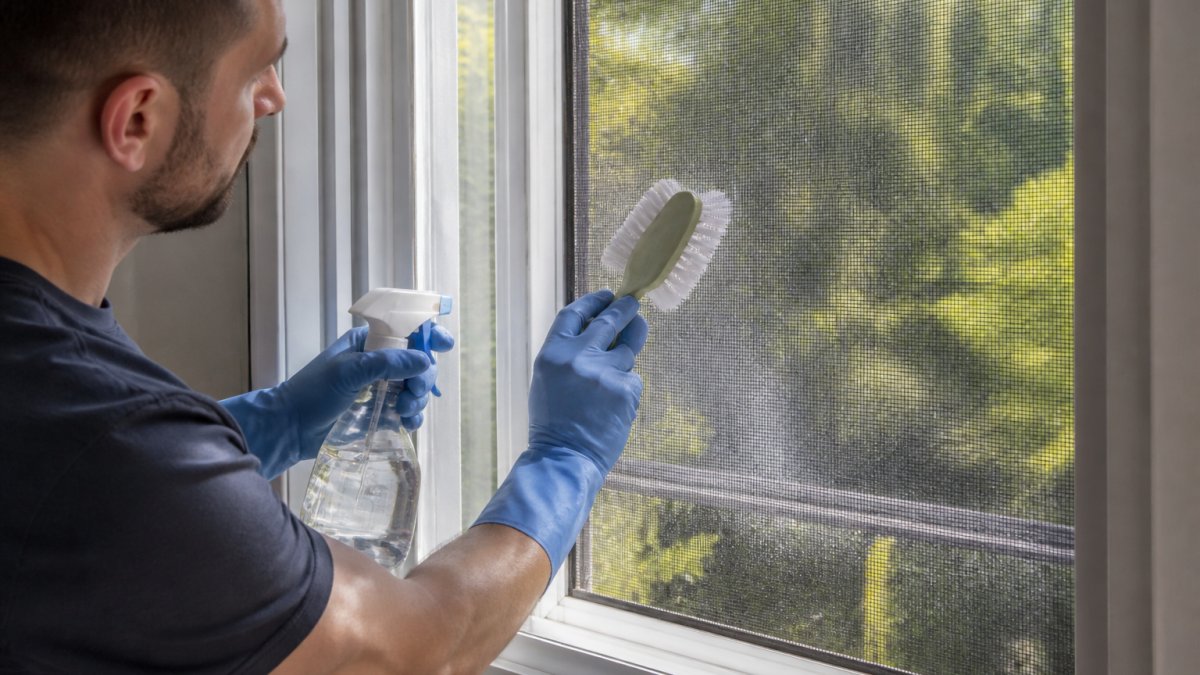
Cleaning Screens While Installed
Cleaning screens in place takes less time and works well for light pollen accumulation. You’ll need a soft brush, a spray bottle, and warm water.
Start by gently brushing the screen with a soft-bristled brush. Use short, gentle strokes to avoid damaging the mesh. Brush both sides if you can reach them. This removes loose pollen and dust.
Next, fill a spray bottle with warm water and a few drops of mild dish soap. Spray the screen lightly and let the soapy water sit for a minute. This breaks down pollen particles and helps them rinse away more easily.
Rinse thoroughly with clean water from a garden hose or spray bottle. Use low pressure to avoid pushing water through the mesh and into your home. Spray from the outside, letting water run down naturally.
Allow the screen to air-dry completely before closing the window. Drying takes 30 minutes to an hour depending on humidity and temperature. Never close a wet screen, as trapped moisture can promote mold growth.
This method works best for light cleaning during the pollen season. For heavier buildup, removal and deeper cleaning produces better results.
Cleaning Removed Screens
Removing screens allows you to clean both sides thoroughly. The process takes more time but handles stubborn pollen and dust buildup effectively.
To remove a screen safely, gently push up from the inside while supporting the frame. Most screens slide up and out of their tracks.
Rinse both sides with a garden hose using moderate water pressure. Start from the top and work downward. This removes most loose pollen and debris.
For stuck-on particles, mix warm water with a small amount of mild soap or white vinegar. Use a soft brush to gently scrub the mesh on both sides.
Rinse again with clean water until no soap residue remains. Shake gently to remove excess water.
Dry the screens completely in a shaded area before reinstalling. Place them flat or lean them against a wall where air can circulate freely.
Once dry, reinstall screens by sliding them back into their tracks. Push down firmly until they seat properly in the frame.
Window Screen Cleaning Frequency During Pollen Seasons
How often you clean screens depends on your local pollen levels and how much time you spend with windows open. During peak pollen season, many people benefit from cleaning screens every 2-4 weeks.
If you live in an area with high pollen counts during spring or fall, start checking your screens weekly. Look for visible pollen accumulation on the mesh. If you see a light coating, it’s time to clean. Light cleaning with a brush and spray bottle takes 10-15 minutes per window.
During low pollen periods, monthly cleaning usually suffices. In winter or dry seasons when pollen counts drop, you might clean screens only once a month or less frequently.
Consider your personal sensitivity too. People with severe allergies or asthma benefit from more frequent cleaning. Those with mild symptoms might clean less often. Your symptoms should guide your schedule.
Keep a simple checklist:
- Check screens weekly during peak pollen season
- Clean when you see visible pollen buildup
- Clean at least monthly during moderate pollen periods
- Clean before opening windows after a windy day
- Deep clean screens at the start and end of pollen season
This preventive approach keeps screens functioning as a first line of defense against airborne particles.
Preventing Pollen from Sticking to Screen Mesh
Beyond regular cleaning, you can take steps to make pollen less likely to stick to your screens in the first place. The goal is reducing the surface area where particles accumulate.
Dust-Repellent Treatments
Some products create a thin coating on screen mesh that repels dust and pollen. These treatments reduce how much particles stick to the surface, making screens stay cleaner longer between cleanings.
Dust-repellent sprays designed for screens work by creating a slippery surface. Pollen particles slide off more easily rather than clinging to the mesh. The effect gradually diminishes with time and weathering, so reapplication may be needed every few months.
To apply a dust-repellent treatment:
- Clean the screen thoroughly first
- Allow it to dry completely
- Follow the product instructions for application
- Reapply according to the manufacturer’s schedule
Not all treatments work equally well. Test on one screen first before treating all your windows. Some people find these products noticeably reduce cleaning frequency. Others see minimal difference. Results vary based on your local climate and pollen types. Persistent accumulation often necessitates more thorough maintenance techniques, such as those detailed in professional window cleaning practices for the Palouse.
Fine Mesh vs. Standard Screens
Standard window screens use mesh with openings around 0.01 inches. Fine mesh screens have smaller openings, typically 0.005 inches or less. The smaller openings block more pollen and fine dust while still allowing air to flow through.
Fine mesh screens catch more particles before they enter your home. They do restrict airflow slightly compared to standard mesh. Most people don’t notice a significant difference in ventilation, but it exists.
The trade-off matters for your specific situation. If you want maximum pollen blocking and don’t mind slightly reduced airflow, fine mesh is worth considering. If you prioritize fresh air circulation and don’t mind cleaning screens more often, standard mesh works fine.
Fine mesh screens also offer better insect protection, blocking no-see-ums and other tiny flying insects that standard screens allow through.
Replacing screens with fine mesh is a one-time investment that pays dividends throughout pollen season. New screens cost more upfront but last several years with proper care.
How to Keep Pollen Out of the House Beyond Window Screens
Window screens alone can’t block all pollen. Particles enter through doors, gaps around frames, and ventilation systems. A comprehensive approach combines multiple strategies.
Seal gaps around window frames and door frames with weatherstripping. Even small openings let pollen slip through.
Keep windows closed during peak pollen hours, typically early morning when pollen counts peak. Opening windows in late afternoon or evening when counts drop reduces pollen entry.
Use your home’s HVAC system strategically. If you have central air conditioning, keep windows closed and rely on filtered indoor air. Window air units should have clean filters to block incoming pollen.
Wash clothes and shower after spending time outdoors during high pollen days. Pollen clings to hair and clothing. Removing these items keeps pollen from spreading throughout your home.
Maintain indoor humidity between 30-50%. Low humidity allows pollen to remain airborne longer inside your home. Higher humidity helps particles settle faster, reducing how long they stay suspended in the air you breathe.
These steps work together to reduce pollen levels in your home. Combined with clean window screens, they create a healthier indoor environment.
Using an Air Purifier for Pollen as Your Second Line of Defense
Window screens and preventive measures reduce pollen entry, but some particles always make it inside. An air purifier captures pollen that escapes through screens and other entry points. It’s your second line of defense against airborne particles.
A quality air purifier removes pollen, dust mites, pet dander, mold spores, and smoke from your indoor air. It works continuously to clean the air you breathe, reducing allergy symptoms and respiratory irritation.
The Aero Essence LLC SR100 handles nine distinct types of pollutants, including pollen and fine dust that window screens miss.
For homes with severe pollen problems or residents with asthma, an air purifier transforms indoor air quality. It captures particles that screens let through and provides continuous protection rather than relying on seasonal cleaning schedules.
Position your air purifier in the room where you spend the most time. Bedrooms are often the priority, as clean air during sleep helps reduce nighttime allergy symptoms. Living areas and home offices are secondary choices.
An air purifier works best when windows and doors are closed, creating a controlled indoor environment. It complements clean screens rather than replacing them, use both strategies together for optimal results.
Common Mistakes to Avoid When Managing Window Screen Pollen
Many people inadvertently reduce their screens’ effectiveness or damage them while cleaning.
Don’t use high-pressure water when cleaning screens. Pressure washers or strong hose spray can tear the mesh or bend the frame.
Avoid abrasive scrubbing tools. Steel wool, rough brushes, or aggressive scrubbing damages the mesh.
Don’t ignore wet screens. Closing a window with a wet screen traps moisture that promotes mold growth and damages the frame material.
Don’t wait until screens are completely clogged before cleaning. Heavy pollen buildup becomes harder to remove and restricts airflow more severely.
Don’t use harsh chemicals. Bleach, strong degreasers, and corrosive cleaners damage screen materials. Mild dish soap and water handle pollen cleaning effectively.
Don’t neglect the frame. While cleaning mesh, also wipe the frame with a damp cloth.
Don’t forget to check both sides. Pollen settles on both the inside and outside of screens. Clean both surfaces for maximum effectiveness.
Avoiding these mistakes keeps your screens in good condition and maintains their ability to reduce pollen entry.
Window screens and regular cleaning form the foundation of pollen control, but they’re part of a larger strategy.
| Strategy | Frequency | Best For |
|---|---|---|
| Light screen cleaning | Every 2-4 weeks | Removing loose pollen during pollen season |
| Deep screen cleaning | Monthly or seasonally | Heavy pollen buildup or spring/fall preparation |
| Dust-repellent treatment | Every 3-6 months | Reducing pollen adhesion between cleanings |
| Air purifier operation | Continuous | Capturing pollen that screens miss |
| HVAC filter replacement | Monthly during pollen season | Maintaining filtered indoor air quality |
Frequently Asked Questions
How often should I clean window screens during pollen season?
During peak pollen season, clean your screens every 1-2 weeks. In areas with high pollen counts, weekly cleaning prevents excessive buildup that can reduce airflow and allow particles to enter. Outside pollen season, monthly cleaning is typically sufficient. Check your screens after windy days or heavy rain, as these conditions accelerate pollen and debris accumulation on the screen mesh.
Can I use a vacuum to clean pollen off window screens?
Yes, a handheld or portable vacuum with a soft brush attachment works well for removing loose pollen and dust from screens. Use low suction to avoid damaging the screen mesh. This method is fastest for light buildup. For heavier accumulation or sticky residue, follow vacuuming with a rinse using warm water and mild soap for thorough cleaning.
Do window screens block pollen, and how effective are fine-mesh screens?
Standard window screens block larger debris but allow many fine pollen particles to pass through. Fine-mesh screens (with smaller openings) capture significantly more pollen and dust while still maintaining reasonable airflow. However, no screen blocks 100% of airborne particles. Fine-mesh screens require more frequent cleaning because pollen accumulates faster. Pairing upgraded screens with an air purifier for pollen provides the most comprehensive protection.
What’s the best cleaning solution for removing pollen from window screens?
A mixture of warm water and mild dish soap is safe and effective. You can also use equal parts white vinegar and water for stubborn buildup. Avoid harsh chemicals that can damage the screen material. Apply the solution with a soft brush or cloth, then rinse thoroughly with clean water. Air-dry screens in a shaded area before reinstalling to prevent water spots and ensure the mesh dries completely.