Best Air Purifier for Allergies Cost Guide 2026
Table of Contents
- How We Tested Air Purifiers for Allergy Relief
- What to Look for in the Best Air Purifier for Allergies Cost
- Top Air Purifiers for Allergies: Comparison and Pricing
- HEPA Filter Replacement Cost: What to Expect
- Best Budget Air Purifiers for Allergies
- Air Purifier Energy Consumption: Watts and Annual Costs
- Placement Tips for Allergy Relief
- Conclusion
- Frequently Asked Questions
Last Updated: September 28, 2026
How We Tested Air Purifiers for Allergy Relief
Finding the best air purifier for allergies cost balance starts with honest testing. At Aero Essence LLC, we evaluate purifiers on particulate capture, noise, and real annual ownership cost.
When comparing purifiers, divide the annual filter cost by 12 and add it to your mental monthly budget. A unit that looks affordable upfront often isn’t once you account for the filter replacement cycle.
What to Look for in the Best Air Purifier for Allergies Cost
The best air purifier for allergies cost decision comes down to three specs: filtration type, clean air delivery rate, and room coverage. Get these right and you avoid overpaying for capacity you don’t need.
HEPA Filtration and CADR Ratings
True HEPA filtration captures at least 99.97% of airborne particles down to 0.3 microns. (the EPA) That threshold matters because pollen, pet dander, dust mites, and mold spores all fall within or above that range.
Room Size and Air Changes Per Hour
Air changes per hour (ACH) measures how many times a purifier cycles the full volume of air in a room. For allergy relief, aim for at least four ACH where you spend the most time.
Buying a purifier rated for a smaller room than yours is the most common mistake. The unit runs constantly at maximum fan speed, wears out its filter faster, and never quite keeps up with allergen levels.
Top Air Purifiers for Allergies: Comparison and Pricing
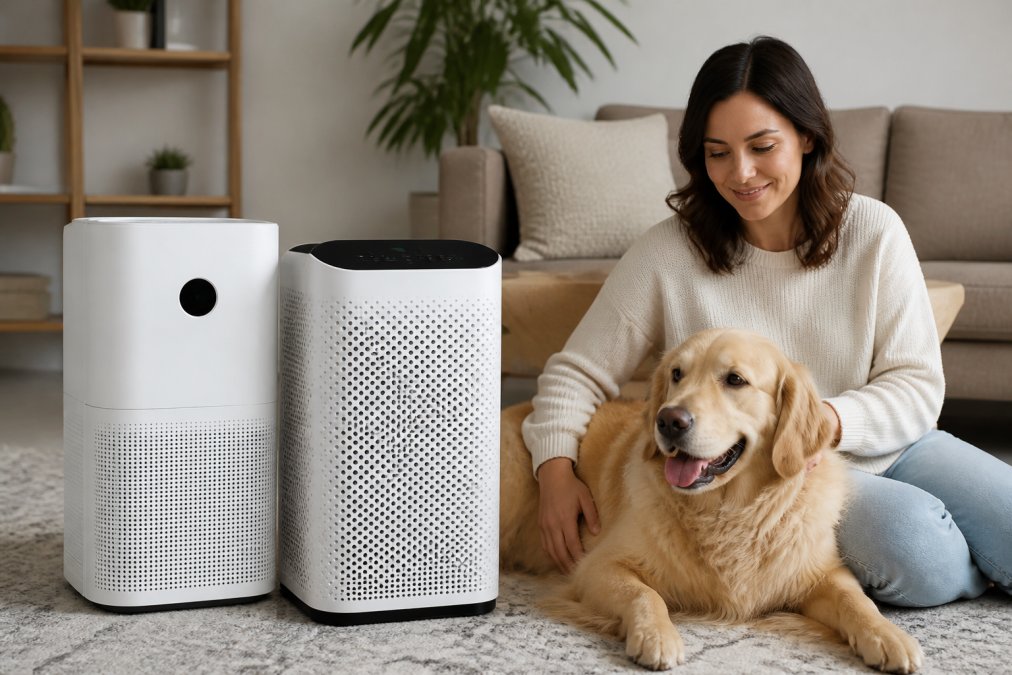
Here’s how the leading options stack up on features, filtration, and cost. Pricing shown reflects manufacturer starting prices where available.
| Model | Starting Price | Filtration | Best For |
|---|---|---|---|
| Aero Essence SR100 | See site for pricing | Nine-pollutant filtration | Pet dander, mold, smoke |
| Dyson HushJet HJ10 | $350 | Advanced HEPA | Small spaces, quiet operation |
| Coway Airmega Mighty2 | $269.99 | High-efficiency particulate | Small to medium rooms |
| NuWave OxyPure | Contact for pricing | Multi-stage | Severe allergy sufferers |
| PRIMEPLUS P280 | $129.99 | H11 HEPA | Strict budgets |
| Coway Airmega 50 | Contact for pricing | Simplified | Budget-conscious buyers |
Aero Essence SR100
The SR100 targets nine pollutant types, including dust mites, pet dander, pollen, mold spores, and smoke. For households juggling multiple allergy triggers, that breadth matters more than a single high CADR number.
Dyson HushJet Purifier Compact (HJ10)
Dyson’s compact HJ10 brings advanced HEPA filtration into a small footprint, built for tight spaces where a full-size unit won’t fit, with quiet overnight operation.
Coway Airmega Mighty2
The Mighty2 hits a strong balance of performance and cost at $269.99. High-efficiency particulate filtration handles small to medium rooms well, and Coway’s reliability record is solid.
NuWave OxyPure
NuWave’s OxyPure earns its place through a very high clean air delivery rate and multi-stage filtration. Sensors monitor air quality in real time and adjust automatically.
PRIMEPLUS P280
At $129.99, the P280 is the entry point for budget buyers: an H11 HEPA filter, three fan speeds, a timer, and a child lock.
Coway Airmega 50
The Airmega 50 strips things down to essentials: simplified filtration, energy-efficient operation, and a compact footprint, with simpler maintenance than the Mighty series.
HEPA Filter Replacement Cost: What to Expect
HEPA filter replacement cost is the hidden expense that separates a good deal from a bad one. Frequency depends on usage, air quality, and filter design. The number that decides affordability is three-year cost of ownership, retail price plus every filter you’ll buy.
What Replacement Filters Actually Cost
Filter pricing varies widely by brand and type. Here’s the range most buyers encounter:
- Budget H11/H13 HEPA filters (PRIMEPLUS-class units): roughly $20-$40 per replacement, often sold in multi-packs that lower the per-filter cost.
- Mid-tier True HEPA filters (Coway Airmega-class units): roughly $40-$80 per replacement, with carbon layers adding to the price.
- Premium multi-stage filters (Dyson, NuWave-class units): roughly $60-$120 per replacement, sometimes split across separate HEPA and carbon cartridges.
- Washable pre-filters: $0 ongoing if you clean them monthly; $10-$25 if you prefer to replace rather than rinse.
Three-Year Cost of Ownership: The Calculation Most Buyers Skip
Here’s the math that separates a real bargain from a trap: retail price, plus annual filter cost times three, plus a modest electricity estimate.
| Cost Component | Budget Unit (~$130) | Mid-Tier Unit (~$270) | Premium Unit (~$350+) |
|---|---|---|---|
| Retail price | $130 | $270 | $350 |
| Filter cost per year | ~$30 | ~$60 | ~$90 |
| 3-year filter total | ~$90 | ~$180 | ~$270 |
| 3-year electricity (moderate use) | ~$30-$50 | ~$40-$70 | ~$50-$90 |
| 3-year total | ~$250-$270 | ~$490-$520 | ~$670-$710 |
Before you buy, look up the replacement filter on the manufacturer’s site and note the price and recommended replacement interval. Multiply the price by the number of replacements per year, then by three. That number, not the sticker price, is your real cost.
What Drives Your Real Replacement Cost
Three things move the number:
- Filter type and design: True HEPA costs more than H11 or HEPA-type alternatives but lasts longer and captures finer particles. Multi-stage units with separate carbon cartridges cost more per year because each stage has its own interval.
- Usage intensity: Running 24/7 at high fan speed shortens filter life considerably. A unit mostly on low or auto mode can stretch a 6-month filter to 9 or 12 months.
- Environment: Homes with pets, smokers, or wildfire smoke burn through filters faster. A single long-haired dog can cut HEPA life by a third or more in a small room.
Allergy-Specific Filter Considerations
Not all allergens load a filter the same way. Pollen particles are relatively large and get caught in the pre-filter, so a washable pre-filter does real work during pollen season. Pet dander is smaller and stickier, clogging HEPA media faster than dust.
Before buying any purifier, price out a year of replacement filters and multiply by three. A filter life indicator on the unit helps, but the annual cost is what determines whether a “budget” model stays budget. The cheapest purifier to buy is rarely the cheapest to own.
Best Budget Air Purifiers for Allergies
The best budget air purifiers for allergies prove effective filtration doesn’t require a premium price. Two models stand out.
Air Purifier Energy Consumption: Watts and Annual Costs
Air purifier energy consumption varies widely by fan speed and motor design. A unit at low speed might draw a fraction of what it pulls at maximum, and for allergy sufferers running 24/7 during pollen season or wildfire smoke, that difference compounds over a year.
Typical Wattage by Fan Speed
Most residential HEPA purifiers fall into a predictable wattage band. Exact numbers vary, but the pattern is consistent:
- Low speed: roughly 5-20 watts, comparable to a LED light bulb.
- Medium speed: roughly 20-50 watts, comparable to a laptop charger under load.
- High speed: roughly 50-120 watts, comparable to a small fan or a bright incandescent bulb.
- Turbo/boost mode (where available): up to roughly 150 watts on larger units.
Turning Watts Into Dollars
To estimate annual cost, multiply wattage by daily hours, divide by 1,000 for kilowatt-hours (kWh), then multiply by your electricity rate. The national average has hovered around 16-17 cents per kWh recently, but rates vary, check your own bill.
- 30 watts × 24 hours = 720 watt-hours per day
- 720 ÷ 1,000 = 0.72 kWh per day
- 0.72 × 365 = ~263 kWh per year
- 263 × $0.16 = roughly $42 per year
Energy Star and What It Actually Tells You
Energy Star certified models meet efficiency standards set by the EPA Energy Star program, which helps you compare running costs across brands. The certification doesn’t guarantee better filtration, but it does signal lower electricity draw for a given clean air delivery rate.
Noise, Speed, and the Allergy Trade-Off
Fan speed, energy use, and noise are directly linked: higher speeds clean more air, draw more watts, and produce more decibels. For allergy relief, run the unit fast enough to hit your target air changes per hour without making the room unusable.
If your utility offers time-of-use rates, running the purifier on high during off-peak hours and low during peak hours can shave a meaningful amount off the annual bill, especially for units run continuously.
Smart Features and Their Energy Impact
Smart home integration and air quality sensors help here. A unit that drops to low speed when air is clean uses less power than one running flat out all day, and scheduling lets you pre-clean a bedroom before sleep, then drop to a quiet low setting overnight.
Placement Tips for Allergy Relief
Placement determines whether your purifier actually reduces allergen levels in the air you breathe. The wrong spot wastes filtration capacity.
Conclusion
Getting the best air purifier for allergies cost balance right means looking past the sticker price to filtration quality, room coverage, and annual filter expense. The wrong unit wastes money twice: at purchase, and every time you replace a filter that never solved the problem.
Frequently Asked Questions
What is the best affordable air purifier for people with allergies?
The PRIMEPLUS P280 at $129.99 and Coway Airmega 50 offer solid HEPA filtration for allergy relief on a tight budget. Both capture pollen, pet dander, and dust mites effectively. For under $300, the Coway Airmega Mighty2 at $269.99 provides higher CADR and better coverage for medium rooms. Prioritize True HEPA filters and a CADR that matches your room size. Remember that filter replacement costs add up, so check annual filter prices before buying.
What are the hidden costs of owning an air purifier?
Beyond the purchase price, you’ll pay for HEPA filter replacement cost, which can run $30 to $100 per filter and may need changing every 6 to 12 months. Energy consumption adds roughly $50 to $150 per year depending on wattage and usage. Some units also require pre-filter cleaning or carbon filter changes. Always factor in these ongoing expenses when comparing the best air purifier for allergies cost, as they can double your first-year investment.
Do expensive air purifiers work better for allergies than cheaper ones?
Not always. A $130 PRIMEPLUS with an H11 HEPA filter can capture many allergens, but models like the NuWave OxyPure or Aero Essence SR100 offer high-performance features. For severe allergies or larger rooms, the extra cost may be justified. For mild symptoms in a small bedroom, a budget unit may suffice. Focus on CADR, filter quality, and room size rather than price alone.
How often do I need to replace the HEPA filter and what does it cost?
Most HEPA filters last 6 to 12 months, depending on usage and air quality. Replacement filters typically cost $30 to $100 each. For example, a Coway Airmega Mighty2 filter runs about $50 and lasts up to a year. Check your unit’s filter life indicator and budget $50 to $150 annually for replacements to maintain peak allergy relief.