
Natural Remedies for Pet Allergy Relief That Work
Last Updated: November 2, 2026
Quick Summary
Natural remedies for pet allergy relief can ease mild symptoms, but they rarely cure the allergy itself. Most people with pet allergies react to proteins in pet dander, saliva and urine, which no herb or oil removes from the immune system. Reducing dander at home usually helps more than any supplement.
- Keep pets out of the bedroom, since you spend six to eight hours there nightly.
- Vacuum with a sealed HEPA system twice weekly in high-traffic rooms.
- Wash pet bedding and soft throws weekly in hot water, followed by a full dry cycle.
- Never give pets human medication or apply essential oils without a vet’s approval.
- See a veterinarian for persistent itching, hair loss, open sores, or breathing trouble after a supplement.
Table of Contents
- Why Natural Remedies for Pet Allergy Relief Need Realistic Expectations
- Recognizing Pet Allergy Symptoms and Their Triggers
- How to Reduce Pet Dander in the Home
- Dog Skin Allergy Treatment at Home: Baths, Topicals and Grooming
- Dog Seasonal Allergies Home Remedies: Supplements and Herbs
- Pet Allergy Medicine for Humans: What Is and Isn’t Safe for Your Pets
- Safety Warnings, Breed Differences and When to See a Veterinarian
- Choosing Your Next Step Toward Cleaner Air at Home
- Frequently Asked Questions
Why Natural Remedies for Pet Allergy Relief Need Realistic Expectations
Natural remedies for pet allergy relief can ease mild symptoms, but they rarely cure the allergy itself. Most people with pet allergies are reacting to proteins in pet dander, saliva and urine, and no herb or oil removes those proteins from the immune system. Set your expectations accordingly before you buy anything. Because natural allergy remedies can only help manage symptoms rather than remove the proteins that trigger them, adults may find it useful to consider how those limits shape their approach to pet allergies.
The research base is thin. There are currently no specific standardized guidelines for treating animal allergies, so avoidance and topical antihistamines remain the main approaches doctors discuss NIH review of animal allergy management. Progress on dog allergy treatments has also lagged behind work on cat, grass and dust mite allergies NIH review of dog allergy diagnosis and treatment.
Below, we cover practical steps for symptoms, dander reduction, skin care, supplements, safety and when to call a vet.
Recognizing Pet Allergy Symptoms and Their Triggers
Pet dander is tiny flakes of skin shed by cats, dogs and other animals. It carries allergy-causing proteins that float in the air and settle on furniture, carpets and bedding.
Common signs of a pet allergy include:
- Sneezing and a runny or stuffy nose
- Itchy, watery eyes
- Coughing or wheezing
- Itchy skin or hives after contact
Because these symptoms overlap with colds and seasonal allergies, track when they flare. Symptoms that worsen at home or after time with a pet point toward pet dander.
How to Reduce Pet Dander in the Home
Cutting dander at the source works better than treating symptoms after the fact, but the details matter more than the checklist. Dander particles are small and sticky; they cling to fabric, ride on air currents, and resettle for hours after a pet leaves a room. That is why a single vacuum pass or a short air-cleaner run rarely moves the needle.
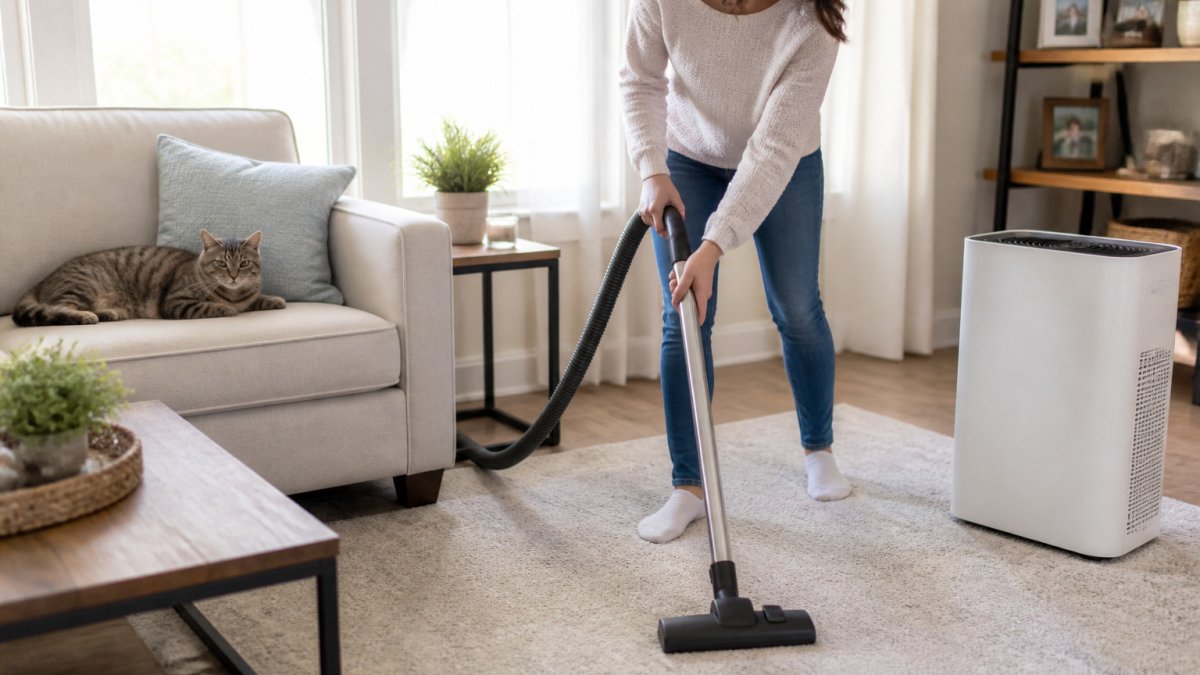
Work in this order, from highest impact to lowest:
- Keep pets out of the bedroom. A closed door is the single most effective barrier, because you spend six to eight hours there. If a pet already sleeps on the bed, wash all bedding in hot water and vacuum the mattress before reinstating the rule.
- Vacuum with a sealed HEPA system, twice weekly in high-traffic rooms. A HEPA filter traps particles; a sealed system keeps them from blowing back out. Standard bagless vacuums without HEPA can stir up more dander than they remove.
- Wash pet bedding and soft throws weekly in hot water. Dander is water-soluble enough that a hot wash cycle plus a full dry cycle removes most of it.
- Run a HEPA air cleaner sized to the room. Match the unit’s clean air delivery rate to the square footage; an undersized unit in a large room mostly recirculates already-clean air. Place it where the pet spends time and where you sit, not in a corner behind furniture.
- Reduce reservoirs. Carpet, upholstered furniture, heavy drapes and fabric blinds hold dander. Hard flooring, washable throw rugs and wipeable surfaces cut the load. If you keep carpet, a vacuum with a powered brush head lifts more embedded dander than suction alone.
- Groom pets outdoors or in a well-ventilated space. Brushing removes loose dander before it settles indoors. Wipe paws and coat after outdoor time during pollen season.
A HEPA air cleaner pulls airborne particles out of the room rather than letting them settle.
The steps below run from highest impact to lowest, so you can see where to start.
| Step | What to do | Time or frequency |
|---|---|---|
| Keep pets out of the bedroom | Close the door; wash bedding and vacuum the mattress if a pet already sleeps there | Six to eight hours nightly |
| Vacuum with sealed HEPA | Use a HEPA system with a sealed design in high-traffic rooms | Twice weekly |
| Wash pet bedding | Wash bedding and soft throws in hot water, then full dry cycle | Weekly |
| Run a HEPA air cleaner | Size the unit to the room; place where the pet spends time | Continuous use |
| Reduce reservoirs | Prefer hard flooring, washable rugs and wipeable surfaces over carpet and heavy fabric | Ongoing |
| Groom outdoors | Brush pets outside or in a ventilated space; wipe paws and coat after outdoor time | After walks in pollen season |
Dog Skin Allergy Treatment at Home: Baths, Topicals and Grooming
Dog skin allergies often show up as itching, redness and flaky patches. Gentle home care can soothe mild cases, but it does not replace a veterinary diagnosis.
Regular grooming is a common first step, and bathing can remove allergens from the coat. Wipe your dog’s paws and coat after walks during high-pollen seasons.
Topical products should be used only as directed by your vet. Never apply human creams or essential oils to a dog’s skin without asking first, because some ingredients are toxic to pets.
Dog Seasonal Allergies Home Remedies: Supplements and Herbs
Some owners look to supplements and herbs for dogs with seasonal allergies. The evidence is mixed, and the safety picture is more important than most lists admit. Treat these as complementary support alongside veterinary care, not as a replacement for diagnosis or prescribed treatment.
Omega-3 fatty acids. Fish oil is the most commonly used supplement for allergy-related skin irritation. It supports the skin barrier and may modestly reduce itching, but it takes weeks to build up and is not a substitute for flea control, diet trials, or prescription therapy. Veterinary wellness platforms list omega-3s as a standard natural option Vetster guide to natural pet skin care.
Stinging nettle. In one study, 58% of participants with allergic rhinitis eased their symptoms after taking 300 mg of freeze-dried stinging nettle daily Found Animals review of herbal allergy supplements. That study was in people, not dogs, so treat the result as suggestive rather than proven for pets.
Soothing topicals. Herbs like aloe vera and lavender can soothe skin, but they may not address the underlying cause of the allergy PetMD overview of natural remedies and veterinary oversight. Never apply a product to broken skin without veterinary guidance.
Safety warnings most remedy lists skip:
- Essential oils are not automatically safe for pets. Many concentrated oils, including tea tree, eucalyptus, pennyroyal, wintergreen and citrus oils, are toxic to dogs and especially cats when ingested, applied to skin, or diffused in a closed room. Cats lack the liver enzymes to clear many compounds that dogs tolerate.
- Herbs can interact with medication. Nettle, ginkgo, garlic and others can affect clotting or blood pressure. If your pet takes prescription medication, ask your vet before adding anything.
- Dosing is weight- and species-specific. A dose studied in people tells you nothing about the right amount for a 12-pound dog or a cat.
- “Natural” does not mean unregulated. Supplements are not held to the same manufacturing standards as drugs, so purity and potency vary by brand.
Watch out: diffusing essential oils around cats or birds can cause respiratory and neurological signs even when the oil is not applied directly, ventilate and keep pets out of the room.
Check with your vet before starting any supplement, especially if your pet takes other medication or has liver, kidney or clotting concerns.
Pet Allergy Medicine for Humans: What Is and Isn’t Safe for Your Pets
Many people reach for their own allergy medicine when a pet causes symptoms. Some human medicines are safe for pets at the right dose, but others are dangerous. Certain decongestants and combination products can be toxic to dogs and cats.
Do not give your pet any human medication without a vet’s approval. The correct dose depends on your pet’s weight, age and health. Keep all human medicines stored out of reach.
For your own symptoms, talk with your doctor about options that suit your health history.
Safety Warnings, Breed Differences and When to See a Veterinarian
Breed matters. Some dogs and cats shed more dander, and coat type can change how much allergen reaches your home. No breed is truly allergen-free, despite marketing claims.
See a veterinarian if your pet has:
- Persistent itching, hair loss or open sores
- Skin infections or a strong odor
- Vomiting, lethargy or trouble breathing after a supplement or topical product
For people, seek medical care if you have wheezing, shortness of breath or symptoms that do not improve with home measures. Asthma and COPD make pet allergies more serious, so do not wait to get checked.
Choosing Your Next Step Toward Cleaner Air at Home
If pet dander is a daily problem, air cleaning is one of the most practical steps you can take. Filtration will not remove every allergen, but it reduces what you breathe in your main living spaces.
When you are ready to compare options, see our portable air cleaner picks for 2026. For a broader look at keeping indoor air clean, read our guide to reducing indoor allergens. If your symptoms match what you are experiencing, learn the signs of pet dander allergies and what pet dander is and why it triggers allergies.
The SR100 from Aero Essence LLC is designed to address nine types of pollutants in the home, including pet dander, dust mites, pollen, mold spores and smoke.
Frequently Asked Questions
How do you get rid of pet allergies naturally?
Natural approaches focus on reducing exposure rather than eliminating the allergy itself. Keep pets out of the bedroom, wash bedding weekly in hot water, groom dogs and cats regularly, and run a HEPA air purifier in the rooms you use most. Reducing dander in the home can ease symptoms for many people, but there is no standardized natural cure. Pet allergy cannot be fully reversed without medical guidance, so see an allergist if symptoms persist or worsen.
Are natural remedies safe for cats and dogs?
Some natural products are safe when used as directed, but others can cause harm. Herbs such as aloe vera and lavender can soothe skin yet may not address the underlying allergy, and some essential oils are toxic to cats. Always check with a veterinarian before giving any supplement, herb or topical product to your pet, especially if your animal is pregnant, very young, elderly or already on medication.
What should you do if you are allergic to your pet?
Start by confirming the allergy with an allergist, since symptoms like sneezing and itchy eyes can have other causes. Combine environmental controls such as HEPA filtration, frequent cleaning and keeping pets out of sleeping areas with over-the-counter antihistamines or nasal sprays your doctor recommends. Discuss long-term options with your physician, and do not stop prescribed treatment in favor of home remedies alone.
Can a home air purifier help with pet dander?
A HEPA air purifier can reduce airborne pet dander and other indoor allergens, which helps many people with pet allergies. The SR100 from Aero Essence LLC is designed to address nine types of pollutants, including pet dander, dust mites, pollen, mold spores and smoke, and it provides visual confirmation that purification is running. Results vary with room size and how often the unit runs, so check current specifications and pricing on the Aero Essence LLC website before buying.
