
Best Levoit Air Purifier Alternatives for Smoke
Table of Contents
- Why You Need an Air Purifier Alternative for Smoke
- HEPA Filter vs Activated Carbon for Smoke: Which Matters More
- How to Choose an Air Purifier for Wildfire Smoke
- Top Air Purifier Alternatives to Levoit for Smoke Removal
- Comparison Table: Smoke Removal Performance and Features
- Long-Term Cost of Ownership: Filter Replacement and Energy Use
- Placement Strategies for Maximum Smoke Removal
- Conclusion
Last Updated: August 27, 2026
Why You Need an Air Purifier Alternative for Smoke
Smoke exposure indoors creates a persistent problem that standard ventilation can’t solve. Whether from wildfires, cigarette smoke, or wood-burning stoves, airborne particles penetrate deep into your lungs and linger long after you stop smelling them.
A levoit air purifier alternative for smoke addresses a specific health challenge. Smoke contains particulate matter smaller than 2.5 microns (PM2.5), volatile organic compounds (VOCs), and odor molecules that require specific filtration technology (the EPA). Most budget models fail where it matters most: they can’t sustain effective filtration during heavy smoke events.
The real issue isn’t whether air purifiers work, it’s whether yours is built for smoke removal. A purifier designed for general dust won’t have enough activated carbon to neutralize smoke odors. One optimized for smoke might lack the particle sensor to confirm it’s working. This guide breaks down what separates an effective smoke purifier from one that just circulates air.
Smoke requires True HEPA filtration (for fine particles) and substantial activated carbon (for odors and VOCs). Most budget alternatives skimp on one or the other. The best choice depends on your room size, smoke intensity, and whether you need real-time air quality feedback.
HEPA Filter vs Activated Carbon for Smoke: Which Matters More
Both matter, but they handle different aspects of smoke. HEPA filter vs activated carbon for smoke performance depends on understanding what each technology does.
A True HEPA H13 filter traps 99.97% of airborne particles down to 0.3 microns, including smoke particles (the FDA). Without it, you’re just pushing smoke around the room.
Activated carbon addresses what HEPA can’t: the smell and chemical compounds. Smoke produces VOCs and odor molecules that pass straight through HEPA filters. Heavy smoke events require 10+ pounds of activated carbon to be effective (peer-reviewed research). The Austin Air HealthMate includes 15 pounds of activated carbon specifically for this reason.
You need both. The filtration sequence matters: pre-filter to catch larger debris, HEPA for fine particles, and activated carbon as the final stage. For wildfire smoke specifically, activated carbon becomes even more critical because wildfire smoke contains more VOCs than indoor cigarette smoke.
Check the carbon weight before buying. Anything under 5 pounds is insufficient for heavy smoke. If the manufacturer doesn’t list the carbon weight, that’s a red flag.
How to Choose an Air Purifier for Wildfire Smoke
Wildfire smoke demands specific specifications. Start with CADR (Clean Air Delivery Rate) for smoke. Look for a CADR of 200 or higher if your room is under 300 square feet.
Room coverage matters more during heavy smoke events than most guides acknowledge. If you’re in a smoke-prone area, choose a purifier rated for a room 20-30% larger than your actual space. This gives you headroom when air quality deteriorates.
Real-time air quality monitoring changes how you use the purifier. A visual display showing PM2.5 levels and particle count gives you confidence the device is working. The Aero Essence SR100 includes a laser particle sensor with a real-time particle count meter, displaying air quality in micrograms per cubic meter (µg/m³).
Noise levels matter if you’re running the purifier continuously. During wildfire season, you may run it 12+ hours daily. Sleep mode should operate at 43 decibels or lower.
Filter replacement frequency adds up over time. Smoke exposure accelerates filter degradation, so expect replacement every 4-8 months during heavy use. Factor this into your long-term budget.
Avoid purifiers with ionizers for smoke removal. Ionizers produce ozone as a byproduct, which is itself a respiratory irritant. During smoke events when your air quality is already compromised, adding ozone exposure is counterproductive.
Top Air Purifier Alternatives to Levoit for Smoke Removal
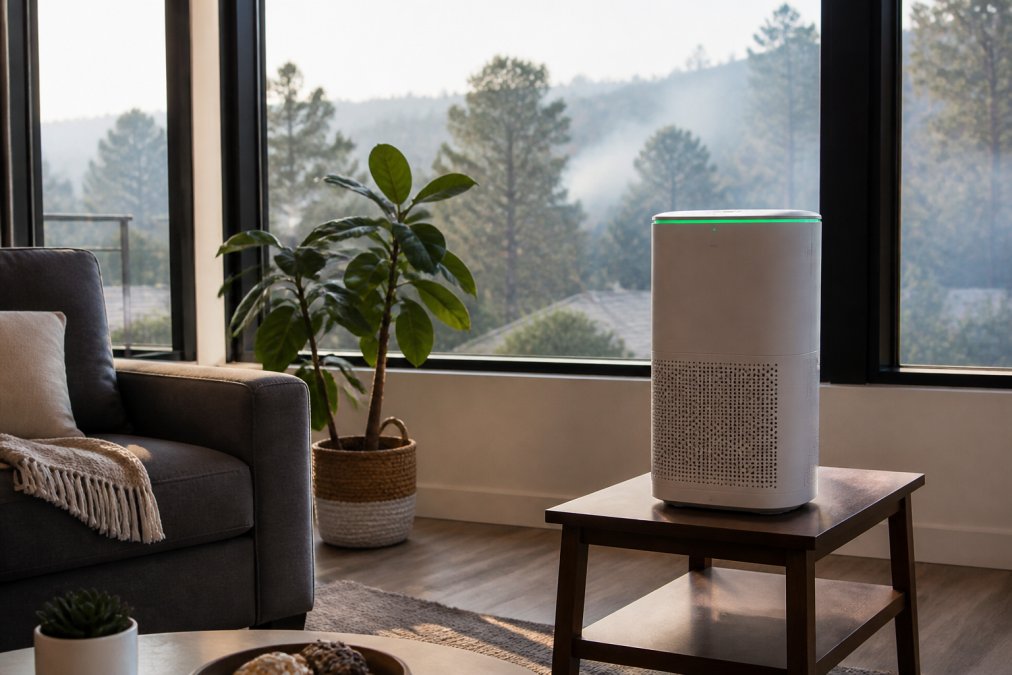
Aero Essence SR100: Real-Time Particle Monitoring for Smoke
The Aero Essence SR100 stands out because it gives you visual confirmation that the purifier is working. The laser particle sensor displays air quality in µg/m³, actual numerical feedback, not just a color-coded light. You see particles dropping in real time as the purifier runs.
The three-stage filtration system handles smoke comprehensively: a pre-filter for larger debris, a True HEPA H13 filter for fine particulates down to 0.3 microns, and activated carbon for odor and VOC removal. The device covers 129-161 square feet and operates at 43 decibels in sleep mode.
Auto mode adjusts fan speed based on real-time air quality readings, so during a smoke event, the purifier automatically ramps up when particles spike. The device addresses nine distinct types of pollutants, including dust mites, pet dander, pollen, mold spores, and smoke.
Pros:
- Real-time particle count display eliminates uncertainty about performance
- True HEPA H13 and activated carbon combination handles smoke comprehensively
- Quiet sleep mode (43 dB) supports continuous operation
- Auto mode responds to air quality changes without manual intervention
Cons:
- Room coverage limited to smaller spaces (129-161 sq ft)
- Pricing requires contacting the manufacturer
Austin Air HealthMate: Maximum Activated Carbon for Heavy Smoke
The Austin Air HealthMate is purpose-built for households dealing with daily indoor smoke exposure. Its defining feature is 15 pounds of activated carbon, significantly more than typical purifiers. This capacity handles sustained smoke exposure and VOC removal that would overwhelm lighter filters.
The True Medical Grade HEPA filter traps 99.97% of airborne particles down to 0.3 microns. The solid steel construction with powder-coated finish is built for durability and long-term continuous operation. The 360-degree air intake ensures efficient circulation regardless of placement.
One significant limitation: the HealthMate lacks smart features. No digital display, no real-time air quality monitoring, no Wi-Fi connectivity. You run the device on your chosen fan speed and trust that it’s working.
Pros:
- 15 pounds of activated carbon excels at smoke odor removal
- True Medical Grade HEPA filter for comprehensive particle capture
- Durable steel construction built for long-term use
- Made in the USA
- Designed for continuous operation in smoke-heavy environments
Cons:
- No real-time air quality display or smart features
- Higher price point than mainstream alternatives
- Lacks modern conveniences like Wi-Fi or app control
Coway Airmega 200M: Affordable Mid-Range Performance
The Coway Airmega 200M offers a practical middle ground for budget-conscious buyers. Its four-stage filtration system includes a pre-filter, deodorization filter, True HEPA filter, and bipolar ionizer. The CADR rating of 233 for smoke indicates solid performance in medium-sized rooms.
Real-time air quality monitoring with a color-coded display provides visual feedback without the cost of a laser particle sensor. Auto mode automatically adjusts fan speed in response to air quality changes.
Coverage extends to 361 square feet with air purification approximately 4.8 times per hour. The ionizer feature is optional, you can disable it if concerned about ozone production. Eco Mode conserves energy during periods of lower air quality concern.
Pros:
- Affordable entry point for smoke removal
- CADR of 233 for smoke indicates solid performance
- Real-time color-coded air quality display
- Covers up to 361 square feet
- Eco Mode reduces energy consumption
- Optional ionizer can be disabled
Cons:
- Ionizer produces ozone if enabled
- Filter replacement required every 6-12 months
- Less activated carbon than heavy-duty alternatives
Comparison Table: Smoke Removal Performance and Features
| Model | Coverage Area | Filtration Stages | Activated Carbon | Real-Time Monitoring | Noise Level (Sleep Mode) | Best For |
|---|---|---|---|---|---|---|
| Aero Essence SR100 | 129-161 sq ft | 3 (pre, HEPA H13, carbon) | Included | Laser particle sensor, µg/m³ display | 43 dB | Small rooms with visual feedback needs |
| Austin Air HealthMate | 1,500 sq ft | 4 (pre, medium particle, HEPA, carbon) | 15 lbs | No display | 42-66.5 dB | Heavy smoke exposure, larger spaces |
| Coway Airmega 200M | 361 sq ft | 4 (pre, deodorization, HEPA, ionizer) | Moderate | Color-coded display | 24-59.5 dB | Budget-conscious mid-range option |
Long-Term Cost of Ownership: Filter Replacement and Energy Use
Initial purchase price tells only half the story. Filter replacement costs accumulate quickly, especially during heavy smoke exposure when filters degrade faster.
The Aero Essence SR100 requires filter replacement every 4-8 months under heavy smoke use. The Austin Air HealthMate’s filters last up to 5 years under normal residential use. The Coway Airmega 200M requires replacement every 6-12 months depending on usage intensity.
Energy consumption varies significantly. The Coway Airmega 200M includes Eco Mode that reduces power draw during lower air quality periods. The Aero Essence SR100 uses auto mode to adjust fan speed based on real-time air quality, reducing energy waste when smoke levels drop.
Calculate your true cost by adding purchase price, estimated annual filter replacement costs, and annual energy consumption. A purifier costing more upfront but with longer filter life often costs less over five years than a cheaper model requiring frequent changes.
Long-term cost of ownership includes purchase price, filter replacement frequency, filter cost per replacement, and annual energy consumption. A purifier costing 30% more upfront can cost 20% less over five years if filters last twice as long.
Placement Strategies for Maximum Smoke Removal
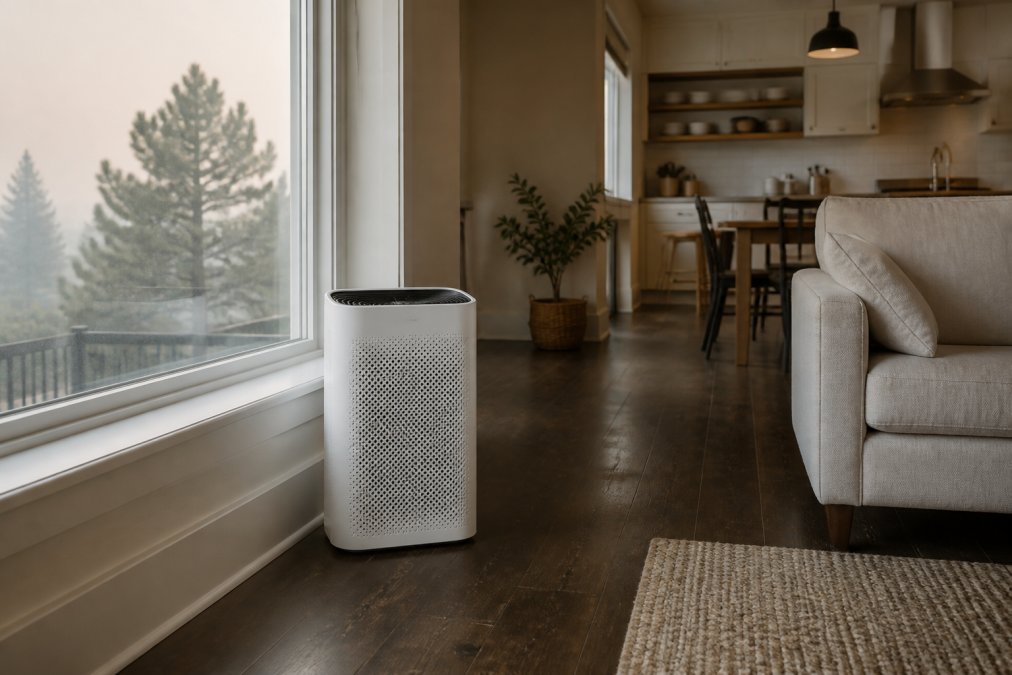
Placement determines whether your purifier reaches the smoke or just cycles the same air repeatedly. Position the purifier in the center of the room or along the main air circulation path. During smoke events, particles settle near windows and doors where outside air infiltrates. Placing the purifier between the smoke source and your main living area allows it to intercept particles before they spread.
Elevation matters. Smoke particles rise initially, then settle as they cool. Placing the purifier at breathing height (3-4 feet off the ground) captures particles as they circulate. Putting it on the floor reduces intake efficiency.
For open-concept spaces, one purifier may not cover the entire area effectively. Consider placement that allows the device to circulate air between connected spaces, or use multiple units if your room exceeds the purifier’s rated coverage area.
During wildfire smoke events, close windows and exterior doors to reduce outdoor air infiltration. Run the purifier continuously on auto mode, it will increase fan speed automatically as particle levels spike.
Avoid placing the purifier directly next to furniture, curtains, or walls that block air intake. Leave at least 12 inches of clearance around the device on all sides.
For bedrooms, place the purifier on a nightstand or dresser at head height rather than on the floor. This ensures you’re breathing cleaner air while sleeping.
Choosing the right air purifier alternative smoke solution means matching your specific situation to the device’s capabilities. If you need real-time confirmation that the purifier is working, the Aero Essence SR100 delivers that with its laser particle sensor and numerical air quality display. If you’re dealing with heavy daily smoke exposure and need maximum activated carbon capacity, the Austin Air HealthMate is purpose-built for that challenge. For budget-conscious buyers seeking solid mid-range performance, the Coway Airmega 200M balances cost and effectiveness.
The most important factor is choosing a purifier with sufficient activated carbon for smoke, a CADR rating appropriate for your room size, and ideally, real-time air quality feedback. At Aero Essence LLC, we built the SR100 specifically to address the frustration of not knowing whether your air purifier is working. That visual confirmation, combined with True HEPA H13 and activated carbon filtration, gives you confidence that your indoor air is genuinely improving during smoke events.
=== FAQ ANSWERS (audit these too, same rules) ===
[1] Q: Do air purifiers actually remove smoke particles or just odors?
A: True HEPA filters remove smoke particles down to 0.3 microns, capturing the particulate matter itself. Activated carbon filters remove smoke odors and volatile organic compounds (VOCs) separately. An air purifier alternative for smoke should include both stages. The Aero Essence SR100 combines True HEPA H13 filtration with activated carbon, addressing both particles and odors. CADR (Clean Air Delivery Rate) ratings specifically measure smoke particle removal, higher scores mean faster purification of smoke-laden air.
[2] Q: What CADR rating do I need for wildfire smoke in my home?
A: CADR ratings measure how quickly a purifier cleans smoke from a room. For light smoke exposure, a CADR of 100+ is adequate. For moderate to heavy wildfire smoke, aim for CADR 200+. The Coway Airmega 200M delivers a CADR of 233 for smoke, making it suitable for wildfire-prone areas. Room size matters too, a purifier rated for 300 square feet won’t handle a 500-square-foot open space. Match the CADR rating to both your smoke exposure level and room dimensions for effective results.
[3] Q: How often do I replace filters, and what’s the real cost over a year?
A: Pre-filters last 2-4 weeks in smoky conditions. HEPA filters typically last 6-12 months depending on air quality and usage. Activated carbon filters need replacement every 3-6 months when dealing with heavy smoke. Filter costs vary by model, budget $50-150 per replacement set. Heavy smoke exposure accelerates filter degradation, so expect higher replacement frequency than standard household use. Calculate annual filter costs before purchasing, as this significantly impacts long-term ownership expenses for smoke-heavy environments.
[4] Q: Will an air purifier alternative to Levoit actually reduce pet dander and mold along with smoke?
A: Yes, if it includes True HEPA filtration. HEPA filters capture pet dander (2.5-10 microns), mold spores (10-40 microns), and smoke particles (0.3+ microns) in a single pass. The Aero Essence SR100 addresses all nine types of pollutants including dust mites, pet dander, pollen, and mold spores while removing smoke. However, mold growth requires humidity control and ventilation fixes, an air purifier removes airborne spores but won’t eliminate mold at its source. For mold problems, combine air purification with dehumidification and moisture management.
Frequently Asked Questions
Do air purifiers actually remove smoke particles or just odors?
True HEPA filters remove smoke particles down to 0.3 microns, capturing the particulate matter itself. Activated carbon filters remove smoke odors and volatile organic compounds (VOCs) separately. An air purifier alternative for smoke should include both stages. The Aero Essence SR100 combines True HEPA H13 filtration with activated carbon, addressing both particles and odors. CADR (Clean Air Delivery Rate) ratings specifically measure smoke particle removal, higher scores mean faster purification of smoke-laden air.
What CADR rating do I need for wildfire smoke in my home?
CADR ratings measure how quickly a purifier cleans smoke from a room. For light smoke exposure, a CADR of 100+ is adequate. For moderate to heavy wildfire smoke, aim for CADR 200+. The Coway Airmega 200M delivers a CADR of 233 for smoke, making it suitable for wildfire-prone areas. Room size matters too, a purifier rated for 300 square feet won't handle a 500-square-foot open space. Match the CADR rating to both your smoke exposure level and room dimensions for effective results.
How often do I replace filters, and what's the real cost over a year?
Pre-filters last 2-4 weeks in smoky conditions. HEPA filters typically last 6-12 months depending on air quality and usage. Activated carbon filters need replacement every 3-6 months when dealing with heavy smoke. Filter costs vary by model, budget $50-150 per replacement set. Heavy smoke exposure accelerates filter degradation, so expect higher replacement frequency than standard household use. Calculate annual filter costs before purchasing, as this significantly impacts long-term ownership expenses for smoke-heavy environments.
Will an air purifier alternative to Levoit actually reduce pet dander and mold along with smoke?
Yes, if it includes True HEPA filtration. HEPA filters capture pet dander (2.5-10 microns), mold spores (10-40 microns), and smoke particles (0.3+ microns) in a single pass. The Aero Essence SR100 addresses all nine types of pollutants including dust mites, pet dander, pollen, and mold spores while removing smoke. However, mold growth requires humidity control and ventilation fixes, an air purifier removes airborne spores but won't eliminate mold at its source. For mold problems, combine air purification with dehumidification and moisture management.
This article was written using GrandRanker