
How to Stop Pet Dander Buildup on Curtains and Drapes
Last Updated: November 6, 2026
Quick Summary
Stop pet dander curtains from becoming an allergen source by vacuuming them weekly with a brush attachment and deep vacuuming folds monthly, or twice weekly for heavy shedders. Keep a fixed schedule, since dander builds up slowly, and use a HEPA-filter vacuum when possible.
- Vacuum curtains with a brush attachment once a week as a baseline.
- Deep vacuum drapes, pleats, and valances every month.
- Heavy shedders should vacuum curtains twice a week and deep vacuum every two weeks.
- Check the HVAC filter monthly and inspect floor-length hems every two weeks.
- Check the care label before using any spray, and spot test hidden areas first.
Table of Contents
- Why Pet Dander Collects on Curtains and Drapes
- Set Up a Curtain-Specific Dander Prevention Schedule
- How to Remove Pet Dander from Fabric Without Damaging It
- How to Clean Curtains with Pet Hair Step by Step
- Choosing Pet Hair Resistant Curtains and Drapes
- Safe Use of DIY Sprays and Cleaning Products
- Checking Whether Your Prevention Routine Is Working
- Frequently Asked Questions
Why Pet Dander Collects on Curtains and Drapes
Pet dander is tiny flakes of skin that cats and dogs shed constantly. Readers curious about how airborne particles settle on window treatments can see a related guide, how pollen buildup forms on window screens.
Curtains work like a filter. They sit near open windows, heating and cooling vents, and the places where pets spend time.
Fabric surfaces hold on to particles for a simple reason. The loose weave and fibers of curtains trap flakes the way a sponge holds water.
- Dander lifts when pets move, sleep, or shake off
- Air currents from vents carry flakes toward window coverings
- Thick, pleated, and velvet drapes hold the most particles
Think of dander as a slow, steady build-up. Small amounts collect each day, and a few months later the pet dander curtains become a source of allergens rather than a place to avoid them.
Set Up a Curtain-Specific Dander Prevention Schedule
A fixed calendar rarely fits every home. A single cat that sheds lightly needs a different routine than two double-coated dogs in a house with a family member who has asthma. The schedule below is a starting point, but the real value comes from adjusting it to your pets, your fabrics, and your allergy situation.
Start With a Baseline Routine
Use this as your default before you customize it:
| Task | Baseline Frequency | Time Needed |
|---|---|---|
| Light vacuum of curtains with a brush attachment | Once a week | 5 to 10 minutes |
| Wipe down curtain rods, rings, and hardware | Every two weeks | 5 minutes |
| Deep vacuum of drapes, pleats, and valances | Every month | 15 to 20 minutes |
| Wash washable curtains | Every 1 to 3 months | Depends on the load |
| Check the HVAC filter | Every month | 2 minutes |
| Inspect curtain hems and floor-length panels | Every two weeks | 3 minutes |
Start in the rooms where pets spend the most time: living rooms, bedrooms, and any room with a pet bed or favorite windowsill. Once that routine feels normal, add the remaining rooms.
Adjust Frequency for Shedding Level
Shedding is the biggest driver of how fast dander accumulates. The following adjustments can help keep the routine realistic:
- Heavy shedders (double-coated breeds, cats in spring and fall coat-blowing periods): vacuum curtains twice a week and deep vacuum every two weeks instead of monthly.
- Moderate shedders: keep the baseline weekly vacuum but shorten the wash interval to every 4 to 6 weeks during peak shedding.
- Light shedders (poodles, hairless breeds, short-coated cats): the baseline schedule is usually enough, but check folds in bright light before stretching the interval.
A common pattern is that owners underestimate seasonal shedding. If you notice more fur on the floor and furniture, assume the curtains are collecting more too.
Adjust Frequency for Fabric and Style
Fabric structure determines how deeply dander works into the weave and how much agitation the curtain can take:
- Sheer and lightweight panels: vacuum weekly on the lowest suction setting; these fabrics release particles easily but can snag, so use a brush attachment with soft bristles.
- Tightly woven synthetics: baseline schedule works well; these fabrics release dander more readily during vacuuming.
- Velvet, plush, and heavy pleated drapes: deep vacuum every two weeks because folds create pockets; wash only if the care label allows, otherwise plan on professional cleaning.
Adjust Frequency for Allergy Severity
If someone in the home has diagnosed pet allergies or asthma, the schedule should be tighter than the baseline:
- Vacuum curtains twice a week with a HEPA-filter vacuum.
- Wash washable curtains every 4 weeks.
- Replace or clean HVAC filters monthly rather than waiting for the manufacturer’s maximum interval.
Cleaning reduces allergen exposure but does not replace medical advice. Talk with a doctor if symptoms are severe or do not improve.
Build the Schedule Around Your Home
Keep the schedule visible. A note on the fridge or a phone reminder helps the job get done before dander builds up. Pair curtain cleaning with tasks you already do, such as changing the HVAC filter or washing bedding, so the routine stays consistent. Recheck the schedule every season, since shedding and HVAC use change with the weather.
How to Remove Pet Dander from Fabric Without Damaging It
Removing dander from curtains is different from removing visible pet hair. Because dander settles deeper than visible hair, removing loose fibers from nearby performance fabric is a separate task; knowing how to remove dog hair without confusing it with dander helps keep both problems in perspective.
Follow these steps for gentle, effective removal:
- Close the windows first so the dander does not blow back into the room
- Vacuum from top to bottom using a brush attachment on a low suction setting
- Use a HEPA-filter vacuum when you can, since it traps fine particles
Vacuuming works best when the curtains are dry. For the same kind of dander problem on soft furnishings, natural methods for removing pollen and allergens from upholstery cover gentle options.
A common mistake is using a hard, stiff brush. It can roughen the fibers and make it easier for dander to hide in the surface. A soft upholstery brush protects the fabric and still lifts particles well.
How to Clean Curtains with Pet Hair Step by Step
Visible pet hair is easier to handle than dander, but it still needs careful cleaning. Following the right order keeps the fabric looking good and stops hair from spreading to other rooms.
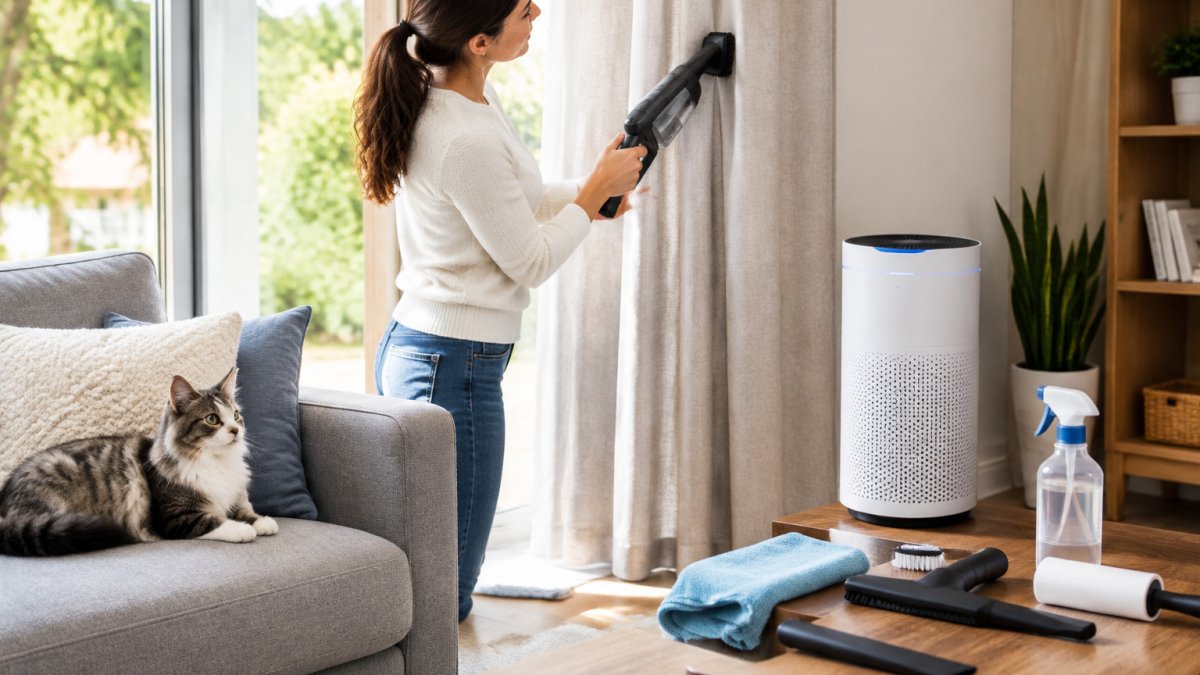
- Gather your tools: a handheld vacuum, a rubber glove or lint roller, and a microfiber cloth.
- Start at the top of the curtain and work downward so loose hair falls to the floor where you can vacuum it.
- Run a damp rubber glove lightly over the fabric to gather hair into small clumps.
- Vacuum the clumps and the floor beneath the curtain.
- Check the hems and folds, since hair often collects there.
- If the curtains are washable, check the care label and wash them on a gentle cycle.
- Hang the curtains to dry fully before closing the window or drawing them shut.
This method works for most fabrics. Always test a small, hidden area first if you are unsure how the material will react.
Choosing Pet Hair Resistant Curtains and Drapes
The right curtain choice can make prevention much easier.
Look for these features when shopping:
- Tight weave: a dense weave gives dander fewer places to hide
- Smooth, synthetic fibers: these often release particles more easily during cleaning
- Anti-static finish: this reduces the static that makes hair and dander cling
Heavy velvet, loose linen, and thick pleated drapes trap the most dander. They may look beautiful, but they need more regular cleaning.
Measure your windows and choose a length that stays off the floor.
Shoppers who want a clear look at options can check the curated range at Aero Essence LLC’s curtain and drape collection.
Safe Use of DIY Sprays and Cleaning Products
Many people reach for homemade sprays, such as white vinegar mixed with water or a dab of lemon juice in a spray bottle. These can seem like safe, cheap options, but fabric is less forgiving than hard surfaces. A spray that works on a countertop can leave a ring on a lined curtain or weaken a delicate weave.
Read the Care Label First
The care label is the first thing to check, before any liquid touches the fabric:
- Dry clean only: do not spray, mist, or spot-treat with water-based mixtures. Moisture can cause shrinkage, watermarking, or lining separation.
- Machine washable: spot test any spray in a hidden area such as the back of a hem, then let it dry fully before judging the result.
- Lined, blackout, and thermal curtains: treat the face fabric and the lining as separate materials. A spray that is safe on the face may stain or degrade the lining.
Understand What DIY Sprays Can and Cannot Do
Vinegar and lemon juice are often recommended for odor and residue, but they do not remove dander particles. A spray can dampen dust so it does not lift into the air, but the flakes still need to be removed with a vacuum or a wash.
Keep these rules in mind:
- Always spot test in a hidden area and wait for the fabric to dry completely before judging color or texture changes.
- Use a light mist rather than soaking the curtain; overspray can wick into hems and linings.
- Avoid strong acids, bleach, and ammonia, which can weaken fibers and cause fading.
Watch out: vinegar and lemon juice can change the color of some fabrics or leave a lingering smell, and the residue can attract dust once it dries. If the label says dry clean only, skip the spray entirely.
Protect Pets During and After Application
Pets are close to curtains, and residue can transfer to paws and fur:
- Keep pets out of the room while you spray and until the fabric is fully dry.
- Remove pet beds, bowls, and toys from the area before application.
- Wash your hands after handling sprayed fabric, and launder any cloths used for spot treatment.
Consider When a Professional Is the Safer Choice
For lined, blackout, velvet, or dry-clean-only curtains, professional cleaning is often the lower-risk option. The cost of replacing a damaged panel usually exceeds the cost of a cleaning service. If you are unsure how a fabric will react, test on a hidden area or consult the manufacturer’s care instructions before applying anything.
Checking Whether Your Prevention Routine Is Working
Once a routine is in place, it helps to check whether it is working. You can do this by watching a few simple signs over several weeks.
- Look at the curtain folds in bright light for fine, dusty flakes
- Notice whether allergy symptoms like sneezing or itchy eyes ease over time
- Check the vacuum filter or bag after each session to see how much it collects
- Keep a short note of when you cleaned and what changed
If symptoms stay the same, the schedule may need to be more frequent, or more rooms may need attention.
A steady routine matters. Small, regular steps can help keep pet dander from building up.
Frequently Asked Questions
How often should you wash curtains if you have pets?
For most households with pets, washing curtains every three to six months is a reasonable starting point, and more often if a pet sheds heavily or sleeps near the window. Check the care label first, since many curtains are machine washable on a gentle cycle in cool or warm water. Vacuum them lightly every one to two weeks between washes to keep dander from accumulating in the folds. Heavier fabrics and lined drapes usually need dry cleaning or a professional cleaner, so plan those on a longer interval.
Can an air purifier reduce pet dander on curtains?
An air purifier with a HEPA filter can reduce airborne pet dander in a room, which in turn slows how much settles back onto curtains and drapes. It does not remove dander that has already embedded in the fabric, so you still need to vacuum and wash the curtains. Running the purifier continuously in the room with the most pet activity gives the best results. Pair it with regular cleaning for the most noticeable reduction in buildup over time.
Do dust mites live in curtains?
Dust mites can live in curtains and drapes because the fabric traps dust, skin flakes and pet dander that they feed on. Heavy, lined or floor-length drapes tend to collect more than thin, easy-to-wash panels. Regular vacuuming and washing in hot water where the care label allows help control them. Keeping the humidity in the room moderate also makes it harder for dust mites to thrive.
How do you remove pet dander from fabric curtains?
Start by vacuuming the curtain with a brush attachment, working from the top down, to lift loose dander and hair. For a deeper clean, wash the curtains according to the care label, using a gentle detergent and, where the fabric allows, warm water. Tumble dry on low or hang to dry so static does not pull dander back onto the fabric. Avoid harsh chemicals on delicate fabrics, and test any spray on a hidden corner first.
