
Remove Pollen From Upholstery: Natural Methods That Work
Table of Contents
- Why Pollen on Upholstery Requires Immediate Action
- Step 1: Assess the Pollen and Fabric Type Before Cleaning
- Step 2: Remove Loose Pollen Without Spreading It
- How to Remove Pollen Stains From Fabric
- Does White Vinegar Remove Pollen Stains Effectively
- How to Remove Lily Pollen From a Couch and Similar Surfaces
- How to Reduce Pollen Indoors and Prevent Future Buildup
- Drying and Final Checks After Treatment
- Frequently Asked Questions
Last Updated: October 14, 2026
Why Pollen on Upholstery Requires Immediate Action
Pollen on your couch, chairs, and other upholstered furniture is more than just a cosmetic problem, and knowing how to remove pollen upholstery properly is essential.
At Aero Essence LLC, we understand how indoor air quality directly impacts your home’s cleanliness. Pollen doesn’t just float in the air, it lands on surfaces where your family sits and relaxes. Removing pollen upholstery properly prevents particles from becoming embedded in fabric and spreading throughout your living space.
The difference between handling fresh pollen and dealing with set-in stains is significant. Dry pollen responds well to gentle lifting and brushing. Once pollen has absorbed moisture or been pressed into the fibers, removal becomes much harder.
Step 1: Assess the Pollen and Fabric Type Before Cleaning
Before you touch your upholstery, you need to know what you’re working with. Different fabrics react differently to moisture, heat, and cleaning solutions. Identifying your fabric type and understanding the pollen’s current state saves time and prevents damage.
Check your upholstery fabric code
Most upholstered furniture comes with a fabric care tag hidden on the underside or back of the piece. Look for a code letter that tells you what cleaning methods are safe:
- W code: Water-based cleaners are safe
- S code: Use solvent-based cleaners only (no water)
- WS code: Both water and solvent cleaners work
- X code: Vacuum or brush only, no liquid cleaners
If you can’t find the tag, test your cleaning method on a hidden area first. This prevents accidentally bleaching or damaging visible fabric.
Determine if pollen is dry or set-in
Dry pollen sits on top of fabric fibers and hasn’t absorbed moisture. Set-in pollen has been pressed into the fabric, possibly by sitting or exposure to humidity.
Dry pollen signs:
- Visible yellow or orange dust on the surface
- Comes off easily when you brush lightly
- No discoloration of the fabric underneath
Set-in pollen signs:
- Staining or discoloration visible in the fabric
- Doesn’t brush away easily
- May have a slight sheen or damp appearance
Dry pollen requires only lifting and brushing. Set-in pollen needs a cleaning solution to break down the particles and lift them from the fibers.
Step 2: Remove Loose Pollen Without Spreading It
The biggest mistake people make is using water or a damp cloth on dry pollen. Water activates the pollen’s natural oils and causes it to spread deeper into the fabric. Your first step is always to remove loose, dry pollen safely.
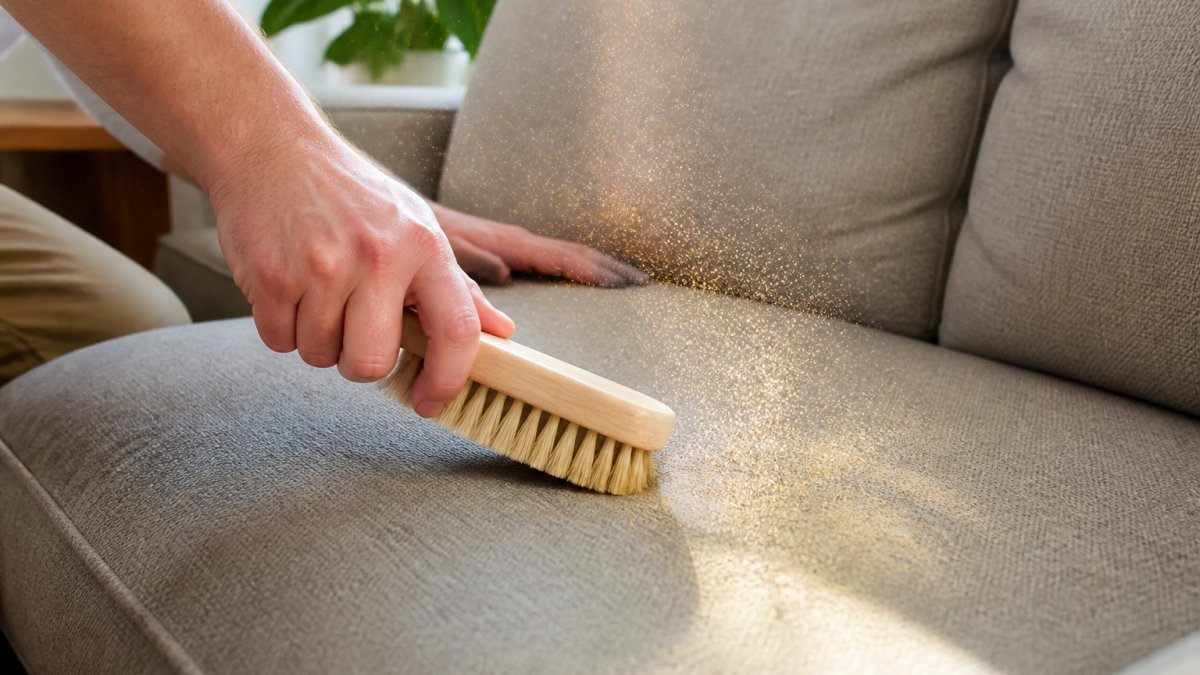
Lift and brush away dry pollen safely
Start with a soft-bristled brush or a dry sponge. Use light, upward strokes to lift pollen away from the fabric surface.
For delicate fabrics like velvet or silk, use an even gentler approach. A soft cloth or paper towel works well for these materials. Pat the surface lightly to pick up loose particles.
After brushing, use a vacuum with an upholstery attachment. Set the suction to low to avoid pulling fibers. Move slowly across the affected area to capture loosened pollen.
Why vacuuming pollen requires caution
Vacuums are effective for removing loose pollen, but high suction can damage delicate fabrics or pull fibers permanently. Always use the upholstery attachment and test on a hidden area first.
Some people worry that vacuuming will push pollen deeper into the couch. This only happens if the pollen is already wet or if you use excessive suction. With dry pollen and moderate suction, vacuuming removes particles safely.
Avoid using a handheld vacuum directly on fabric. The concentrated suction can create small holes or damage. Use the brush attachment instead for better control.
How to Remove Pollen Stains From Fabric
Once you’ve lifted loose pollen, set-in stains need a different approach. The goal is to break down the pollen particles and lift them without spreading the stain or damaging the fabric.
Test your cleaning method first
Never apply any cleaning solution to visible upholstery without testing it first. Find a hidden spot, the underside of a cushion, the back of the couch, or inside a seam. Apply your solution, wait 10 minutes, and check for color bleeding, discoloration, or fabric damage.
This simple step prevents ruining your furniture. It takes five minutes and saves hundreds of dollars in potential damage.
Blot, don’t rub: the critical technique
Rubbing spreads the stain and pushes pollen deeper into the fibers. Blotting lifts the stain without moving it around.
Use a white cloth or paper towel. Press it firmly onto the stained area for 5-10 seconds. Lift straight up. Repeat with a clean section of cloth each time until no more pollen transfers to the cloth.
Work from the outside edge of the stain toward the center. This prevents spreading the stain outward. Be patient, multiple light blots work better than aggressive rubbing.
Does White Vinegar Remove Pollen Stains Effectively
White vinegar is a popular natural cleaning solution for pollen stains. It’s affordable, non-toxic, and effective for many household stains. Understanding how it works and its limitations helps you decide if it’s right for your situation.
How to make and apply a vinegar solution
Mix one part white vinegar with three parts distilled water. Distilled water is important because tap water contains minerals that can leave residue on upholstery.
Dampen a white cloth with the solution, not soaking wet, just damp. Apply it to the stained area and let it sit for 5 minutes. The vinegar breaks down the pollen’s natural oils, making it easier to lift.
Blot the area with a dry cloth. Repeat if needed. Once the stain is gone, blot with a cloth dampened in plain distilled water to rinse away vinegar residue. Finally, blot with a dry cloth to remove excess moisture.
Why vinegar works and its limitations
Vinegar’s acidity cuts through the oily residue that pollen leaves on fabric. This makes it effective for fresh stains and light discoloration. However, vinegar has a strong smell that can linger on upholstery for hours.
Vinegar works best on natural fabrics like cotton and wool. Synthetic fabrics sometimes respond less effectively. For delicate or antique fabrics, test the solution on a hidden area first, vinegar can sometimes affect certain dyes.
If the stain persists after vinegar treatment, the pollen has likely set deeply into the fibers. In that case, stronger treatments or professional cleaning may be necessary.
How to Remove Lily Pollen From a Couch and Similar Surfaces
Lily pollen is particularly challenging because it contains oils that stain fabric quickly. Unlike other flower pollen, lily pollen can leave permanent marks if not treated promptly. The color is also more intense, making stains more visible.
Lily pollen stain specifics and prevention
Lily pollen stains yellow or orange and can set within hours. The moment pollen from lilies touches upholstery, time becomes critical. Never let lily pollen sit overnight.
Prevention is easier than removal. Remove lily stamens before the flowers open, or keep lilies in a separate room away from furniture. If you receive lilies as a gift, cut off the stamens with scissors or tweezers before bringing them into your main living space.
If lily pollen does land on your couch, resist the urge to wipe it with a damp cloth immediately. This spreads the stain. Brush away dry pollen first, then treat the remaining stain.
Natural treatments for lily pollen: baking soda and peroxide
Baking soda absorbs moisture and helps lift stains. Hydrogen peroxide breaks down organic compounds, including pollen oils. Together, they’re effective for stubborn lily pollen stains.
Sprinkle baking soda directly on the stain. Let it sit for 15-20 minutes to absorb moisture and oils. Vacuum it away carefully.
Apply the peroxide solution with a cloth and blot repeatedly. The solution will foam slightly as it works on the stain. Continue blotting until the stain lifts. Rinse with distilled water and blot dry.
This method works well for light to medium stains. For deep, set-in lily pollen stains, professional upholstery cleaning may be your best option.
How to Reduce Pollen Indoors and Prevent Future Buildup
Managing pollen on upholstery is much easier when you prevent it from accumulating in the first place. Simple habits and protective measures keep pollen off your furniture and reduce allergens throughout your home.
Protective measures and upholstery covers
Washable furniture covers protect upholstery from pollen and other particles. They’re especially useful during high pollen seasons or if you have pets that bring pollen indoors. Covers are affordable and easy to remove and wash.
Keep windows closed during peak pollen season, typically spring and early summer (the CDC). Use air conditioning instead, which filters incoming air.
Designate a “pollen zone” near entryways. Keep a brush or lint roller there so family members can remove pollen from clothing before sitting on furniture. This simple habit prevents most pollen from reaching your couch in the first place.
Air filtration and indoor air quality
A high-performance air purifier removes pollen and other particles from the air before they settle on furniture.
Place the air purifier in your main living area where you spend the most time. Run it continuously during pollen season for best results.
Vacuum regularly with a HEPA filter vacuum. Standard vacuums recirculate small particles back into the air. HEPA filters trap pollen and prevent it from spreading (the EPA). Vacuum high-traffic areas twice weekly during pollen season.
Dust surfaces with a damp microfiber cloth rather than a dry duster. Damp cloths capture particles instead of spreading them. Pay special attention to windowsills, where pollen collects.
Drying and Final Checks After Treatment
After treating a pollen stain, proper drying is essential. Moisture left in upholstery can cause mold growth or attract more dust and pollen.
Air dry treated areas naturally. Open windows if weather permits to increase air circulation.
Check the area once it’s fully dry. If staining remains, repeat the treatment. Sometimes set-in stains require multiple applications.
Once dry, vacuum the area lightly to remove any residue from cleaning solutions. This final step ensures your upholstery looks and feels clean.
For persistent stains that don’t respond to home treatments, professional upholstery cleaning is worth the investment.
Managing pollen on upholstery doesn’t require harsh chemicals or expensive treatments.
Frequently Asked Questions
Does white vinegar remove pollen stains from upholstery?
White vinegar can help remove fresh pollen stains when applied as a diluted solution (equal parts vinegar and distilled water). Blot the stain gently rather than rubbing. Vinegar works best on dry pollen that hasn’t set into fabric fibers. For older or stubborn stains, it may only partially lighten the discoloration. Always test the solution on an inconspicuous area first to ensure it won’t damage or discolor your upholstery fabric.
What is the safest way to remove pollen from fabric furniture without spreading it?
Start by lifting loose dry pollen with a soft-bristled brush or dry sponge using gentle, downward strokes. Avoid rubbing side-to-side, which pushes pollen deeper into fibers. Once loose pollen is removed, blot any remaining stain with a damp cloth using a pressing motion rather than wiping. Never apply water before removing dry pollen, as moisture can set the stain. Test your cleaning method on a hidden area of the couch or chair first.
Can baking soda help remove pollen stains from upholstery?
Baking soda works well for absorbing residual pollen and odors after initial removal. Sprinkle a thin layer on the affected area, let it sit for 15-20 minutes, then vacuum gently. For stains, you can mix baking soda with a small amount of water to form a paste, apply it to the spot, and blot after 10 minutes. Baking soda is gentler than many commercial cleaners and works safely on most upholstery fabrics, though you should still test it first on an inconspicuous area.
How can I prevent pollen from settling on upholstery indoors?
Keep windows and doors closed during high pollen season, and use an air purifier with a HEPA filter to capture airborne pollen before it lands on furniture. Wash or change clothes after being outside to avoid tracking pollen inside. Use protective upholstery covers or throws on frequently used furniture. Regular vacuuming with a HEPA filter and damp dusting of surfaces helps reduce pollen accumulation. These preventive steps combined with good indoor air quality management significantly reduce the risk of pollen stains on your couch and other upholstered pieces.