
Air Purifier for Mold and Mildew Removal
Table of Contents
- How Air Purifiers Work for Mold Spores and Airborne Contaminants
- HEPA Filter Mold Removal Effectiveness and Filtration Stages
- Air Purifier vs Dehumidifier for Mold: Which You Really Need
- Key Features to Look for in a Mold-Focused Air Purifier
- How to Prevent Mold Growth in Your Home Beyond Air Filtration
- Maintenance, Filter Replacement, and Long-Term Effectiveness
- The Limitations of Air Purifiers for Mold Remediation
- Frequently Asked Questions
Last Updated: September 24, 2026
How Air Purifiers Work for Mold Spores and Airborne Contaminants
An air purifier for mold and mildew removal captures mold spores and other airborne contaminants before they settle on surfaces or enter your respiratory system. The device pulls air through a series of filtration stages, trapping particles as small as 0.3 microns, far smaller than the human eye can see. This process directly addresses one of the most persistent indoor air quality challenges homeowners face.
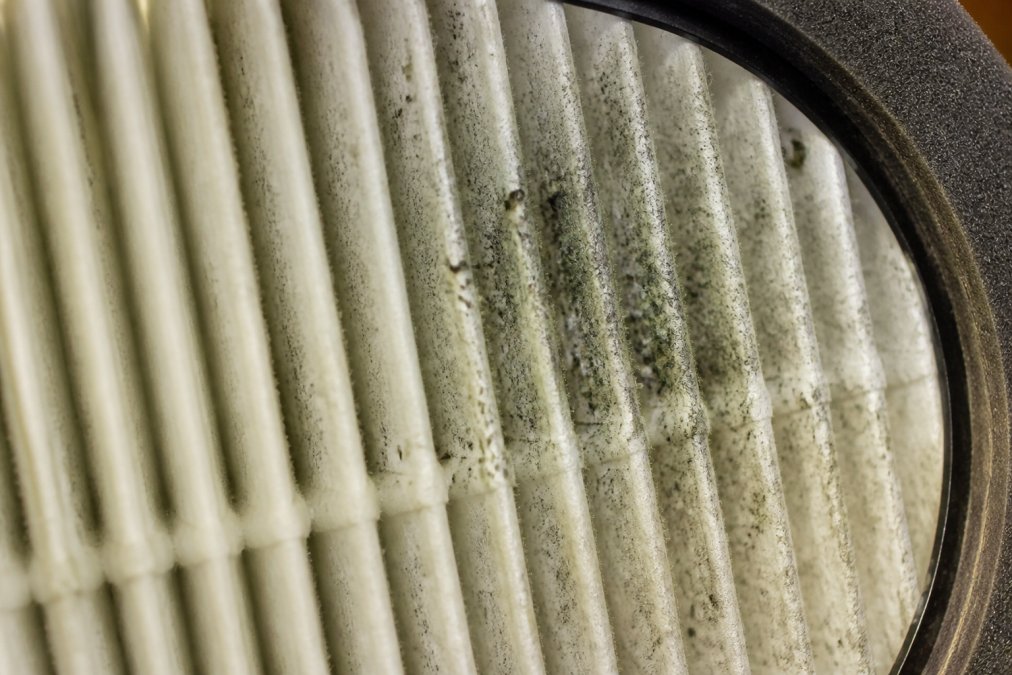
Mold spores enter through windows, doors, and ventilation systems, thriving in humid conditions. Airborne spores trigger allergic reactions, asthma attacks, and respiratory irritation, especially in people with sensitivities or lung conditions like COPD. An air purifier doesn’t eliminate the mold source (that requires addressing moisture and humidity), but it significantly reduces spore concentration circulating through your living space.
Filtration works in stages: a pre-filter captures dust and pet dander, the HEPA filter catches mold spores and pollen, and activated carbon removes volatile organic compounds (VOCs) and odors accompanying mold growth. This multi-stage approach creates layers of protection.
The real value of an air purifier emerges when you run it continuously in the room where mold risk is highest, typically basements, bathrooms, or bedrooms. Intermittent use provides minimal benefit because mold spores accumulate faster than a part-time purifier can remove them.
HEPA Filter Mold Removal Effectiveness and Filtration Stages
HEPA filtration is the gold standard for capturing mold spores, removing 99.97% of particles 0.3 microns or larger (the EPA). Mold spores range from 3 to 40 microns, well within HEPA’s capture range. However, the effectiveness of your air purifier for mold and mildew removal depends on air volume passing through the filter and replacement frequency.
The pre-filter extends HEPA life by catching larger debris. The HEPA filter removes mold spores and allergens. Activated carbon absorbs odors and chemical contaminants. Some models add UV-C light to inactivate spores, though UV alone cannot remove particles from the air.
HEPA filters only clean air passing through them. If your purifier’s air exchange rate is too low for room size, spores accumulate faster than removal occurs. Understanding CADR (Clean Air Delivery Rate) ratings and room coverage is essential.
Replacing filters on schedule is non-negotiable. A clogged HEPA filter loses effectiveness and forces the motor to work harder, reducing the device’s lifespan. Most residential air purifiers require filter changes every 6 to 12 months, depending on air quality and usage.
Air Purifier vs Dehumidifier for Mold: Which You Really Need
Many assume an air purifier alone solves mold problems, it won’t. An air purifier for mold and mildew removal addresses airborne spores, but a dehumidifier addresses the root cause: moisture that allows mold to grow.
Mold requires organic material, darkness, and humidity above 60%. An air purifier reduces airborne spores; a dehumidifier reduces humidity, stopping active growth. The best strategy uses both.
Start with a dehumidifier if you have active mold or high humidity; bring humidity below 50% to stop growth. Then use an air purifier to remove existing airborne spores. Using an air purifier without addressing humidity manages symptoms while the problem persists.
The Aero Essence LLC SR100 handles the airborne contamination side effectively, capturing mold spores and other particles. But it does not dehumidify. Pairing it with a dehumidifier creates a complete strategy: one device stops moisture-driven growth, the other removes particles already in circulation.
Air purifier + dehumidifier = complete mold management. Air purifier alone = temporary symptom relief. Dehumidifier alone = prevention without removal of existing spores.
Key Features to Look for in a Mold-Focused Air Purifier
Not all air purifiers are equally effective for mold. Several features directly impact performance in mold-prone environments.
CADR Ratings and Room Size Coverage
CADR measures how much clean air a purifier delivers per minute, measured separately for dust, tobacco smoke, and pollen. For mold-focused use, look at the dust CADR, it correlates most closely with particle capture. A higher CADR means the device cleans air faster, which matters in larger rooms or spaces with heavy contamination.
Match CADR to room size; a 300-square-foot purifier underperforms in 600 square feet. Verify by calculating air changes per hour (ACH): divide room cubic footage by purifier CFM, multiply by 60. Minimum 4-5 ACH is standard for mold remediation; below 4 means undersized.
Multi-Stage Filtration and Activated Carbon
Pre-filter, HEPA, and activated carbon create redundancy. Pre-filter extends HEPA life; HEPA removes spores; activated carbon removes odors and VOCs that indicate microbial activity.
Some models include H13 medical-grade HEPA filters (99.95% capture) versus standard H11 (99.97%).
UV-C light is optional. It can inactivate some microbes, but it does not remove particles from the air. If mold is your primary concern, prioritize filtration over UV features.
Homes with basement moisture issues, bathrooms prone to mildew, or anyone with asthma or respiratory sensitivities triggered by mold exposure.
How to Prevent Mold Growth in Your Home Beyond Air Filtration
An air purifier removes airborne spores, but preventing mold requires controlling moisture and organic material. Source control is more effective than any filter, and understanding mold types is critical before investing.
Identifying Common Household Molds vs. Toxic Species
Aspergillus, Penicillium, and Cladosporium are common household molds triggering allergies and respiratory irritation, manageable with air purification and humidity control. Air purifiers capture their spores effectively.
Black mold (Stachybotrys chartarum) produces mycotoxins. An air purifier cannot neutralize mycotoxins or address structural damage. If you suspect black mold (dark, slimy clusters on moisture-exposed surfaces), contact a certified mold inspector or remediation company, air purification is not the solution.
Common household molds appear as fuzzy growth (white, green, or orange) and respond well to moisture control and air purification.
Moisture Control as the Foundation
Maintain humidity below 50%. Use exhaust fans during and after showers or cooking. Fix leaks immediately, small drips seed mold within 24-48 hours. Direct gutters away from foundation. Improve basement ventilation. Remove visible mold with appropriate cleaning solutions on non-porous surfaces and HEPA-filtered vacuums on carpets.
Insulate cold surfaces where condensation forms. Thermal insulation and air circulation reduce mold risk. Keep indoor temperature consistent to minimize condensation and mold germination.
When Air Purification Becomes Effective
After controlling moisture and cleaning visible mold, air purification prevents spore recirculation. Running a purifier continuously in high-risk areas for 2-4 weeks post-cleanup significantly reduces regrowth risk.
Prevention hierarchy: (1) eliminate moisture, (2) clean visible mold, (3) deploy air purification. Skipping steps 1-2 and relying solely on air purification will fail.
Common household molds respond well to air purification + humidity control. Black mold and severe infestations require professional remediation first. Air purifiers are a finishing tool, not a primary solution.
Maintenance, Filter Replacement, and Long-Term Effectiveness
An air purifier for mold and mildew removal only works if you maintain it properly. Filter replacement is the single most important maintenance task. A clogged filter reduces airflow, decreases CADR performance, and forces the motor to work harder, shortening the device’s lifespan.
Most residential HEPA filters need replacement every 6 to 12 months. Pre-filters may need changing every 3 to 6 months in high-dust environments. Activated carbon filters typically last 6 to 12 months. Check your model’s specifications and set calendar reminders for replacement dates.
Cleaning the exterior and intake vents monthly prevents dust buildup that restricts airflow. Wipe the housing with a dry cloth, avoid water near electrical components. Some models have washable pre-filters, which can extend their life but should still be replaced entirely when they no longer trap visible dust.
Monitor performance. Many modern purifiers include air quality sensors and app notifications when filters need replacement. The Aero Essence LLC SR100 provides visual confirmation of purification performance, helping you see that the device is actively working, a feature that matters when you’re investing in air quality.
The Limitations of Air Purifiers for Mold Remediation
An air purifier is not a mold remediation tool. It cannot eliminate existing mold colonies, address water damage, or prevent future growth without moisture control. Homeowners often buy an air purifier hoping it will solve a mold problem, only to find the issue persists because the underlying moisture remains.
When Professional Remediation Is Required
If you have visible mold growth, structural damage, water intrusion history, or suspect black mold, hire a professional mold remediation specialist.
Post-Remediation Air Quality Maintenance: The Missing Piece
Secondary Contamination and Surface Cleaning
Scenarios Where Air Purifiers Alone Provide Value
Do not rely on an air purifier to solve an active mold problem. If you see visible mold, smell persistent mustiness despite humidity control, or have a history of water damage, contact a certified mold inspector or remediation company before purchasing an air purifier.
Frequently Asked Questions
Do air purifiers actually remove mold and mildew from the air?
Yes, air purifiers equipped with HEPA filters can capture mold spores and other airborne contaminants. A true HEPA filter removes up to 99.97% of particles 0.3 microns or larger, which includes most mold spores. However, air purifiers address only airborne mold, not mold already growing on surfaces. They work best as part of a complete strategy that includes moisture control and source removal.
How effective are HEPA filters for mold removal compared to other filtration technologies?
HEPA filters are the gold standard for capturing mold spores and other particulates. When paired with activated carbon filters, they create a multi-stage system that removes both particles and volatile organic compounds (VOCs) associated with mold. Other technologies like ionizers or UV-C light have limitations, ionizers don’t physically remove particles, and UV-C works only on microorganisms in direct light. HEPA combined with carbon offers the most comprehensive approach to indoor air quality.
Should I buy an air purifier or a dehumidifier to solve my mold problem?
Both serve different purposes. A dehumidifier controls humidity (the root cause of mold growth), while an air purifier removes mold spores already in the air. Ideally, use both: a dehumidifier to prevent new mold from forming by keeping relative humidity below 50%, and an air purifier to capture existing airborne spores. An air purifier alone won’t stop mold from growing if moisture levels remain high.
How do I know if my air purifier is working against mold?
Look for visual confirmation features like filter status indicators or air quality displays that show real-time particle capture. Check your purifier’s CADR (Clean Air Delivery Rate) rating, higher numbers mean faster air exchange and more effective mold spore removal. Monitor filter condition regularly; a darkening filter indicates it’s capturing contaminants. If mold symptoms persist after several weeks of continuous use, the unit may be undersized for your space or source control issues remain unaddressed.