
Do Air Purifiers Help With COPD? What You Need to Know
Table of Contents
- How Air Purifiers Impact COPD Symptoms
- HEPA Filter Benefits for Respiratory Health
- Best Air Purifier for COPD: Key Features to Look For
- How to Reduce Indoor Air Pollutants for COPD
- Removing Particulate Matter: PM2.5 and Respiratory Exacerbations
- Air Purifiers vs. Oxygen Therapy: Understanding Your Options
- Frequently Asked Questions
Last Updated: August 31, 2026
How Air Purifiers Impact COPD Symptoms
Air purifiers can meaningfully reduce airborne pollutants that trigger respiratory exacerbations in people with chronic obstructive pulmonary disease. They don’t cure COPD and aren’t substitutes for prescribed medications or oxygen therapy. What they do is lower the concentration of particulate matter, allergens, and volatile organic compounds circulating in your indoor air, which directly reduces the frequency and severity of symptom flare-ups.
COPD damages the airways and air sacs in your lungs, making them hypersensitive to irritants. When you breathe in dust, pollen, mold spores, pet dander, or wildfire smoke indoors, your damaged airways respond with inflammation, mucus production, and constriction. An air purifier equipped with HEPA filtration and activated carbon removes these triggers before they reach your lungs. People managing COPD who deploy air purifiers report fewer coughing episodes, reduced shortness of breath, and better sleep quality.
Placement and filter type matter enormously. A purifier running in one room won’t help if you spend most of your time in another. A basic model with poor CADR rating (Clean Air Delivery Rate) will move air around but won’t actually clean it fast enough to make a difference. Match the purifier’s capacity to your space and maintain it properly so the filters stay effective.
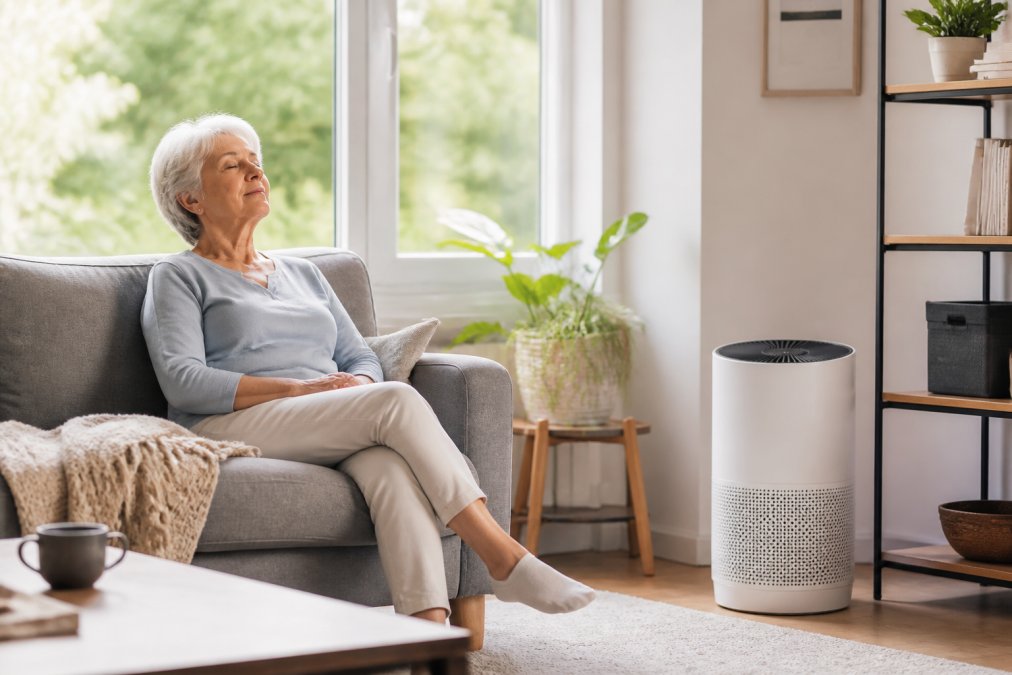
At Aero Essence LLC, we’ve designed the SR100 specifically for people managing respiratory sensitivities. It targets nine distinct types of pollutants, including dust mites, pet dander, pollen, mold spores, and smoke, with HEPA filtration and visual confirmation that the system is actively working. For someone with COPD, that visual feedback matters. You can see the air being cleaned in real time.
HEPA Filter Benefits for Respiratory Health
HEPA filtration is the gold standard for removing particulate matter from indoor air. HEPA stands for High-Efficiency Particulate Air, and the standard requires that the filter capture at least 99.97% of particles 0.3 micrometers or larger (the EPA). For people with COPD, this matters because the most harmful particles, dust mites, pollen, mold spores, and fine smoke particles, fall squarely into this size range.
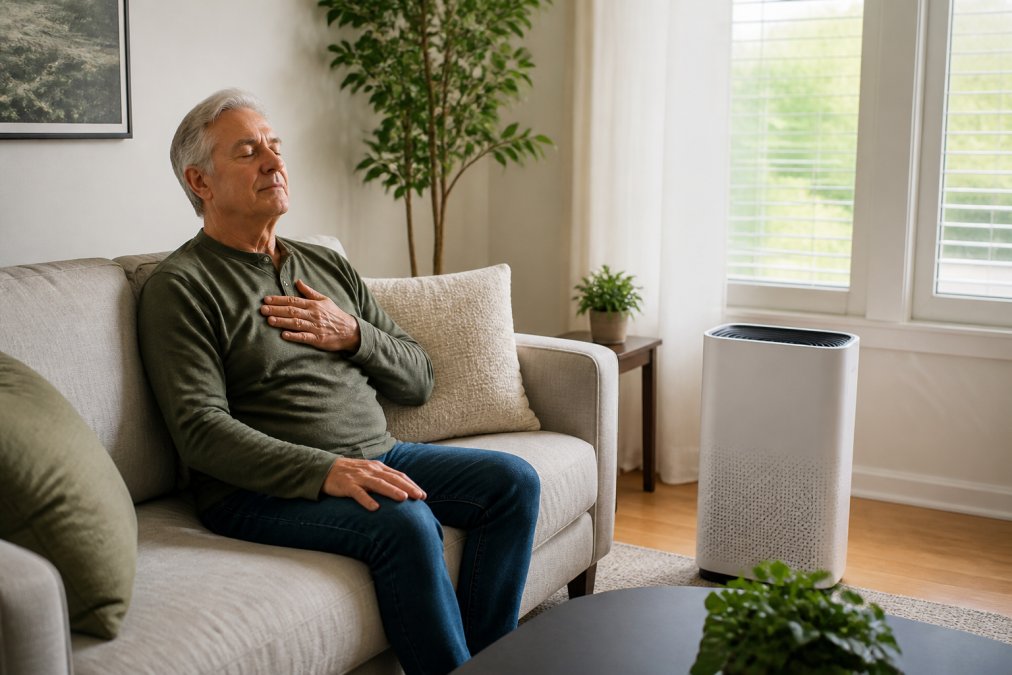
The HEPA filter works through mechanical processes: interception, impaction, and diffusion. As air passes through the dense mat of fibers, particles get trapped. Larger particles collide with fibers and stick. Smaller particles follow air currents but eventually collide with fibers through random motion. The result is that a true HEPA filter removes the majority of airborne irritants that would otherwise inflame your airways.
HEPA is particularly valuable for COPD management because it removes both visible and invisible threats. You can’t see PM2.5 (particulate matter 2.5 micrometers or smaller), but it penetrates deep into the lungs and causes measurable inflammation. HEPA captures it. You can’t see mold spores or dust mite feces either, but they’re potent respiratory irritants. HEPA removes them.
However, HEPA alone isn’t enough for comprehensive air quality. Many COPD patients also struggle with chemical irritants and volatile organic compounds from cleaning products, paint, or off-gassing furniture. Activated carbon filters absorb gases and odors that HEPA can’t capture. The best air purifiers for COPD combine HEPA with activated carbon to address both particulate and chemical threats.
HEPA filters need replacement every 6 to 12 months, depending on air quality and usage. A clogged filter loses efficiency fast. If you live in a high-pollen area or have pets, expect to replace filters more frequently. Budget for this ongoing cost when choosing a purifier.
Best Air Purifier for COPD: Key Features to Look For
Choosing the right air purifier for COPD requires understanding critical specifications. Not all air purifiers are created equal.
CADR Rating and Clean Air Delivery
The CADR rating tells you how many cubic feet of clean air per minute the purifier delivers. It’s measured separately for smoke, dust, and pollen. For COPD, focus on the dust and pollen CADR ratings, as these directly relate to respiratory irritants.
A higher CADR means the purifier cleans the air faster. For a bedroom (roughly 200 square feet), you want a CADR of at least 100 for dust and pollen (aham.org). For a living room or open-concept space (400+ square feet), aim for CADR of 150 or higher. The air exchange rate itself matters too. Ideally, the purifier should cycle all the air in your room through its filters at least 4 to 5 times per hour.
The SR100 from Aero Essence LLC delivers a CADR rating that handles medium-sized rooms effectively, with the added benefit of visual confirmation that filtration is actively occurring.
Noise Level and Sleep Quality
A loud air purifier defeats its purpose if it keeps you awake. Sleep disruption worsens COPD outcomes by increasing inflammation and reducing your body’s ability to clear respiratory secretions. Many high-CADR purifiers run at 60+ decibels on high speed, louder than normal conversation.
For bedroom use, look for purifiers that operate at 40-50 decibels on medium or lower settings. Some purifiers offer quiet night modes that reduce speed and noise while maintaining reasonable air cleaning. If sleep quality is a concern, this flexibility is worth paying for.
How to Reduce Indoor Air Pollutants for COPD
Beyond choosing the right purifier, your behavior and environment setup dramatically affect outcomes. An air purifier is only one tool in a broader strategy to manage indoor air quality.
Start by identifying and reducing pollution sources. Smoking indoors must stop. Secondhand smoke contains thousands of chemicals that trigger COPD exacerbations. If someone in your household smokes, establish a strict outdoor-only policy.
Next, address moisture and mold. Keep indoor humidity between 30% and 50% (the CDC). Use a dehumidifier in damp areas. Fix water leaks immediately. Clean bathrooms and kitchens regularly to prevent mold growth.
Pet dander is another major trigger. Bathe pets regularly and keep them out of your bedroom. Use a vacuum with HEPA filtration when cleaning. Wash bedding weekly in hot water to remove dust mites and pet dander.
Chemical irritants matter too. Switch to fragrance-free cleaning products or make your own with vinegar and water. Avoid air fresheners, scented candles, and plug-in fragrance dispensers, which release volatile organic compounds that irritate airways.
Strategic Placement for Maximum Air Exchange
Place the purifier in the room where you spend the most time, ideally your bedroom. Position it 1-2 feet away from walls and furniture so air can flow freely around it. Avoid placing it in corners or behind couches, which restrict air circulation.
For open-concept spaces, place the purifier in the central area where air naturally circulates. Keep doors open between rooms to allow air circulation. If you have a basement or garage where pollutants accumulate, keep those doors closed to prevent contaminants from entering your living space.
Make sure the purifier’s intake isn’t blocked by dust or furniture. If the unit has an exhaust vent, position it away from your face so you’re not breathing recirculated air directly.
Filter Maintenance and Replacement Schedules
A purifier with a clogged filter delivers minimal cleaning. Check your filter monthly. If it’s visibly dirty, replace it sooner than the manufacturer recommends. In high-pollution environments, you may need replacement every 3-4 months instead of 6-12 months. The SR100 includes visual confirmation of filter status, so you know exactly when replacement is needed.
Set a reminder for the next replacement. Keep spare filters on hand so you can swap immediately when needed. Clean the exterior of the purifier monthly with a dry cloth to remove dust from the casing.
Removing Particulate Matter: PM2.5 and Respiratory Exacerbations
PM2.5, particulate matter 2.5 micrometers or smaller, is particularly dangerous for people with COPD. These fine particles bypass your upper airway defenses and lodge deep in the alveoli, triggering inflammation and reducing your lungs’ ability to transfer oxygen into your bloodstream.
Wildfire smoke is a major source of PM2.5, especially during fire season. A single day of heavy smoke exposure can trigger COPD exacerbations that last for weeks. People living in wildfire-prone regions benefit enormously from air purifiers. During smoke events, running a purifier continuously can mean the difference between managing your condition and ending up in the emergency room.
Urban air pollution, traffic exhaust, and industrial emissions also generate PM2.5. If you live near a highway or industrial area, PM2.5 levels are chronically elevated. An air purifier will reduce your exposure during the hours you spend indoors.
The connection between PM2.5 exposure and respiratory exacerbations is well-documented. Higher PM2.5 levels correlate with increased hospital admissions for COPD and reduced lung function. Removing PM2.5 from your indoor air directly reduces these outcomes.
Air Purifiers vs. Oxygen Therapy: Understanding Your Options
A common misconception is that air purifiers can replace oxygen therapy for COPD patients who need supplemental oxygen. They can’t. These are complementary tools, not alternatives.
Oxygen therapy adds oxygen to the air you breathe, increasing the oxygen concentration in your bloodstream. It’s prescribed when your blood oxygen saturation drops below safe levels. Air purifiers remove irritants and pollutants from the air you breathe. They don’t add oxygen, but they reduce inflammation and airway constriction triggered by pollutants, helping your lungs work more efficiently.
If your doctor has prescribed oxygen therapy, continue using it exactly as prescribed. An air purifier complements oxygen therapy by reducing the triggers that make your COPD worse. Together, they create a more supportive respiratory environment.
Some COPD patients don’t need oxygen therapy but do have significant symptoms triggered by poor air quality. For these patients, an air purifier is a first-line intervention. If you’re not yet on oxygen therapy, an air purifier can help prevent the decline that leads to needing it.
Managing COPD requires a multi-faceted approach: medication, oxygen therapy if prescribed, pulmonary rehabilitation, and environmental control. Air purification is a powerful tool in that toolkit, particularly for reducing exposure to particulate matter and airborne irritants that trigger exacerbations.
The Aero Essence LLC SR100 removes nine types of pollutants, including dust mites, pet dander, pollen, mold spores, and smoke, with HEPA filtration and visual confirmation of active purification. For COPD patients seeking to improve their home environment and reduce symptom flare-ups, the SR100 delivers the performance and transparency you need to breathe easier. Shop Now and take control of your indoor air quality.
Frequently Asked Questions
Q: Do HEPA filters help with COPD?
A: Yes. HEPA filters capture 99.97% of airborne particles 0.3 microns or larger, including dust, pollen, pet dander, and mold spores that trigger respiratory exacerbations. For COPD patients, removing these particulate matter sources reduces airway inflammation and breathing difficulty.
Q: Can indoor air quality affect COPD exacerbations?
A: Indoor air quality directly impacts COPD flare-ups. Poor air quality, caused by particulate matter, volatile organic compounds, and airborne irritants, triggers respiratory distress and accelerates lung function decline. High PM2.5 levels, pet dander, mold spores, and smoke exposure are common indoor culprits. Air purifiers reduce these pollutants, lowering exacerbation risk and improving symptom management in your home environment.
Q: How often should I replace air purifier filters for COPD management?
A: Filter replacement frequency depends on your home’s pollution level and air purifier usage. In homes with pets, smokers, or high pollen exposure, replace HEPA filters every 6-8 months. Pre-filters may need monthly checks. Check your purifier’s filter status indicator regularly, many models show when replacement is needed. Delayed filter changes reduce efficiency and allow airborne pollutants to recirculate, defeating the purpose of air purification for respiratory health.
Q: What’s the difference between air purifiers and oxygen therapy for COPD?
A: Air purifiers clean your indoor environment by removing airborne pollutants and particulate matter, preventing respiratory exacerbations. Oxygen therapy delivers supplemental oxygen directly to your lungs when blood oxygen levels drop. Both serve different purposes: purifiers reduce triggers and protect lung function, while oxygen therapy addresses immediate oxygen deficiency. Many COPD patients benefit from both, purifiers for prevention, oxygen therapy for symptom management during exacerbations or physical activity.
This article was written using GrandRanker