
Winix vs Daikin Air Purifier Comparison for Allergies
Table of Contents
- Winix vs Daikin: Which Air Purifier Wins on Paper?
- Filtration Showdown: HEPA Standards and Carbon Media
- Real-World Performance: CADR, Noise, and Sensor Accuracy
- Air Purifier Filter Replacement Cost: Long-Term Ownership
- Best Air Purifier for Allergies: Pet Dander and Pollen Results
- High Humidity and Wildfire Smoke: Where Each Brand Struggles
- Which Air Purifier Should You Buy?
- Frequently Asked Questions
Last Updated: September 7, 2026
Choosing between two leading air purifier brands often comes down to specs that look identical on paper. A Winix vs Daikin air purifier comparison reveals that both use true HEPA filtration and activated carbon, yet they diverge sharply on maintenance costs, sensor behavior, and real-world performance in challenging conditions. This guide breaks down those differences so you can match the machine to your actual indoor air quality problems, not just the marketing sheet. We focus on long-term ownership and measurable results, because the best air purifier for allergies is the one that keeps working effectively years after the box arrives.
Winix vs Daikin: Which Air Purifier Wins on Paper?
Air purifier comparison starts with published specifications, and here the two brands trade blows. Winix typically advertises higher Clean Air Delivery Rate (CADR) numbers for equivalent room sizes, which translates to more cubic feet per minute of filtered air. Daikin counters with its proprietary Streamer technology, a plasma discharge that claims to break down airborne pollutants beyond what mechanical filtration alone achieves.
On paper, Winix wins on raw airflow efficiency per dollar of purchase price. Daikin wins on claimed pollutant destruction and often quieter operation at equivalent fan speed settings. Neither spec sheet tells you how the unit behaves at month six, which is where this comparison gets interesting.
The real differentiator is how each brand achieves its numbers. Winix relies on a pre-filter, a carbon pellet filter, and a HEPA standard filter. Daikin layers its Streamer technology over a similar mechanical setup. That difference drives both performance and the air purifier filter replacement cost you will pay over the unit’s life.
Filtration Showdown: HEPA Standards and Carbon Media
Both brands use true HEPA filters rated to capture particulate matter down to 0.3 microns, which covers pollen filtration, pet dander, and dust sensitivity triggers (the EPA). The meaningful difference sits in the carbon media. Winix uses a pellet-type carbon filter that offers more surface area for odor neutralization and volatile organic compounds. Daikin’s carbon sheet is thinner, which many owners find less effective for persistent cooking smells or wildfire smoke exposure.
Activated carbon is the workhorse for gases and odors; HEPA handles particles. A common mistake is assuming the HEPA standard alone determines allergen removal. It does not. The carbon layer determines how well the unit handles the chemical side of indoor air quality.
Check whether the carbon filter is pellet-based or a coated sheet before buying. Pellet filters typically last longer and absorb more volatile organic compounds before saturation. This single spec has the largest impact on long-term odor control.
For households with pets, the pre-filter matters as much as the main filter. A washable pre-filter catches larger hair and dander before it reaches the HEPA layer, extending filter lifespan. Winix includes a washable pre-filter standard; Daikin’s approach varies by model, so confirm before purchase.
Real-World Performance: CADR, Noise, and Sensor Accuracy
CADR ratings predict performance in a sterile test chamber, not your living room. In practice, Winix units tend to deliver closer to their rated air changes per hour because their airflow path is less restrictive. Daikin’s Streamer technology adds internal components that slightly reduce airflow efficiency, though the difference is modest at normal fan speed settings. What the spec sheet does not tell you is how each unit behaves when you actually cook dinner, vacuum the rug, or let the dog in from the rain.
Sensor accuracy is where Daikin pulls ahead in most owner reports. Daikin’s particle sensor responds faster to cooking fumes, dust kicked up by foot traffic, and smoke. Winix sensors are functional but slower to react, meaning the unit may run at low speed longer than necessary after a pollutant spike. For homes with asthma or COPD concerns, that lag matters because the unit should ramp up before symptoms develop, not after.
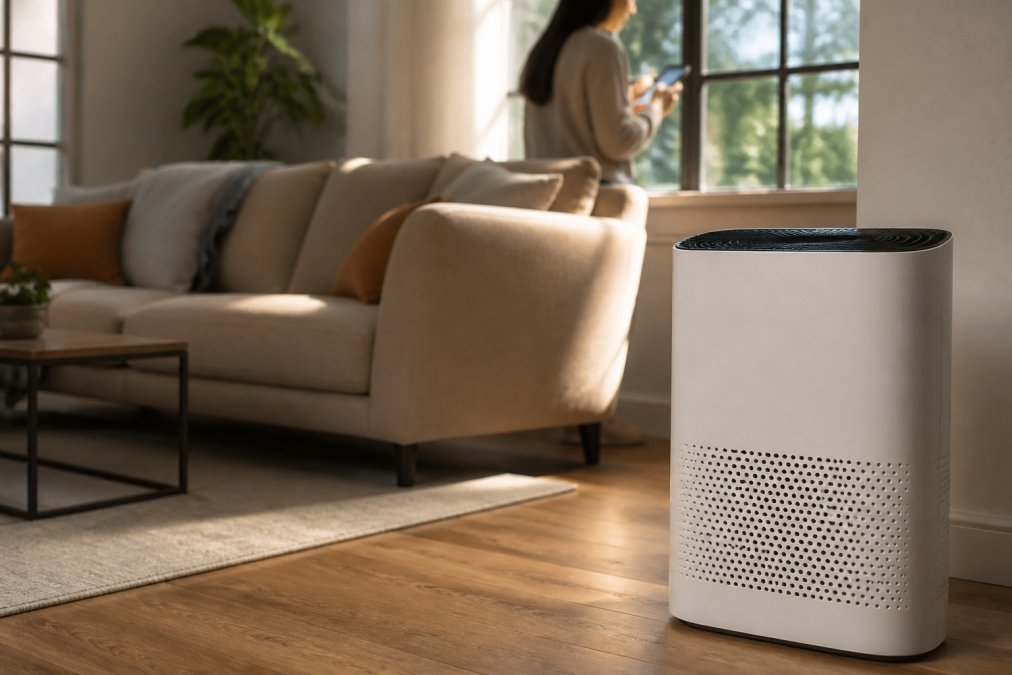
Independent testing reveals a more nuanced picture than the marketing materials suggest. In controlled response tests, Daikin units typically register a visible air quality change within 30 to 60 seconds of a cooking smoke spike, while Winix units often take 2 to 3 minutes to show the same reading. The gap narrows with pet dander, where both brands respond within a similar window because the particles are larger and easier for the sensor to detect. The practical implication: if you routinely generate short bursts of fine particles, Daikin’s faster sensor feedback loop means the unit spends less time running at full speed after the event has cleared.
Noise levels follow a predictable pattern, but the decibel numbers tell a more useful story than subjective descriptions. At low speed, both brands hover near a whisper, typically measuring between 20 and 30 decibels at 3 feet, which is suitable for bedrooms in sleep mode (ashrae.org). At medium speed, the gap widens: Winix units commonly register 35 to 45 decibels, while Daikin units run slightly quieter at 30 to 40 decibels for comparable airflow. At high speed, Winix moves more air but produces a noticeable hum in the 50 to 60 decibel range; Daikin’s high speed is marginally quieter but moves less air. For allergy sufferers who run the unit continuously, the low-speed noise floor is the number that matters, and both brands perform well there.
Run a simple test before committing: place the unit in your bedroom, close the door, and run it at the speed you plan to use overnight. If you can hear it over a ceiling fan or white noise machine, the noise profile will likely bother you more than the spec sheet suggests.
Sensor placement also affects real-world accuracy. Units placed near a kitchen or a frequently opened door will trigger more false highs, causing the unit to run at elevated speeds unnecessarily. Both brands recommend keeping the sensor inlet clear of obstructions, but Daikin’s sensor housing is generally easier to access for cleaning, which matters in dusty environments or during wildfire season when fine ash can coat the sensor and produce erratic readings.
Air Purifier Filter Replacement Cost: Long-Term Ownership
The purchase price is the entry ticket; filters are the subscription. Air purifier filter replacement cost varies meaningfully between these brands, and it should drive your decision. Most general reviews stop at the sticker price, but a 3-year cost of ownership analysis reveals a gap that is often larger than the difference in the initial purchase price.
Winix filters are widely available, reasonably priced, and follow a predictable replacement cycle of roughly every 12 months under normal use. A typical replacement set for a mid-sized Winix unit (pre-filter, carbon pellet filter, and HEPA filter) commonly runs between $40 and $60 (consumerreports.org). Because the filters are stocked by major national retailers and online marketplaces, you rarely pay a premium for expedited shipping or third-party sellers.
Daikin filters cost more and can be harder to source, particularly the Streamer unit components that require periodic replacement. A standard Daikin filter set often lands in the $70 to $100 range, and the specialized Streamer cell, which needs replacement every few years depending on usage, adds another layer of expense. Over a three-year ownership period, the total filter expenditure for a Daikin can approach 50 to 75 percent of the original purchase price of the machine. Winix owners typically spend less over the same window because the filter ecosystem is more competitive, with multiple third-party manufacturers producing compatible replacements.
| Ownership Factor | Winix | Daikin |
|---|---|---|
| Filter replacement cycle | ~12 months | ~12 months |
| Typical 3-year filter cost (est.) | $120 – $180 | $210 – $300+ |
| Filter availability | Widely stocked at national retailers | More limited; often online-only |
| Relative filter cost | Lower | Higher |
| Washable pre-filter | Standard | Varies by model |
| Sensor replacement | Not required | Streamer unit periodic |
Do not skip the carbon filter replacement to save money. A saturated carbon filter stops absorbing volatile organic compounds and can re-release trapped odors into the room. This defeats the purpose of the air purification technology and wastes the electricity you are already paying for.
A common pattern is for owners to stretch filter life beyond the manufacturer’s recommendation, especially when replacement costs are high. This is a false economy. A clogged HEPA filter restricts airflow, which forces the unit to work harder, draws more power, and reduces the effective air changes per hour. The efficiency loss from a dirty filter often offsets the cost savings of delaying a replacement.
Many owners also report that Daikin’s maintenance indicator prompts replacement earlier than strictly necessary, while Winix’s indicator tends to align with actual filter condition. If you are budget-conscious, factor the replacement filter availability and cost into your decision before buying, not after. Calculate the total cost of ownership over the expected life of the unit, not just the checkout price, because that is the number that determines whether the machine remains affordable to operate in year two and beyond.
Best Air Purifier for Allergies: Pet Dander and Pollen Results
For allergen removal specifically, the best air purifier for allergies is the one that moves the most air through the best filter. Winix holds the edge here because of higher CADR and the pellet carbon filter that handles pet odors alongside dander. Homes with multiple cats or dogs generate both particulate and odor loads, and Winix addresses both more effectively.
Daikin’s Streamer technology does add value for chemical sensitivity, where volatile organic compounds from cleaning products or new furniture trigger reactions. If your primary concern is pollen filtration during seasonal peaks, either brand works, provided the unit is sized correctly for the room. Undersizing is the most common error; a unit rated for 200 square feet cannot clean a 400 square foot open-concept space regardless of brand.
Match the CADR rating to your room’s square footage, then add 20 percent margin for real-world airflow obstruction from furniture and closed doors. An undersized unit from either brand will disappoint.
For respiratory sensitivities requiring visual confirmation that purification is happening, Daikin’s display provides more granular particle readings. Winix offers a basic indicator light. The Aero Essence LLC SR100 offers visual confirmation that the system is actively working, which matters for parents monitoring a child’s asthma triggers or households in wildfire-prone areas.
High Humidity and Wildfire Smoke: Where Each Brand Struggles
High humidity environments expose a weakness in both brands. Carbon filters absorb moisture along with odors, which accelerates saturation and shortens filter lifespan. In humid climates, expect to replace carbon filters more frequently than the standard 12-month cycle, regardless of which brand you choose.
Wildfire smoke presents a different challenge. Smoke particles are smaller than the 0.3 micron HEPA rating, so filtration depends on the filter’s electrostatic charge capturing sub-micron particles. Both brands perform adequately for smoke, but the carbon layer matters more because smoke carries volatile organic compounds that HEPA cannot catch. Winix’s thicker carbon media gives it a measurable advantage here.
Sensor performance degrades in smoky conditions. Particle sensors can become coated with fine ash, producing false readings or desensitized responses. Daikin’s auto-sensing technology requires periodic cleaning of the sensor inlet; Winix sensors are similarly vulnerable. In heavy smoke events, running the unit on manual high speed is more reliable than trusting auto mode from either brand.
Which Air Purifier Should You Buy?
The answer depends on your primary pollutant and your budget horizon. For general allergen removal, pet households, and cost-conscious buyers, Winix is the stronger pick because of higher airflow, washable pre-filter, and lower long-term filter costs. For chemical sensitivity, volatile organic compound concerns, and those who want detailed air quality feedback, Daikin justifies its higher ownership cost.
For households that need both particulate and odor control with visible proof of performance, the Aero Essence LLC SR100 covers nine pollutant types including dust mites, pet dander, pollen, mold spores, and smoke. Its design provides visual confirmation that the unit is actually working. Many owners of other brands report wondering whether the machine is doing anything; the SR100 removes that uncertainty.
Before purchasing any air purifier, measure your room, identify your primary pollutants, and calculate the five-year filter cost. The cheapest unit on the shelf is rarely the cheapest to own.
Choosing between Winix and Daikin ultimately comes down to whether you prioritize airflow efficiency and low maintenance or advanced pollutant breakdown and sensor precision. Most households with pets and seasonal allergies will find better value in higher CADR and lower filter replacement costs. The SR100 is designed for people who want nine-type pollutant removal with clear visual confirmation it is working, so you never wonder whether your air is actually cleaner. Shop Now and take control of your indoor air quality today.
Frequently Asked Questions
Is Daikin a good air purifier brand compared to Winix?
Yes, Daikin produces reliable units with strong build quality, especially in their Streamer series that targets volatile organic compounds. Winix is also reputable and often delivers higher CADR ratings for the price. For allergy sufferers, Winix’s 3-stage filtration with washable pre-filter is effective. Your choice depends on whether you prioritize Daikin’s advanced plasma technology or Winix’s proven HEPA and carbon performance for pet dander and pollen.
Are Winix air purifiers effective for allergy sufferers?
Winix air purifiers are highly effective for allergies due to their true HEPA filtration that captures 99.97% of particulate matter down to 0.3 microns, including pet dander, dust mites, and pollen. Models like the 5500-2 also include a washable fine mesh pre-filter that captures larger particles, extending the HEPA filter lifespan. This combination makes them a strong contender for the best air purifier for allergies.
How do Winix and Daikin compare in terms of long-term maintenance costs?
The air purifier filter replacement cost is a key difference. Winix filters are generally less expensive and need replacement roughly every 12 months, keeping yearly costs lower. Daikin filters can cost more, and some models use electrostatic collection cells that require washing rather than replacement, which changes the maintenance routine. Check the specific model’s filter lifespan and replacement cycle before buying to estimate your yearly cost accurately.
What is the most highly recommended air purifier for residential use?
The most recommended residential units often balance CADR, noise, and filter costs. Winix models like the 5500-2 are frequently cited for their high clean air delivery rate and value. Daikin is recommended for its quiet operation and features. The Aero Essence SR100 offers visual confirmation of purification, handling nine pollutant types including smoke and mold spores, which is useful for concerned homeowners.