
How to Prevent Mold Growth in Finished Basements
Table of Contents
- Why Finished Basements Are Prone to Mold Growth
- Basement Humidity Level to Prevent Mold: Targets and Monitoring
- Basement Leak Prevention: Finding and Fixing Water Intrusion
- Basement Dehumidifier Settings for Effective Moisture Control
- Signs of Mold Behind Basement Walls and What to Do
- Improving Airflow and Insulation to Prevent Mold Growth
- When to Call a Professional for Basement Mold
- Frequently Asked Questions
Last Updated: October 16, 2026
Why Finished Basements Are Prone to Mold Growth
A finished basement is the most mold-prone room in most homes: it sits below grade, where soil stays cool and damp year-round. Warm indoor air meets those cool surfaces, moisture condenses, and mold spores already present have everything they need to grow. This guide explains how to prevent mold growth in finished basements, step by step.
Mold needs three things: moisture, organic material, and still air. A finished basement supplies all three. Drywall paper, carpet backing, and wood framing are food. Leaks and high humidity are water. Closed doors and blocked vents kill airflow.
Finished walls hide the problem: moisture builds up inside wall cavities long before you see a stain.
Painting over a mold stain without fixing the moisture source guarantees the mold returns, usually within one season, and often worse because the paint traps dampness inside the wall.
Basement Humidity Level to Prevent Mold: Targets and Monitoring
The basement humidity level to prevent mold is 30% to 50% relative humidity. Keep readings there and mold struggles to grow; above 60%, it takes off quickly. A hygrometer costs little, check it weekly and after every heavy rain.
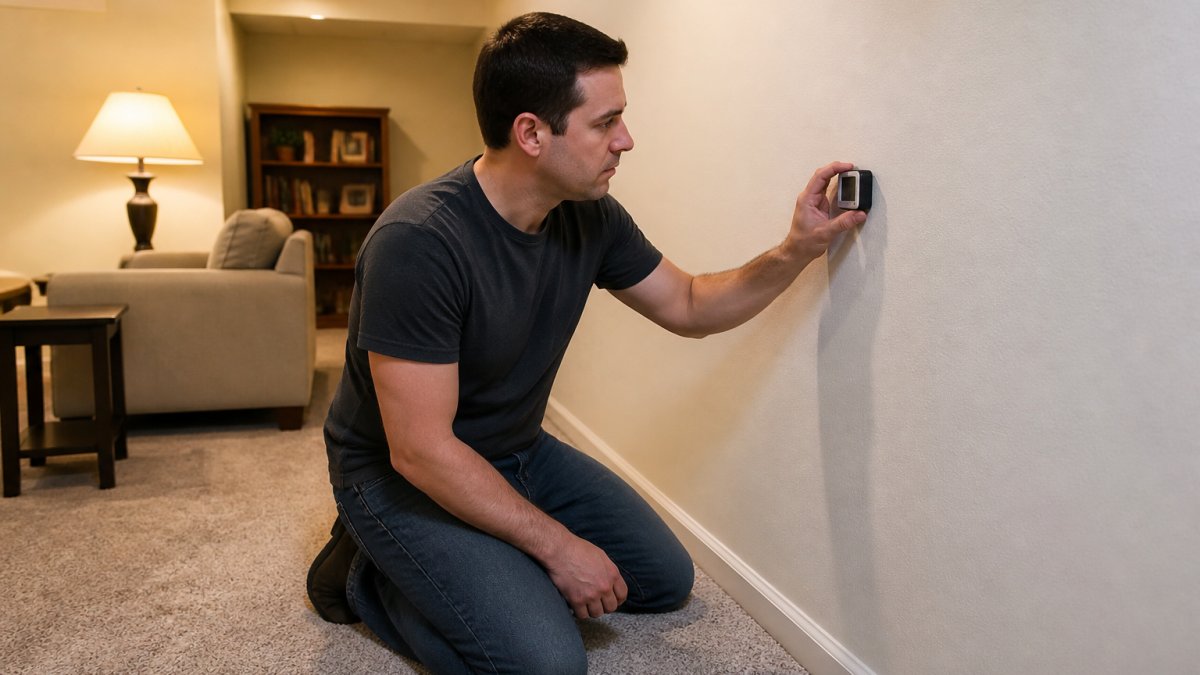
Choosing and Placing Humidity Monitors
- Pick a digital hygrometer with a memory feature
- Place one near the floor, where damp air settles, and a second inside an accessible wall cavity
- Log readings weekly to spot slow rises, not just spikes
- Replace cheap batteries yearly
The U.S. Environmental Protection Agency’s mold guidance recommends keeping indoor humidity below 60%, and ideally between 30% and 50%, to limit mold growth.
Tracking Seasonal Swings, Not Just Snapshots
A single reading tells you almost nothing, basement humidity follows a seasonal curve that drives mold.
- Summer: Warm, humid outdoor air enters through windows, doors, and the chimney chase and condenses on cool foundation walls and slabs. This is when a dehumidifier earns its keep.
- Fall: Outdoor humidity drops, but soil moisture from summer rain still migrates through the foundation, so the hygrometer looks fine while the wall cavity stays damp.
- Winter: Heating dries the air and the hygrometer reads low, but cold rim joists and foundation walls stay near soil temperature, so any warm, moist air that reaches them condenses.
- Spring: Snowmelt and heavy rain raise the water table; hydrostatic pressure pushes water against the foundation, and sump pumps and drains do the heavy lifting.
Log readings at the same time each week with outdoor temperature and rainfall. After a year you will see your basement’s pattern and can pre-empt the months that push you over 50%.
Where to Place Monitors in a Finished Space
Finished basements hide the surfaces that matter most, so place monitors where moisture actually accumulates.
- One at floor level in the lowest corner
- One on a shelf at chest height to compare against floor readings
- One inside a return-air grille or accessible wall cavity
- One near the sump pit or floor drain, if you have one
A 10% to 15% gap between floor-level and chest-height readings means cold air is pooling and the space is stratified; a box fan aimed along the floor usually closes it.
Place a second cheap hygrometer on the opposite side of the basement from your dehumidifier. If the two readings differ by more than 10%, your unit is too small for the space or the air is not circulating.
What to Do When Readings Drift
- 30% to 50%: Ideal. Maintain current settings.
- 50% to 60%: Run the dehumidifier continuously and check for a hidden water source.
- Above 60% for 48+ hours: Treat it as an active moisture event and find the source before mold establishes.
- Below 30%: Fine for mold, but dry air cracks wood trim and drywall joints, do not chase low numbers at the structure’s expense.
If readings climb after every rain but fall during dry spells, the source is exterior water, grading, gutters, or foundation drainage, not the dehumidifier.
Basement Leak Prevention: Finding and Fixing Water Intrusion
Basement leak prevention starts with water intrusion. Water finds the path of least resistance, so most leaks trace back to grading, gutters, or plumbing, not the foundation itself. Walk the outside after a storm and look for:
- Gutters that overflow or drain next to the foundation
- Soil sloping toward the house instead of away
- Cracks in the foundation wall or floor
- Efflorescence, the white powder signaling water moving through concrete
Common Leak Sources and Quick Fixes
| Problem | Likely Cause | Quick Fix |
|---|---|---|
| Damp wall base | Poor grading | Add soil slope away from home |
| Water at floor joint | Clogged gutter | Clear and extend downspouts |
| Wet ceiling spot | Leaking pipe | Tighten or replace fitting |
| Musty smell only | Hidden seepage | Seal cracks, monitor humidity |
Fix leaks fast. A slow drip behind drywall does more damage than a burst pipe you notice right away.
Condensation Is Not a Leak, but It Acts Like One
A finished basement has a second water source unrelated to rain: condensation, where warm, humid air meets a cold surface and drops its moisture. The usual cold surfaces are:
- The lower few feet of a foundation wall, near soil temperature year-round
- Rim joists and sill plates at the top of the wall
- Cold-water supply pipes and the toilet tank line
- Slab-on-grade floors in summer, when humid air enters from upstairs
- Metal ductwork and HVAC boots passing through unconditioned space
These are thermal bridges: paths where outdoor or soil temperature reaches an indoor surface. Insulating the bridge keeps the surface warm enough that indoor air does not condense on it.
- Wrap cold-water pipes with closed-cell foam
- Cut rigid foam board for rim joists and seal edges with canned foam
- Use rigid foam against foundation walls instead of fiberglass batts, which trap moisture against concrete
- Insulate HVAC boots and metal ducts running through cool zones
If a surface feels cold and beads water in summer, that is condensation, not a plumbing leak, sealing the wall will not fix it, but warming the surface will.
Checking Behind Finished Walls Without Tearing Them Out
Finished walls hide the cavity where mold actually starts, but you do not need to open the wall to learn what is happening inside.
- Infrared thermometer: Scan after rain or on a humid day; cool spots often mark wet insulation or a hidden leak.
- Moisture meter: Pin-type meters read through drywall; pinless meters scan behind tile and paneling. Compare suspect areas against a known-dry wall.
- Baseboard pull-back: Remove a short section in a suspect corner to expose the bottom plate and first inch of drywall.
- Outlet and switch plates: Remove the cover and look for rust, discoloration, or a musty smell.
- Access panel: Use a sump pit, crawlspace hatch, or mechanical closet as a viewing port into the wall cavity.
A common pattern is a dry wall face with a damp bottom plate: the drywall wicks water up from the slab, and the paper facing feeds mold long before the surface stains.
HVAC Pressure and Why Opening Windows Can Backfire
Basements sit at the bottom of the house’s air stack. In heating season, warm air rises and the basement pulls in replacement air from outside through every gap; in cooling season, the reverse can happen.
- Negative pressure pulls humid outdoor air in through rim joist gaps and foundation cracks.
- Positive pressure pushes conditioned air out, fine for moisture but wasteful of energy.
- Unbalanced supply and return pressurizes some rooms and starves others, so moisture collects in the starved zones.
Opening basement windows in humid weather makes this worse. Instead:
- Keep basement supply vents open and unblocked
- Add a return-air path if the system lacks one
- Ask an HVAC technician to check static pressure and balance the system
- Run the air handler fan on low continuously during humid months
A Seasonal Water-Intrusion Check
- Spring: Clear gutters, extend downspouts 6+ feet from the foundation, check the sump pump and backup power.
- Summer: Watch for condensation on cold pipes and rim joists; run the dehumidifier continuously.
- Fall: Re-grade settled soil; clean floor drains and the sump pit.
- Winter: Check for ice dams and frost on rim joists; keep the basement above 60°F to reduce condensation.
If you find water behind a finished wall, fix the source before replacing drywall, new drywall over a wet cavity is a mold nursery.
Basement Dehumidifier Settings for Effective Moisture Control
Basement dehumidifier settings should target 45% to 50% relative humidity. Lower and the unit runs constantly for no benefit; higher and you leave room for mold.
Run it continuously during humid months. Empty the tank daily, or connect a hose to a floor drain so it never shuts off full.
- Keep the unit at least 6 inches from walls
- Close basement windows while it runs
- Clean the filter monthly
- Check the coils for frost in cool months
A dehumidifier handles airborne moisture; it cannot fix water coming through the walls.
Signs of Mold Behind Basement Walls and What to Do
Signs of mold behind basement walls show up before you ever see mold: a musty odor first, then warped baseboards, bubbling paint, and dark stains near the floor.
If you suspect hidden mold:
- Pull back a small section of baseboard or carpet edge
- Shine a light along the wall base for discoloration
- Sniff near outlets and trim, where damp air collects
- Test humidity inside the cavity with a monitor
Small patches under a square foot are often a DIY fix; anything larger, or any mold behind drywall, needs professional removal.
Improving Airflow and Insulation to Prevent Mold Growth
Improving airflow and insulation to prevent mold growth means keeping surfaces warm and air moving: cold surfaces invite condensation, and still air lets spores settle.
Insulate cold water pipes to stop summer sweating, add rigid foam to basement walls so the warm side stays warm, and never trap fiberglass batts against a damp foundation.
Ventilation and Air Circulation Strategies
- Run a small fan near walls and corners
- Open interior doors so basement air mixes with the rest of the house
- Use a bathroom or kitchen exhaust fan to pull damp air out
- Keep supply vents open and unblocked by furniture
The U.S. Department of Energy’s guide to basement insulation notes that adding insulation to basement walls also cuts heating and cooling costs.
Mold prevention comes down to three controls: keep humidity between 30% and 50%, fix every water source, and keep air moving. Miss one and the other two lose most of their power.
When to Call a Professional for Basement Mold
Call a professional when mold covers more than 10 square feet, sits behind drywall, or anyone in the home has asthma or a weakened immune system, disturbing mold releases spores that can trigger breathing problems.
The Centers for Disease Control and Prevention’s mold cleanup guidance advises that people with asthma or immune conditions should avoid mold cleanup areas entirely.
Hire a certified mold inspector first, then a remediation company, and ask for clearance testing afterward. If your basement floods, dry it out within 24 to 48 hours.
Once the mold is gone, keep the air clean. Aero Essence LLC offers the SR100 air purifier, designed to tackle nine kinds of pollutants, including mold spores, dust mites, pet dander, pollen, and smoke. It gives you visual confirmation that it is working, which matters when the threat is invisible.
Frequently Asked Questions
What humidity level should a finished basement be kept at to prevent mold?
Keep your finished basement between 30% and 50% relative humidity. Mold thrives when humidity exceeds 60%, so aim for the lower end if anyone in your home has allergies or asthma. Use a hygrometer to monitor levels, especially during humid summer months. If readings stay above 55%, run a dehumidifier and check for water intrusion. Consistent monitoring is key to preventing mold growth.
How do you prevent mold in a finished basement?
Prevent mold by controlling moisture: fix leaks promptly, maintain humidity below 50%, improve airflow with vents or fans, and insulate cold surfaces to stop condensation. Clean gutters and grade soil away from the foundation to reduce water intrusion. For finished spaces, choose mold-resistant drywall and avoid carpet in damp areas. A dehumidifier and regular inspections complete the strategy to prevent mold growth.
Do air purifiers remove mold spores from basement air?
Air purifiers with HEPA filters can capture airborne mold spores, reducing the number you inhale. They do not address the moisture source, so they complement but do not replace moisture control. For best results, fix leaks, run a dehumidifier, and use an air purifier to improve air quality. If mold growth is visible, remove it first.
How often should you check a finished basement for leaks or moisture?
Inspect your finished basement monthly for signs of moisture: musty odors, damp spots, peeling paint, or warped flooring. Check after heavy rain and during spring thaws. Use a hygrometer to monitor humidity weekly. Early detection of leaks prevents mold growth and costly repairs. Set a reminder to inspect pipes, windows, and foundation walls regularly.
Mold in a finished basement is a moisture problem first and a cleaning problem second. Fix the water, control the humidity, and keep the air moving, and you remove what mold needs to survive. When you want extra protection for the air your family breathes, Aero Essence LLC offers the SR100, with nine-pollutant coverage, visual confirmation of performance, and targeting of invisible particles like mold spores. Shop Now and give your basement cleaner air.