
How to Clean Pet Dander from Furniture Fabrics
Table of Contents
- Why Standard Cleaning Fails to Remove Pet Dander
- Step 1: Vacuum with a HEPA Filter and Upholstery Tool
- Step 2: Remove Pet Hair Before Treating Dander
- Step 3: Apply a Fabric-Safe Cleaning Solution
- Step 4: Use Steam Cleaning to Denature Proteins
- Essential Upholstery Cleaning Tools for Pet Owners
- Post-Cleaning Maintenance to Keep Allergens Down
- Pair Deep Cleaning with the Best Air Purifier for Pet Dander Allergies
- Frequently Asked Questions
Last Updated: September 5, 2026
Pet dander is the microscopic flakes of skin your cat or dog sheds daily, and it is one of the most persistent indoor allergens because it clings to fabric fibers and stays airborne for hours. Standard dusting and a quick once-over with a regular vacuum fail to remove pet dander from furniture fabrics because the particles are protein-based and electrostatic, meaning they bond tightly to upholstery rather than lifting away easily. Below, we show you exactly how to clean pet dander from furniture fabrics using a four-step method that targets the source rather than just the surface.
Removing dander is a two-part problem: you must physically extract the particles, then denature the proteins that trigger allergic reactions. Most guides stop at vacuuming, which only removes surface debris. The strategies we cover have proven effective for households with multiple pets and pair directly with ongoing air quality management to reduce allergy symptoms at the source.
Why Standard Cleaning Fails to Remove Pet Dander
The biggest mistake homeowners make is treating pet dander like ordinary dust. Dander particles carry the Fel d 1 and Can f 1 proteins, which are the actual triggers for allergic reactions, and these proteins are sticky. When dander lands on a couch, it embeds into the weave of the fabric, and a dry cloth or a standard vacuum without a HEPA filter simply pushes it deeper or recirculates it into the air.
Standard cleaning also fails because it ignores the electrostatic charge. Fabric softeners and dry cloths can increase static electricity, making dander cling harder to upholstery. To break that bond, you need moisture, agitation, and suction. Without all three, you are only moving the allergen around the room, worsening airborne particle levels and prolonging symptoms.
Step 1: Vacuum with a HEPA Filter and Upholstery Tool
Vacuuming is the foundation of dander removal, but only with the right equipment. A HEPA-filter vacuum traps microscopic particles inside the machine, preventing them from being exhausted back into the room, which is critical for anyone with respiratory sensitivities.
Fit the upholstery tool, the wide, flat attachment designed for fabric surfaces. Work in slow, overlapping passes against the grain of the fabric to lift embedded particles, paying special attention to seams, crevices, and the base of cushions. A thorough vacuum pass on a standard three-seat sofa takes at least ten minutes.
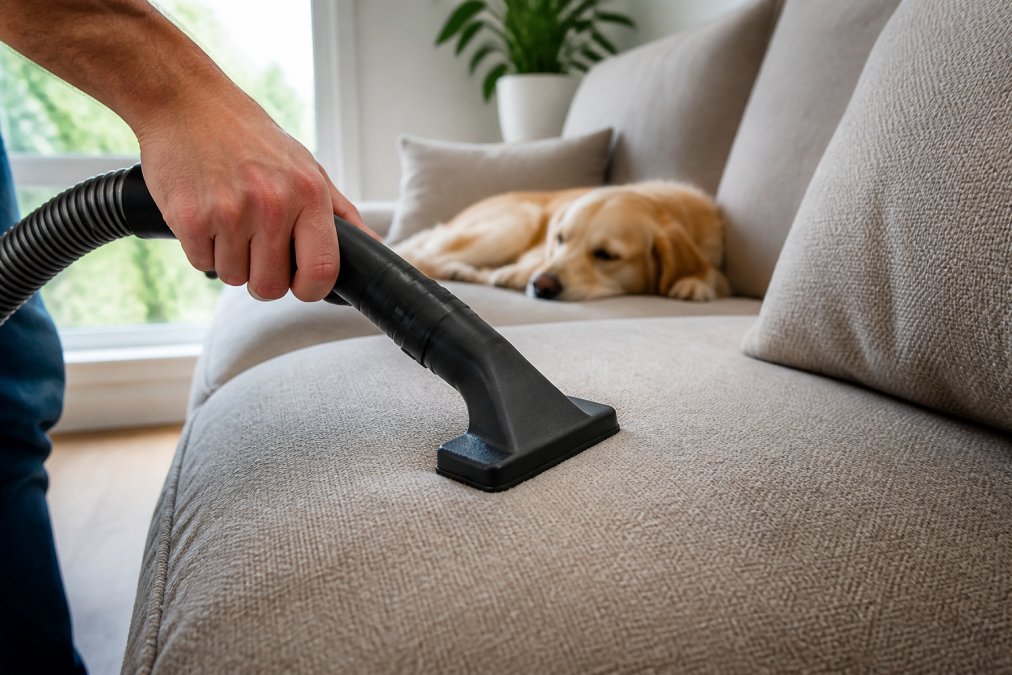
Vacuum the furniture before you wipe or spray it. Dry suction lifts the loose dander and pet hair so your cleaning solution can reach the fabric fibers where the protein allergens are actually embedded.
Step 2: Remove Pet Hair Before Treating Dander
Pet hair acts as a carrier for dander, so removing it first makes your cleaning solution far more effective. The answer depends on your fabric type: a lint roller works well on smooth fabrics like microfiber, while a stiff brush or rubber glove is better for woven textiles.
Dampen rubber gloves and run your hand across the upholstery in a sweeping motion; the moisture creates friction that pulls hair and dander into clumps you can collect and dispose of. For deeply woven hair, use a stiff brush in short, firm strokes to break the bond.
| Fabric Type | Best Tool | Technique |
|---|---|---|
| Microfiber | Lint roller | Roll in one direction |
| Cotton/Canvas | Stiff brush | Short, firm strokes |
| Velvet/Chenille | Rubber gloves | Damp, sweeping motions |
| Leather/Vinyl | Damp cloth | Wipe, do not scrub |
Step 3: Apply a Fabric-Safe Cleaning Solution
Once the surface is free of hair and loose dander, treat the remaining proteins with a cleaning solution. A simple mixture of water and a small amount of mild dish soap works for most upholstery, but test it on a hidden area first to ensure it does not discolor the fabric.
Lightly mist the solution onto the furniture rather than saturating it. Use a clean cloth to blot the area, working the solution into the fabric fibers to lift protein-based allergens. Avoid vigorous scrubbing, which can damage the textile and push allergens deeper. For pet households, ensure any cleaning solution is non-toxic, as residue can be ingested during grooming.
Never use bleach, ammonia, or harsh disinfectants on pet furniture. These chemicals are toxic to cats and dogs, and the residue can cause skin irritation or poisoning when your pet lies on the treated surface.
Step 4: Use Steam Cleaning to Denature Proteins
Steam cleaning is the most effective method for neutralizing dander because heat denatures the proteins, changing their structure so they no longer trigger an allergic reaction. A handheld steam cleaner or an upholstery machine’s steam function can reach temperatures high enough to break down the allergens.
Hold the steam nozzle a few inches from the fabric and move it slowly across the surface. The steam penetrates the fibers, dissolving dander and killing dust mites. After steaming, allow the furniture to air dry completely before use; damp fabric breeds mold and bacteria, so proper drying is essential for air quality.
If you do not own a steam cleaner, a hot iron with a damp cloth can serve as a temporary alternative, though it is less effective on thick cushions. For second-hand furniture, professional steam cleaning is often the safest route to ensure allergens are fully neutralized.
Essential Upholstery Cleaning Tools for Pet Owners
Building a dedicated upholstery cleaning kit makes the process faster and more consistent. You do not need expensive equipment, but you do need the right tools.
- HEPA vacuum: Non-negotiable for trapping microscopic particles.
- Lint roller or rubber gloves: For quick hair and dander pickup.
- Stiff brush: To agitate woven fabrics.
- Spray bottle: For applying your cleaning solution evenly.
- Microfiber cloths: For blotting and drying.
- Steam cleaner: For the protein-denaturing heat treatment.
These tools cover the full cleaning cycle, from dry removal to wet treatment. Keeping them accessible lets you spot-clean high-traffic areas weekly rather than waiting for a seasonal deep clean.
Post-Cleaning Maintenance to Keep Allergens Down
Cleaning your furniture is only half the battle; keeping allergens from returning requires a consistent, scheduled maintenance routine. Most pet owners clean reactively, after a sneezing fit or visible fur buildup, but by then, dander has already embedded deep into the fabric weave. A proactive schedule prevents that accumulation and extends the time between deep steam cleanings.
The Weekly Maintenance Schedule
| Day | Task | Time Required | Why It Matters |
|---|---|---|---|
| Daily (5 min) | Run a lint roller or damp rubber glove over the arms and back of the couch | 5 minutes | Removes the top layer of dander before it works into the weave; this is the highest-contact zone for your pet. |
| Twice Weekly | Vacuum the upholstery with the HEPA filter and crevice tool | 10 minutes | Captures dander that has settled into seams and cushion gaps; more frequent than weekly because dander accumulates faster than dust. |
| Weekly | Wash pet bedding in hot water (140°F or higher) with a fragrance-free detergent | 30 minutes | Hot water denatures the Fel d 1 and Can f 1 proteins; bedding is the single largest reservoir of dander in most homes (PubMed). |
| Weekly | Wipe down hard surfaces near the couch (side tables, window sills, baseboards) | 10 minutes | Dander settles on hard surfaces and gets re-suspended into the air when you walk by; a damp microfiber cloth traps it. |
| Monthly | Steam clean the upholstery or apply a fabric-safe enzyme spray | 1-2 hours | Monthly heat treatment denatures proteins that weekly vacuuming cannot reach; enzyme sprays break down residual allergens between steam sessions. |
Prevention Habits That Reduce the Allergen Load
Brush your pet outdoors daily. A single brushing session can remove thousands of dander-laden fur particles before they ever reach your couch. Do this outside or in a garage, and immediately dispose of the brushed fur in a sealed bag. If outdoor brushing is not possible, brush in a room with a HEPA air purifier running and close the door to the rest of the house.
Use washable furniture covers. A machine-washable throw or slipcover on the areas your pet frequents most, the armrest, the back of the couch, or a dedicated pet spot, creates a barrier you can strip and wash weekly. This is far easier than steam cleaning the entire sofa every week. Look for covers made of tightly woven cotton or polyester that can withstand hot-water washing.
Bathe your pet on a regular schedule. While not a furniture-cleaning task, bathing your dog every 2-4 weeks (or as recommended by your veterinarian) significantly reduces the amount of dander they shed. For cats, regular brushing is more practical than bathing, which most cats resist. Always use a pet-safe shampoo; human shampoos strip natural oils and can cause dry skin, which increases dander production.
Control humidity levels. Dander particles are lighter and stay airborne longer in dry air. Keeping indoor humidity between 30% and 50% (the range recommended by the EPA for allergen control) helps dander settle faster, making it easier to vacuum up. A portable hygrometer costs around $15 and takes the guesswork out of humidity management.
Run a HEPA air purifier continuously in the room where your pet spends the most time. The EPA notes that air cleaning devices can help reduce airborne allergen concentrations, but they work best when paired with source removal. Run the purifier 24/7, not just when you are cleaning, dander is shed constantly, and the purifier captures particles before they settle on your freshly cleaned furniture.
The Seasonal Deep-Clean Reset
Every 3-4 months, do a full reset: remove all cushions and vacuum every surface, including the underside of the cushions and the frame beneath them. Wash all removable covers in hot water. Steam clean the entire piece, and allow it to dry completely with windows open or a fan running. This seasonal reset prevents the gradual buildup that triggers allergy flare-ups in sensitive household members.
Keep a small “pet dander kit” near the couch, a lint roller, a pair of rubber gloves, and a spray bottle of your fabric-safe solution. When you see fur accumulating, you can address it in under two minutes instead of waiting for a scheduled cleaning day.
By following this schedule, you are not just cleaning, you are managing the allergen reservoir continuously. Most households that adopt this routine report that they can extend the time between professional deep cleanings from every 6 months to once a year, saving both money and effort while keeping allergy symptoms under control.
Pair Deep Cleaning with the Best Air Purifier for Pet Dander Allergies
Deep cleaning removes dander from your furniture, but it does nothing for particles already floating in the air. Pet dander is lightweight and can remain airborne for hours, settling on surfaces long after you finish cleaning. This is why pairing your cleaning routine with the best air purifier for pet dander allergies is essential for reducing total exposure.
The Aero Essence LLC SR100 air purifier is designed to handle nine distinct types of pollutants, including pet dander, dust mites, pollen, mold spores, and smoke. It targets the invisible particles that trigger allergy symptoms and provides visual confirmation that it is actively working. For households with asthma or COPD, reducing airborne dander is as important as cleaning the surfaces where it settles.
According to general guidance on indoor allergen reduction from the American Lung Association, combining source removal with air filtration is the most effective strategy for managing pet allergies. Similarly, the EPA guidance on indoor air quality and pets notes that regular cleaning and air cleaning devices can help lower allergen concentrations.
Furniture cleaning removes the reservoir of allergens, but an air purifier with a HEPA filter captures the particles that become airborne during cleaning and daily activity. For the best results, run the purifier continuously in the room where your pet spends the most time.
A maintenance schedule that works for most households includes vacuuming upholstery weekly, washing pet bedding every seven days, and running a full steam cleaning session monthly. This cadence keeps protein-based allergens from accumulating to levels that trigger reactions. If you have multiple pets or a family member with significant allergies, you may need to increase the frequency of both vacuuming and steaming.
The combination of mechanical removal, heat treatment, and continuous air filtration is the most reliable defense against pet dander. Cleaning your furniture fabrics addresses the source, while the SR100 manages the airborne particles that cleaning alone cannot catch. By following this four-step process and maintaining a consistent schedule, you can create a living space that is noticeably more comfortable for everyone, including your pets.
Frequently Asked Questions
How to get pet dander out of fabric?
Start by vacuuming the fabric with a HEPA filter and an upholstery tool to pull up loose dander and hair. Follow with a damp microfiber cloth or rubber glove wiped across the surface to collect particles stuck to the fibers. For deeper removal, use a steam cleaner, as the heat helps break down the proteins in dander. Finish by letting the fabric air dry completely before allowing pets back on the furniture.
What kills pet dander on furniture?
Heat and enzymatic cleaners are most effective. Steam cleaning at temperatures above 130°F denatures the proteins in pet dander, making them less likely to trigger an allergic reaction. You can also use an enzymatic cleaner designed for pet messes, which breaks down the biological material. A thorough vacuuming with a HEPA filter before and after treatment removes the dander particles themselves from the fabric fibers.
Can vacuuming alone remove pet dander from upholstery?
Vacuuming alone removes only surface-level dander. Pet dander clings to fabric fibers and embeds deep within cushions, so a standard vacuum pass misses a significant portion. Use a vacuum with a HEPA filter and an upholstery tool to prevent particles from being blown back into the air. Follow with a damp cloth wipe or steam cleaning to extract embedded dander, and repeat the process weekly to maintain low allergen levels.
How often should you clean furniture to manage pet dander?
For homes with pets, vacuum upholstery weekly with a HEPA filter attachment. Perform a deeper clean, such as steam cleaning or a thorough enzymatic treatment, every 1 to 3 months depending on the number of pets and severity of allergies. Wash removable cushion covers and throws monthly in hot water. Consistent maintenance prevents dander from accumulating in the fabric fibers and becoming airborne.
Reducing pet dander in your home requires a thorough approach that covers both your furniture and the air you breathe. The Aero Essence LLC SR100 complements your deep cleaning routine by continuously filtering airborne allergens, dust mites, and smoke, with visual confirmation that it is working. Get started with Aero Essence LLC and take control of your indoor air quality today.
This article was written using GrandRanker