
Best Air Filtration Systems for Musty Basement Smells
Table of Contents
- Why Basements Smell Musty and What Air Filtration Can Fix
- Comparison Table: Best Air Filtration Systems for Musty Basement Smells
- How to Choose the Best Air Purifier for Basement Spaces
- HEPA Air Purifier for Mold Spores: What 99.97% at 0.3 Microns Means
- Activated Carbon Filter for Basement Odors and VOCs
- How Often to Run an Air Purifier in a Damp Basement
- Humidity, Moisture Remediation, and Radon Testing
- Conclusion
- Frequently Asked Questions
Last Updated: October 18, 2026
Why Basements Smell Musty and What Air Filtration Can Fix
Most homeowners buy an air purifier to solve a musty basement smell, then wonder why the smell returns within a week. Here is the core problem: filtration removes what is floating in the air, not what is growing on the floor joists.
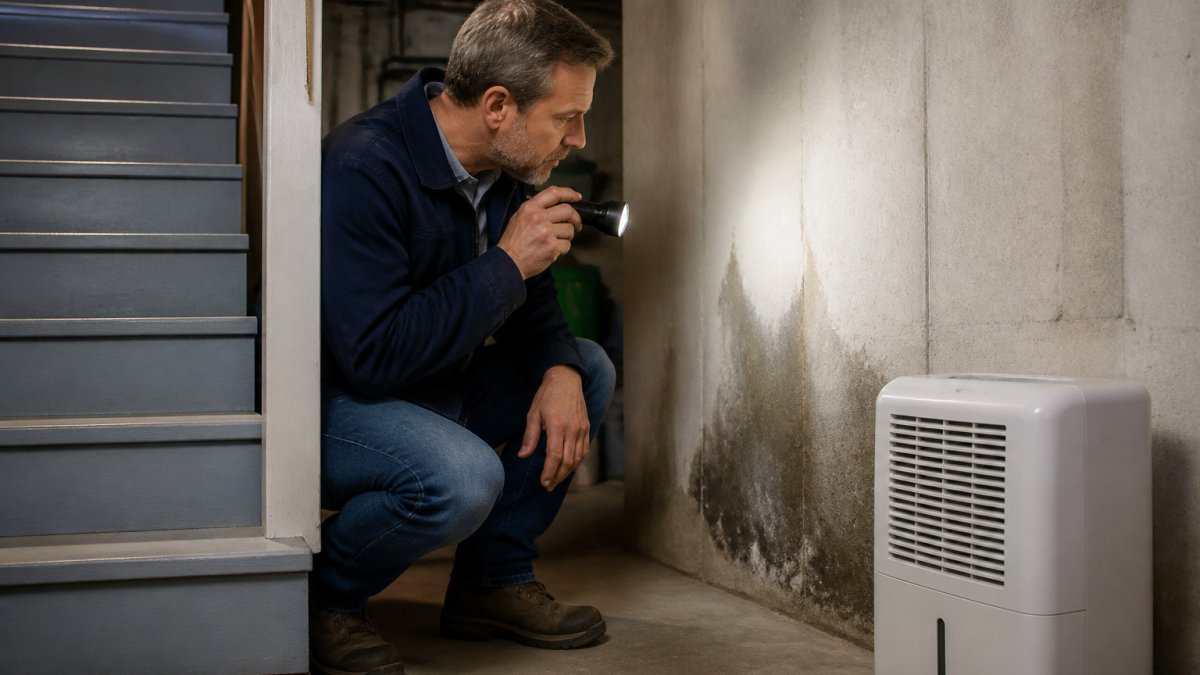
Diagnosing the Source Before You Buy
Before shopping, find out what you are actually smelling. A musty basement odor usually traces to one of four sources:
- Damp concrete or block walls wicking groundwater
- A wet crawlspace or floor drain feeding humidity upward
- Organic growth on joists, boxes, or carpet after past leaks
- Stored items like cardboard, fabric, and paper absorbing moisture
A simple test: tape a square of clear plastic to a concrete wall for a day. Condensation under the plastic points to moisture moving through the wall. Fix that first. Air cleaning handles the airborne leftovers, not the source.
Airborne Mold Spores vs. Mold Growth
This distinction matters more than any spec on a box. Airborne mold spores are microscopic particles drifting through the air, and a HEPA filter can capture them. Mold growth is a colony anchored to a wet surface, and no purifier removes it. An air filtration system lowers the spore count in the air, which reduces what you breathe and smell. It does not kill or remove the colony. If you see visible growth larger than a small patch, or smell it after drying the space out, call a mold professional.
Comparison Table: Best Air Filtration Systems for Musty Basement Smells
The table below maps the main filtration approaches to basement odor problems. Use it to match the technology to your specific issue rather than buying on price alone.
| System Type | Best For | Handles Odors? | Handles Spores? | Watch Out For |
|---|---|---|---|---|
| HEPA + activated carbon purifier | Musty odors plus airborne spores | Yes, with carbon | Yes | Filter replacement cost |
| HEPA-only purifier | Spores and dust, light odor | Limited | Yes | Odors pass through |
| Carbon-only unit | Odor and VOC control | Yes | No | No particle capture |
| Whole-home filtration | Central HVAC homes | Varies | Yes | Basement may be underserved |
| Dehumidifier + purifier combo | High-humidity basements | Yes, indirectly | Yes | Two devices to maintain |
Our pick for most basements is a HEPA plus activated carbon purifier, because musty smells and mold spores usually show up together. The Aero Essence SR100 targets nine kinds of pollutants, including mold spores, dust mites, pet dander, pollen, and smoke, and it gives you visual confirmation that purification is actively running, so you are not guessing whether the unit is doing anything.
How to Choose the Best Air Purifier for Basement Spaces
Start with coverage, not brand names. The best air purifier for basement use is one rated for your actual square footage at a realistic fan speed, with enough carbon to handle odor. Three specs decide it:
- CADR (clean air delivery rate): the volume of filtered air the unit moves per minute, measured separately for smoke, dust, and pollen. Higher CADR means faster cleaning.
- Ceiling height: basements often run shorter or taller than the 8-foot standard, which changes room volume. A 7-foot ceiling in a 500-square-foot room is 3,500 cubic feet; a 10-foot ceiling in the same footprint is 5,000.
- Air changes per hour (ACH): how many times the full room volume cycles through the filter each hour. Aim for 4-5 for odor and spore control, and 5-6 if someone in the home has respiratory sensitivities.
Sizing by CADR, Ceiling Height, and Air Changes per Hour
Multiply length by width by ceiling height to get cubic feet. Then divide your target CADR by that volume and multiply by 60 to estimate air changes per hour. A unit with a CADR around 200 in a 1,000-cubic-foot basement delivers roughly 12 air changes per hour at top speed, which is more than enough.
Here is the formula written out so you can run it on your own space:
ACH = (CADR × 60) ÷ room volume in cubic feet
Worked example: a 20-foot by 25-foot basement with an 8-foot ceiling is 4,000 cubic feet. To hit 5 ACH, you need a CADR of at least (5 × 4,000) ÷ 60 ≈ 333.
Matching CADR to Real Basement Layouts
Open, finished basements with a single connected footprint are the easy case, one correctly sized unit near the center works. The harder cases are partitioned basements with a finished room, a laundry alcove, and a storage area behind closed doors. Air purifiers only clean air that reaches their intake, so a unit in the finished room does little for a closed storage area where the musty smell originates.
Manufacturers rate coverage at maximum fan speed, which is rarely how you will run it. Size for your target room at medium speed so you have headroom on smoky or humid days. A unit that only hits your target ACH at its loudest setting is effectively undersized.
Reading the Fine Print on Coverage Claims
Coverage claims assume an 8-foot ceiling and a single air change per hour in many cases, far below the 4-5 ACH you actually want for odor control. When a box says “covers up to 1,500 square feet,” check the CADR and do the math yourself. If the stated CADR cannot deliver at least 4 ACH in your actual cubic footage, the coverage number is marketing, not engineering.
HEPA Air Purifier for Mold Spores: What 99.97% at 0.3 Microns Means
A true HEPA filter captures 99.97% of particles at 0.3 microns, the hardest particle size to trap (the EPA). Mold spores typically run larger than that, so a genuine HEPA air purifier for mold spores is effective at pulling them from the air. The catch is the word “true.” Some units advertise “HEPA-type” or “HEPA-like” media that does not meet the standard. Look for the words “true HEPA” and a stated efficiency rating.
Activated Carbon Filter for Basement Odors and VOCs
Odor molecules and volatile organic compounds are gases, not particles, so a HEPA filter lets them pass straight through. That is why an activated carbon filter for basement odors is the second half of the equation. Carbon adsorbs the gases that create the musty smell, along with fumes from paint, solvents, and stored chemicals. Carbon filters vary widely in how much media they hold. A thin carbon screen saturates fast and stops working quietly. A thicker carbon bed lasts longer and handles heavier odor loads.
How Often to Run an Air Purifier in a Damp Basement
Run it continuously on low or medium, not in short bursts. Mold spores and odors build up around the clock, and a purifier only cleans air that passes through it. Continuous operation keeps the spore count down and keeps air moving, which itself discourages damp pockets. The one exception: if the basement is genuinely wet, dry it out first. Running a purifier in standing humidity wastes filter life.
Skipping filter replacement is a common mistake. A loaded filter restricts airflow, drops CADR, and can start releasing captured odor back into the room. A clogged carbon filter is often why someone thinks their purifier “stopped working.”
Humidity, Moisture Remediation, and Radon Testing
Filtration is the last step, not the first. An air purifier can lower the spore count in the air, but it cannot dry a wet wall, stop a leak, or remove mold growing on a joist. The order that actually works is: find the moisture source, fix it, dry the space, then filter the air. Skip the first three steps and the musty smell returns as soon as the filter loads up.
Practical Humidity Targets for a Basement
Keep basement relative humidity in the 30-50% range. Above 60%, mold and mildew have the conditions they need to grow, and the musty odor will persist no matter how much carbon you run. A cheap hygrometer placed at floor level, where cool, damp air collects, tells you what you are actually dealing with. If the reading sits above 55% for days at a time, a dehumidifier is doing more for your air quality than any purifier will.
Dehumidifier Guidance and Leak Checks
A dehumidifier sized for the space is the single highest-impact purchase for a musty basement. Match its pint rating to the basement’s square footage and dampness level, and route the drain hose to a floor drain or condensate pump so you are not emptying a bucket twice a day. Run it continuously during humid months and set the target around 45-50%.
Airborne Spores vs. Surface Mold, Setting Expectations
A HEPA filter captures airborne mold spores, which reduces what you breathe and smell. It does not kill or remove mold growing on surfaces. If you see visible growth larger than a small patch, or the smell persists after the space has been dried out, that is a remediation job, not a filtration job. Filtration is a support tool that keeps spore counts down after the source is addressed, it is not a substitute for fixing the colony.
Radon Testing and Mitigation
Separately from odor and mold, test for radon. Radon is a radioactive soil gas that can collect in basements, and no air purifier removes it, HEPA and carbon media do not capture a gas that seeps in through the slab and foundation. Testing is inexpensive and widely available through hardware stores and state radon programs, and mitigation is a separate professional service involving sub-slab depressurization.
The best air filtration systems for musty basement smells reduce odors and airborne spores, but moisture control, source repair, and radon testing address what filtration cannot. Do all of them for a genuinely healthy basement.
Conclusion
A musty basement is rarely solved by one device. It takes moisture control to stop the source, filtration to clean the air you breathe, and a radon test for peace of mind. If you want the filtration piece handled with a system for mold spores, odors, and the other invisible particles that collect in damp spaces, the Aero Essence SR100 targets nine pollutant types and shows you visual confirmation that it is working. Shop the SR100 at Aero Essence LLC and give your basement air a real reset.
Frequently Asked Questions
How often should I run my air purifier in a basement?
Run it continuously on low or medium fan speed for the best results, because musty basement odors and airborne particles build up around the clock and a purifier only cleans air that passes through it. Bumping to high speed makes sense during and after activities that stir up dust, or when humidity spikes. If noise is a concern, run it on high while you are away and drop to low overnight. Check the filter monthly and replace it on the schedule your unit specifies, since a loaded filter cuts airflow and clean air delivery rate.
Can an air purifier remove mold spores from basement air?
A HEPA air purifier for mold spores captures airborne spores at 99.97% efficiency down to 0.3 microns, which removes them from the air you breathe. What it cannot do is kill mold or stop it from growing on damp concrete, joists, or stored boxes. Treat filtration as one layer of a larger plan: fix the moisture source, run a dehumidifier to keep humidity in check, and clean visible growth. If mold covers a large area or you smell it after drying, bring in a mold remediation professional.
Will an air purifier fix the cause of a musty basement smell?
No. Filtration removes odor molecules and airborne spores from the air, but the musty basement smell will return as long as moisture feeds the source. Common culprits include poor drainage, foundation cracks, leaking pipes, and humid summer air condensing on cool concrete. Address those first, then use activated carbon filtration to clear residual odors and a dehumidifier to hold humidity down. A purifier works best as the final step, not the only one.
What type of air filter works best for musty basement odors?
You need two stages working together. A HEPA filter traps particulate matter such as mold spores, dust, and dander, while an activated carbon filter adsorbs the gas-phase compounds that create the musty smell, along with VOCs and resin fumes. Carbon filters have limited capacity, so check the replacement interval and cost before buying. For a small basement, a single well-sized unit with both stages usually beats a larger unit with a thin carbon pad.