
Air Purifier Benefits for Better Bedroom Sleep
Table of Contents
- Air Purifier Benefits for Better Bedroom Sleep
- How Air Purifiers Reduce Allergens and Airborne Particles
- Impact on Sleep Quality and Respiratory Health
- Eliminating Pet Dander, Dust Mites, and Mold Spores
- How Often Should You Run an Air Purifier in Your Bedroom
- Air Purifier Benefits for Allergies and Asthma Management
- Placement, Noise, and Energy Efficiency Considerations
- Conclusion
Last Updated: August 29, 2026
Air Purifier Benefits for Better Bedroom Sleep
A good night’s sleep depends on more than just comfort, the air you breathe matters. Most people don’t realize that bedroom air quality directly impacts sleep duration, respiratory health, and overall well-being. At Aero Essence LLC, we understand that invisible particles like dust mites, pet dander, pollen, and mold spores accumulate in bedrooms, disrupting sleep and triggering allergies. An air purifier benefits bedroom environments by removing these contaminants, creating cleaner air that supports deeper, more restorative sleep.
The connection between air quality and sleep quality is straightforward: when your lungs work harder to filter pollutants, your body experiences stress. Your breathing becomes shallow, sleep becomes fragmented, and you wake feeling unrested. Research shows that indoor air can be up to five times more polluted than outdoor air, and bedrooms often trap the highest concentrations of allergens and particulate matter (the EPA). Installing an air purifier in your bedroom removes these irritants before they reach your respiratory system, allowing your body to relax fully during sleep.
This guide explores the specific benefits of using an air purifier in the bedroom, from allergen reduction to asthma management, and covers placement strategies that maximize effectiveness. Whether you’re dealing with pet allergies, seasonal pollen, wildfire smoke, or general indoor pollution, understanding how air purifiers work and where to position them transforms your bedroom into a clean-air sanctuary.
How Air Purifiers Reduce Allergens and Airborne Particles
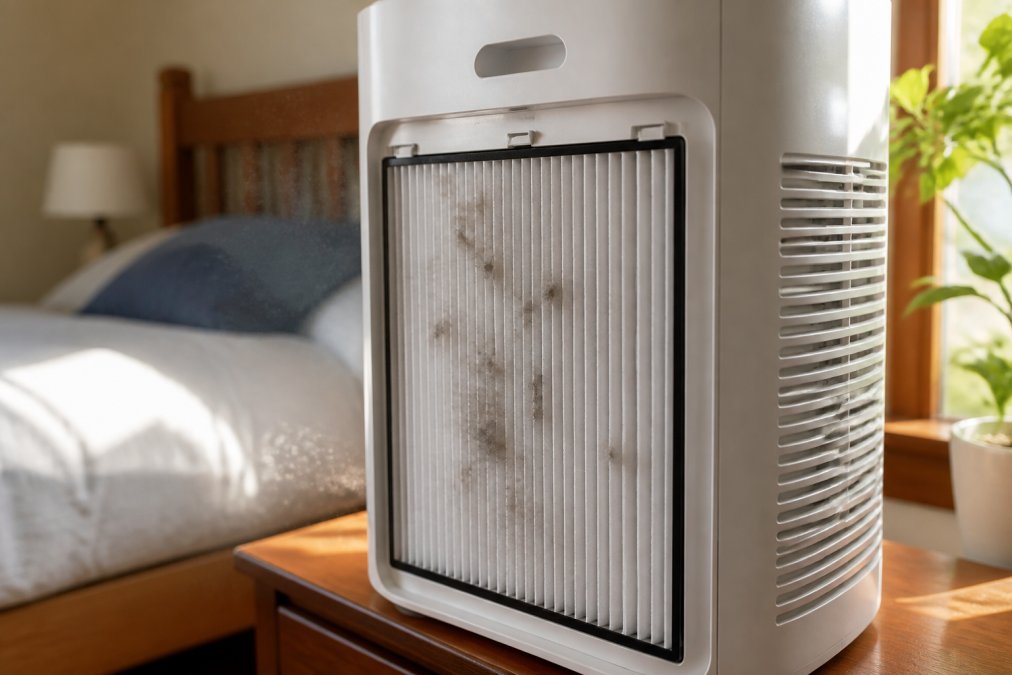
Air purifiers remove allergens and airborne particles by pulling air through specialized filtration systems. The most effective models use HEPA filtration, which captures particles as small as 0.3 microns, small enough to trap dust mites, pollen, and pet dander that invisible to the naked eye (the FDA). When an air purifier benefits bedroom air quality, it’s because the filtration process continuously cycles air through the room, removing contaminants on each pass.
HEPA filters work through mechanical trapping, not chemical reactions. Air enters the purifier’s intake, passes through a pre-filter that catches larger particles like pet hair and dust, then moves through the HEPA layer where microscopic particles stick to the filter material. This multi-stage approach ensures that common bedroom allergens, dust mite feces, pet dander fragments, and pollen grains, are captured rather than recirculated.
The clean air delivery rate (CADR) measures how effectively an air purifier removes specific pollutants. A higher CADR means the unit cleans the air faster. For bedrooms, you want a purifier with a CADR rating that matches your room size. A unit designed for 400 square feet won’t adequately clean a 600-square-foot master bedroom, leaving allergens in areas the purifier doesn’t reach effectively.
Check the CADR rating on the product specifications. For bedrooms under 200 square feet, look for a CADR of at least 150 for dust and pollen. For larger bedrooms, add 50 points per additional 100 square feet. This ensures the purifier can complete multiple air exchanges per hour, effectively removing allergens before they settle on bedding.
Impact on Sleep Quality and Respiratory Health
When bedroom air contains fewer allergens and irritants, sleep quality improves dramatically. Your respiratory system doesn’t have to work overtime filtering pollutants, which means deeper sleep cycles and better oxygen absorption. People who add air purifiers to their bedrooms report falling asleep faster and experiencing fewer nighttime awakenings.
The mechanism is biological. Allergens and particulate matter trigger inflammatory responses in the airways, even if you don’t consciously notice them. This inflammation narrows air passages slightly, reducing oxygen flow and disrupting the natural sleep architecture. Your body shifts between sleep stages less smoothly, and you experience more micro-awakenings that fragment sleep without you remembering them. Removing these irritants eliminates the underlying trigger, allowing sleep to proceed uninterrupted.
Respiratory health improves alongside sleep quality. People with asthma, allergies, or general respiratory sensitivity notice reduced nighttime coughing, fewer morning congestion symptoms, and easier breathing throughout the night. The air purifier benefits bedroom users by creating an environment where the lungs can fully relax, which is especially important during sleep when your body prioritizes repair and recovery.
Sleep apnea symptoms may also improve with cleaner bedroom air. While an air purifier isn’t a treatment for sleep apnea, reducing airway irritation from particulate matter can decrease the severity of breathing interruptions. Combined with proper medical care, air purification supports better respiratory function during sleep.
Eliminating Pet Dander, Dust Mites, and Mold Spores
Pet owners face a specific allergen challenge: dander accumulates heavily in bedrooms where pets sleep or spend time. Pet dander is microscopic skin cells shed continuously by cats, dogs, and other animals. Unlike pet hair, which you can see and vacuum, dander particles float in air and settle into bedding, pillows, and mattresses. An air purifier benefits pet owners by capturing dander before it embeds into fabrics.
Dust mites thrive in bedrooms, feeding on dead skin cells and multiplying in warm, humid environments. A single dust mite produces roughly 20 waste particles daily, and a typical mattress can harbor millions of dust mites (peer-reviewed research). These waste particles are potent allergens that trigger reactions even in people without diagnosed allergies. HEPA filtration removes dust mite allergens from the air, reducing the total allergen load in your sleeping environment.
Mold spores present another significant bedroom concern, especially in humid climates or homes with moisture issues. Mold grows in poorly ventilated spaces, and bedrooms with limited air circulation are prime locations. Mold spores trigger respiratory reactions and can worsen asthma or cause fungal infections. An air purifier equipped with activated carbon filtration removes mold spores and volatile organic compounds (VOCs) that mold releases into the air.
If you have visible mold growth in your bedroom, an air purifier alone won’t solve the problem. Address the moisture source first, fix leaks, improve ventilation, or use a dehumidifier. The purifier then removes airborne spores from the environment, but it cannot eliminate mold that’s actively growing on surfaces.
How Often Should You Run an Air Purifier in Your Bedroom
Running your air purifier continuously provides the most consistent benefit, but many people run them strategically to balance effectiveness with energy consumption. Most users run their units during sleep hours at minimum, typically 8 to 10 hours nightly. This ensures clean air throughout your sleeping period when you’re most vulnerable to airborne irritants.
For optimal air purifier benefits in bedroom environments, aim to run the unit at least 4 hours daily, with 8 hours being the ideal minimum. This schedule allows the purifier to complete multiple air exchanges, removing accumulated particles. If you have pets, allergies, or respiratory conditions, running the unit continuously or for extended periods yields better results.
The supporting keyword "how often should you run an air purifier" depends on several factors. Room size, pollution levels, and filter condition all influence optimal runtime. A bedroom with heavy pet traffic or seasonal pollen exposure benefits from longer runtimes. A smaller bedroom with minimal allergen sources can achieve good results with 6 to 8 hours of operation.
Filter lifespan decreases with longer runtimes, so consider this in your cost-of-ownership calculation. Most HEPA filters last 6 to 12 months depending on usage and air quality. Continuous operation shortens filter life but maintains superior air quality. Running the unit 8 to 10 hours nightly balances air quality improvement with reasonable filter replacement costs.
For most bedrooms, running your air purifier during sleep hours (8-10 hours nightly) provides substantial benefits without excessive energy costs or rapid filter degradation. Increase runtime during high-allergen seasons or if you have pets or respiratory conditions.
Air Purifier Benefits for Allergies and Asthma Management
Allergies and asthma both worsen in bedrooms with high allergen concentrations. Dust mites, pollen, pet dander, and mold spores trigger allergic reactions and asthma attacks, often during sleep when you’re in close proximity to these irritants for extended periods. An air purifier benefits allergy and asthma sufferers by removing these triggers from the breathing zone.
For people with allergies, cleaner bedroom air means fewer nighttime symptoms. Allergic rhinitis, stuffy nose, sneezing, itchy eyes, diminishes when allergen levels drop. Morning congestion decreases, and daytime allergy symptoms improve because you’ve spent eight hours in a cleaner environment. The cumulative effect of breathing filtered air during sleep reduces overall allergen exposure and allows your immune system to recover.
Asthma management improves similarly. Asthma attacks often occur at night when airways are more reactive and allergen exposure is highest. Removing common asthma triggers, dust mites, pet dander, mold spores, and particulate matter, reduces the likelihood of nighttime attacks. People with asthma report fewer rescue inhaler uses and better sleep quality after adding air purifiers to their bedrooms.
The air purifier benefits bedroom users with asthma by creating a controlled environment where medication can work more effectively. When you’re not constantly exposed to irritants, your lungs don’t need to produce excessive inflammation. This allows prescribed asthma medications to maintain better control with potentially lower doses.
Placement, Noise, and Energy Efficiency Considerations
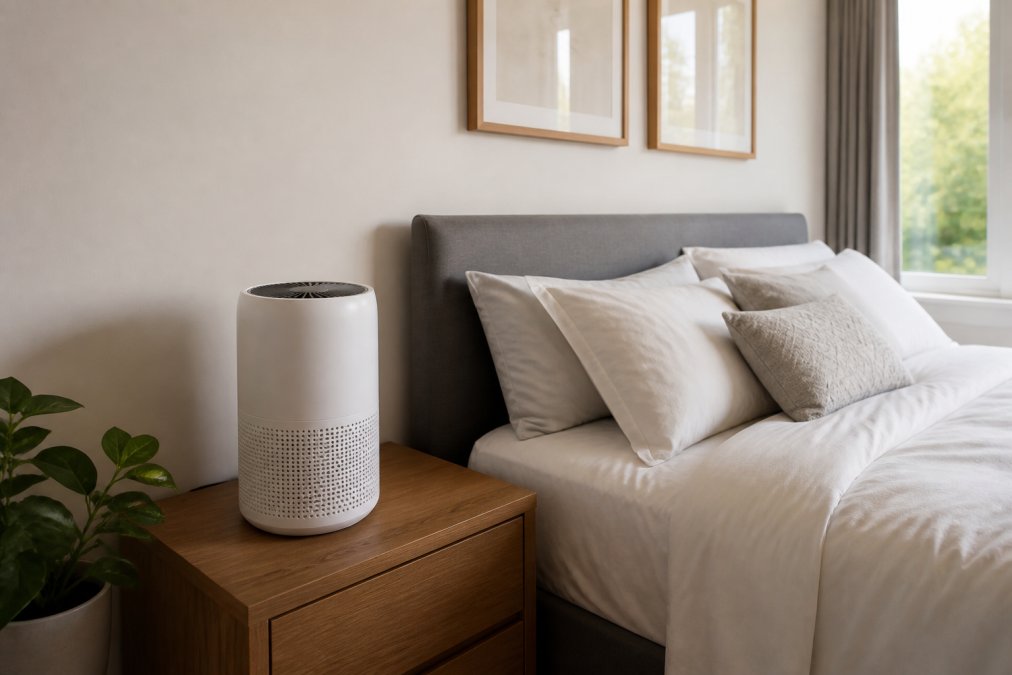
Where you position your air purifier dramatically affects its performance. Effective placement ensures the unit pulls air from throughout the room rather than just recycling air from its immediate vicinity. Place the purifier at least 3 feet from walls and furniture to allow unrestricted air intake from multiple directions. Positioning it on a nightstand or low table works well for bedrooms, as it pulls air from the breathing zone where you spend sleep hours.
Avoid placing the purifier in corners, against walls, or behind furniture where air intake is blocked. These positions reduce the unit’s effectiveness by limiting the air it can pull in. The best placement follows the airflow dynamics of your bedroom, position the purifier where it can draw air across the room and push clean air back toward your sleeping area.
Noise levels matter for bedroom use. Most modern air purifiers operate between 25 and 60 decibels depending on fan speed. At night, you want a unit that runs quietly on lower settings. Many purifiers offer multiple speed settings, use the lowest setting that still provides adequate air circulation during sleep. Higher speeds increase noise and energy consumption without proportionally improving air quality if the unit is appropriately sized for your room.
Energy efficiency affects long-term costs. Most bedroom air purifiers consume between 30 and 100 watts depending on size and speed. Running a 50-watt unit continuously costs roughly $40 to $50 annually in electricity. This is minimal compared to the health benefits, but consider energy consumption when choosing between models. Smaller, appropriately-sized units for your bedroom use less energy than oversized models running at full capacity.
Test your air purifier at different fan speeds to find the sweet spot between noise and effectiveness. Most people can tolerate 30-40 decibels during sleep, similar to a quiet refrigerator. If noise bothers you, run the unit on a lower setting during sleep and increase speed during daytime hours when you’re not in the bedroom.
Pros and Cons of Bedroom Air Purifiers
Air purifiers offer substantial benefits for bedroom air quality, but understanding both advantages and limitations helps you make an informed decision.
Pros:
- Remove allergens and particulate matter, reducing allergy and asthma symptoms
- Improve sleep quality by reducing airway irritation and respiratory stress
- Eliminate odors and volatile organic compounds from the bedroom environment
- Provide cleaner air for people with respiratory sensitivities
- Relatively low operating cost compared to health benefits
- No installation required, simply plug in and operate
Cons:
- Cannot address moisture problems or active mold growth
- Filter replacement costs add up over time
- Require regular maintenance and filter changes for continued effectiveness
- Noise on higher settings may disturb light sleepers
- Effectiveness depends on proper room sizing and placement
- Do not eliminate all pollutants, some particles are too large or small for standard filters
The air purifier benefits bedroom environments most when used as part of a comprehensive indoor air quality strategy. Combine purification with humidity control, regular vacuuming, and proper ventilation for optimal results.
Conclusion
An air purifier benefits bedroom environments by removing allergens, particulate matter, and irritants that disrupt sleep and trigger respiratory symptoms. Whether you’re managing pet allergies, seasonal pollen exposure, wildfire smoke, or general indoor pollution, cleaner bedroom air translates directly to better sleep quality and improved respiratory health.
Creating a cleaner sleep environment is one of the most effective ways to improve nighttime rest and respiratory wellness. The Aero Essence LLC SR100 air purifier tackles nine distinct types of pollutants, including dust mites, pet dander, pollen, mold spores, and smoke, while providing visual confirmation that it’s actively working to protect your home. With proper placement and consistent operation, you’ll notice improvements in sleep quality, reduced allergy symptoms, and easier breathing within days. Get started with the SR100 and experience the difference that truly clean bedroom air makes.
Frequently Asked Questions
Is it healthy to sleep with an air purifier running in your bedroom?
Yes, running an air purifier during sleep is safe and beneficial for most people. Air purifiers reduce airborne particles, dust mites, pet dander, and pollen that accumulate in your bedroom overnight. The main consideration is noise level, look for models rated below 30 decibels to avoid sleep disruption. Some people find white noise from purifiers actually helps them sleep better, while others prefer quieter operation. If you have asthma or respiratory sensitivities, sleeping with an air purifier can significantly improve nighttime breathing and reduce symptom severity.
Can an air purifier help with pet dander allergies in the bedroom?
Air purifiers with HEPA filtration are highly effective at capturing pet dander. A high-performance purifier can trap particles as small as 0.3 microns, which includes most pet dander particles that trigger allergic reactions. For pet owners with severe allergies, running the purifier continuously or several hours before bedtime noticeably reduces nighttime sneezing, congestion, and itchy eyes. Combined with regular bedding washing and pet grooming, an air purifier addresses a major source of bedroom allergens and can make a meaningful difference in allergy symptom reduction.
How often should you run an air purifier to see real benefits in your bedroom?
Running your air purifier for 8 hours daily, ideally during sleep hours, provides substantial air quality improvement. For optimal results, run it continuously or at least 4-6 hours nightly, especially if you have allergies or asthma. The air exchange rate matters: a purifier should cycle your bedroom air 4-5 times per hour, meaning a smaller bedroom reaches clean air faster than a large open space. If you live in an area with wildfire smoke or high pollen counts, running it 24/7 during those seasons provides maximum protection. Most users notice improvements in sleep quality and symptom reduction within 3-7 days of consistent use.
Do air purifiers reduce mold spores and help with respiratory conditions like asthma?
HEPA filters effectively capture mold spores, helping reduce airborne mold that triggers asthma and respiratory distress. Air purifiers remove common asthma triggers including dust mites, pollen, pet dander, and mold spores, all of which accumulate in bedroom air overnight. Studies show that improved indoor air quality reduces asthma symptom frequency and severity, particularly during sleep when exposure is longest. However, air purifiers address airborne mold but not moisture-related mold growth on surfaces; you may still need moisture control or professional remediation for active mold problems. Combined with sleep hygiene improvements and medication, a bedroom air purifier is a practical tool for asthma management.
This article was written using GrandRanker