
7 Signs Snoring May Be Caused by Sleep Apnea
Last Updated: November 16, 2026
Quick Summary
Sleep apnea is a sleep disorder where breathing repeatedly stops and restarts during sleep, often because the upper airway collapses. Signs that snoring may be caused by sleep apnea include witnessed breathing pauses followed by gasping, choking or snorting, and excessive daytime sleepiness even after a full night in bed. Only a sleep test can confirm the diagnosis.
- A bed partner should log pause frequency, estimated pause duration, ending sound, sleep position, and daytime fallout.
- A short phone recording of a pause-and-gasp cycle is often the most persuasive evidence to bring to an appointment.
- An apnea-hypopnea index under 5 events per hour is within the normal range, so snoring alone does not meet the threshold.
- Do not buy a CPAP machine, mouthguard, or snoring device based on symptoms alone; get tested first.
- See a doctor promptly if pauses are confirmed, gasping wakes you, or you fall asleep while driving or at work.
Table of Contents
- How to Tell If Your Snoring Is More Than Snoring
- Sleep Apnea Symptoms You Can Spot Without a Sleep Study
- Dangerous Snoring Signs a Bed Partner Should Report
- What a Sleep Apnea Diagnosis Actually Involves
- Sleep Apnea Treatment Options and What Each One Does
- How Symptoms Differ by Age, Sex, and Body Type
- When to See a Doctor About Snoring and Safety Warning Signs
- Build a Cleaner Sleep Environment While You Get Evaluated
- Frequently Asked Questions
How to Tell If Your Snoring Is More Than Snoring
Snoring is just noise from air moving past a narrowed airway. As MedlinePlus explains in its guide to obstructive sleep apnea in adults, not everyone who snores has obstructive sleep apnea, and that single fact changes how you should read every symptom below.
This guide was put together to help you sort ordinary snoring from signs snoring may be caused by sleep apnea, and to know when to get tested.
Here is the short version. Sleep apnea is a sleep disorder where breathing repeatedly stops and restarts during sleep, often because the upper airway collapses. (Sleep Apnea – What Is Sleep Apnea?) It shows up as breathing pauses, gasping, and daytime exhaustion, not just loud snoring.
Sleep Apnea Symptoms You Can Spot Without a Sleep Study
You can spot several sleep apnea symptoms on your own, before any testing. The clearest ones show up during the day and in the morning, because they reflect how broken your sleep was the night before. Daytime fatigue and morning headaches can point toward disrupted breathing at night, making it useful to understand how sleep apnea symptoms and treatments relate to the signs you notice.
Watch for these:
- Excessive daytime sleepiness, even after a full night in bed
- Morning headaches that fade as the day goes on
- Dry mouth or a sore throat on waking
- Difficulty concentrating or feeling irritable
Daytime Sleepiness, Morning Headaches, and Dry Mouth
Daytime sleepiness is the symptom people notice first. You fall asleep in front of the TV or fight to stay awake at your desk.
Morning headaches and a dry mouth tell a similar story. When you breathe through your mouth because your airway is blocked, your throat dries out.
If any of these feel familiar, keep reading. The nighttime signs are where the picture gets clearer.
Dangerous Snoring Signs a Bed Partner Should Report
A bed partner is your best witness. You cannot hear yourself sleep, so the dangerous snoring signs are usually caught by someone else in the room.
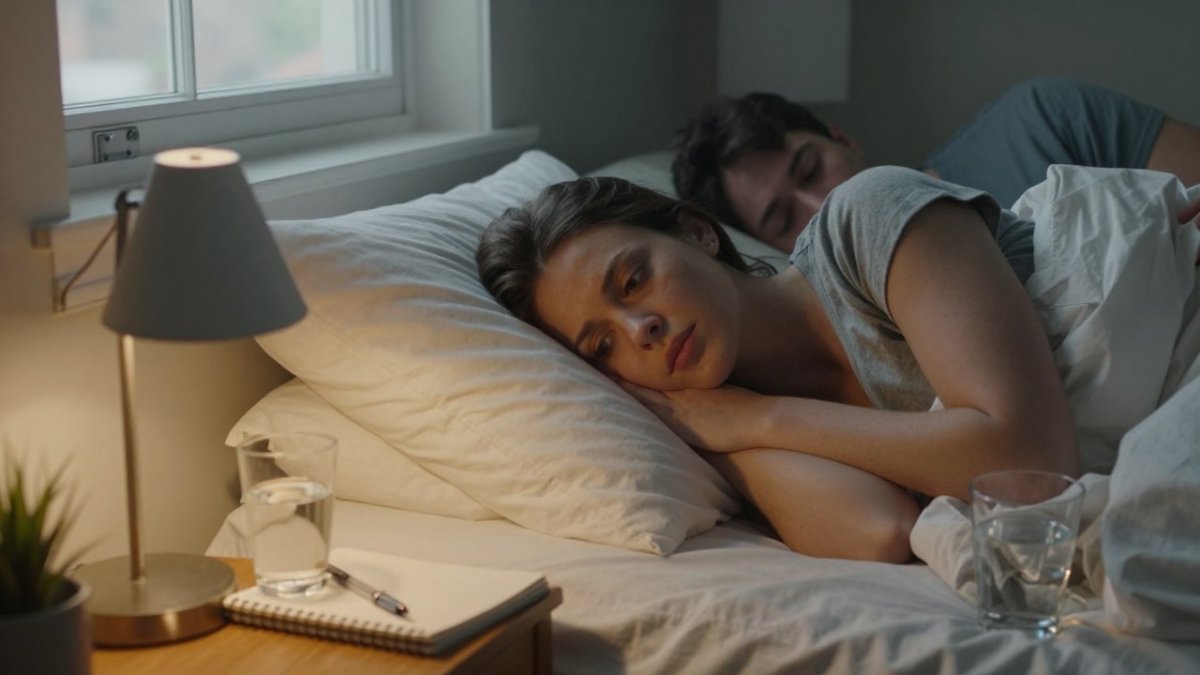
Ask them to listen for:
- Breathing pauses. Long silent gaps, then a sudden gasp.
- Choking or gasping. Sounds like the sleeper is struggling for air.
- Snorting. A sharp, noisy intake right after a pause.
- Frequent loud snoring. Snoring that rattles the room most nights.
These are the classic witnessed apnea signs. A silent pause followed by a gasp is the pattern doctors look for most. If your partner describes it, write down how long the pauses last and how often they happen.
What a Bed Partner Should Actually Write Down
A clinician cannot act on “he snores a lot.” A short log turns a vague complaint into a usable clinical history. Over one or two weeks, note:
- Frequency. How many nights per week the loud snoring or pauses occur, and whether it is worse on the back, after alcohol, or when congested.
- Pause duration. Estimate in seconds by counting silently (“one Mississippi, two Mississippi”) from the moment the sound stops to the gasp. Most people overestimate, so a rough count beats a guess.
- Ending sound. Gasp, snort, choke, or a full body jerk.
- Position. Whether the sleeper was on the back, side, or stomach.
Watch out: do not shake or wake the sleeper during a pause to “check” on them. Most pauses end on their own within seconds, and repeated waking fragments sleep further and can make the next night worse. Note the time and the pattern instead.
How to Share It Without Turning It Into an Argument
Snoring is a sensitive topic, and a partner who feels accused will tune out. A common pattern that works: frame the log as concern for health, not criticism of noise, and hand over the written notes rather than reciting them from memory. Bring the log, the video, and a list of any medications and alcohol use to the appointment. The sleeper’s own report matters too, but the partner’s observations frequently fill in what the sleeper genuinely cannot know about their own night.
What a Sleep Apnea Diagnosis Actually Involves
A sleep apnea diagnosis does not come from a questionnaire, a symptom checklist, or a snoring app. It comes from measuring your breathing during sleep, and a doctor leads that process. This is the part most symptom articles gloss over: recognizing the signs raises suspicion, but only testing confirms the disorder.
The first step is a visit with your healthcare professional. They review your symptoms, your risk factors, and your bed partner’s report. From there, testing usually takes one of two forms:
- Home sleep apnea test. A small monitor worn overnight in your own bed records breathing effort, airflow, oxygen level, and sometimes body position. It is convenient and lower-cost, but it typically measures fewer signals than a lab study and can underestimate mild cases.
- Overnight sleep study (polysomnography). Conducted in a sleep lab, it records brain waves, eye movement, muscle tone, heart rhythm, airflow, breathing effort, and oxygen saturation. It is used for more complex cases, for suspected central sleep apnea, and when a home test is inconclusive.
What the Numbers Mean
Test results are summarized with the apnea-hypopnea index (AHI), the average number of breathing pauses and near-pauses per hour of sleep. A common clinical convention is:
- Fewer than 5 events per hour. Within the normal range; snoring alone does not meet the threshold.
- 5 to 15 per hour. Mild sleep apnea.
- 15 to 30 per hour. Moderate sleep apnea.
- More than 30 per hour. Severe sleep apnea.
A sleep specialist reads the results and confirms whether your breathing pauses meet the threshold for obstructive sleep apnea. You can read more about the process through the National Heart, Lung, and Blood Institute’s sleep apnea overview.
Why Symptoms Alone Cannot Confirm It
Snoring, gasping, and daytime fatigue are common and have many causes, including allergies, alcohol, weight gain, nasal blockage, and simply sleeping on the back.
Watch out: do not buy a CPAP machine, mouthguard, or snoring device based on symptoms alone. An unmatched device can waste money and, in the case of an ill-fitting oral appliance, move the jaw in ways that cause pain.
What Happens After the Test
If the study confirms sleep apnea, the specialist discusses severity, likely causes, and treatment options, and may refer you to a sleep medicine physician, dentist, or surgeon depending on the findings. If the study is negative but symptoms persist, the next step is usually a conversation about other causes of poor sleep rather than a second device purchase. Either way, the test turns guesswork into a plan.
Sleep Apnea Treatment Options and What Each One Does
Treatment depends on how severe your sleep apnea is and what is causing the airway obstruction. Most plans combine a few approaches.
| Treatment | What It Does | Best For |
|---|---|---|
| CPAP therapy | Keeps the airway open with air pressure | Moderate to severe OSA |
| Oral appliances | Repositions the jaw to open the throat | Mild OSA, snoring |
| Positional therapy | Keeps you off your back | Back-sleepers with mild symptoms |
| Weight management | Reduces tissue pressing on the airway | People with excess weight |
| Surgery | Removes or reshapes blocking tissue | Specific structural causes |
Your doctor will match the option to your test results. Do not skip diagnosis and buy a device on your own.
For readers who want to tackle the air side of sleep at home, a cleaner-air solution like the SR100 from Aero Essence LLC is a helpful add-on to medical care, not a replacement for it. You can see the full range on our cleaner air delivered page.
How Symptoms Differ by Age, Sex, and Body Type
Symptoms do not look the same in every person, which is a big reason sleep apnea goes missed.
- Men more often report loud snoring and witnessed pauses.
- Women may show up with fatigue, insomnia, or headaches instead.
- Older adults can have subtler signs, sometimes mistaken for normal aging.
- Children may snore, breathe through the mouth, or struggle at school.
If your symptoms do not match the “classic” picture, that does not rule anything out. It just means you should describe what you actually notice.
When to See a Doctor About Snoring and Safety Warning Signs
See a doctor when snoring comes with breathing pauses, gasping, or daytime sleepiness that affects your safety. Do not wait it out.
Get medical help promptly if you notice:
- Pauses in breathing your partner confirms
- Choking or gasping that wakes you
- Falling asleep while driving or at work
- Untreated sleep apnea paired with heart or blood pressure problems
Untreated sleep apnea strains the heart over time. If you are unsure, a single conversation with your doctor costs little and rules out a lot.
Build a Cleaner Sleep Environment While You Get Evaluated
While you wait for testing, clean up the room you sleep in. A bedroom free of dust, dander, and smoke supports easier breathing and better rest.
Our air purifier benefits for better bedroom sleep guide covers the basics, and our complete guide to improving indoor air quality goes deeper. If you are wondering whether a purifier can fix snoring itself, read our honest take on whether air purifiers help with snoring and sleep apnea.
Small steps add up:
- Wash bedding weekly in hot water
- Keep pets off the bed
- Keep the room cool and free of smoke
Snoring is common. Sleep apnea is not something to shrug off.
Breathing easy at night starts with the air around you. Aero Essence LLC built the SR100 to handle nine kinds of pollutants, from pet dander and dust mites to pollen, mold spores, and smoke.
Frequently Asked Questions
How do I know if my snoring is caused by sleep apnea?
Snoring alone does not confirm sleep apnea. MedlinePlus notes that not everyone who snores has obstructive sleep apnea, since snoring can simply come from air moving through a narrowed airway. The stronger signals are breathing pauses witnessed by a bed partner, gasping or choking sounds, waking with a dry mouth or headache, and excessive daytime sleepiness. If you notice several of these together, ask a healthcare professional about a sleep apnea diagnosis rather than guessing from the snoring itself.
What type of snoring is dangerous?
The pattern matters more than the volume. Dangerous snoring signs include long silent pauses followed by a gasp or snort, choking sounds, and snoring that continues no matter which position you sleep in. A bed partner describing stopped breathing is the detail clinicians take most seriously. Loud, frequent snoring on its own is worth mentioning at a checkup, but the pauses and gasps are what point toward sleep-disordered breathing and warrant a prompt evaluation.
Can you have sleep apnea without snoring?
Yes. Snoring is common in obstructive sleep apnea, but it is not required for the condition to be present. Some people with OSA show primarily daytime sleepiness, fatigue, morning headaches, or difficulty concentrating, with little or no reported snoring. This is one reason a bed partner’s observations and a formal sleep study matter. If you have unexplained daytime sleepiness or other sleep apnea symptoms, bring them up with a healthcare professional even if snoring is not part of your picture.
Does treating sleep apnea stop snoring?
Often it reduces it, but not always completely. Sleep apnea treatment such as CPAP therapy keeps the upper airway open during sleep, which typically quiets snoring along with resolving breathing pauses. Other approaches, including oral appliances and positional therapy, can also lower snoring for some people. Because snoring and OSA are related but not identical, the goal of treatment is restoring breathing during sleep, not silence. Follow up with your sleep specialist if snoring persists after treatment starts.
