
Smart Air Purifier Features Worth Paying For in 2026
Table of Contents
- Smart Air Purifier Features Worth Paying For: A 2026 Comparison
- Air Purifier CADR Rating Explained: The Spec That Decides Everything
- Real-Time Monitoring and Sensor Accuracy: Worth the Premium?
- Smart Air Purifier App Connectivity Benefits: Remote Access and Automation
- HEPA Filter Replacement Cost: The Hidden Long-Term Expense
- Privacy, Data Security, and Accessibility for Non-Tech Users
- Which Smart Air Purifier Features Are Actually Worth It?
- Frequently Asked Questions
Last Updated: September 18, 2026
Smart Air Purifier Features Worth Paying For: A 2026 Comparison
The smart air purifier features worth paying for in 2026 are CADR rating, sensor accuracy, app connectivity, and filter cost tracking, not decorative extras like wireless charging pads. This guide from Aero Essence LLC breaks down which features deliver cleaner air and which just inflate the price tag.
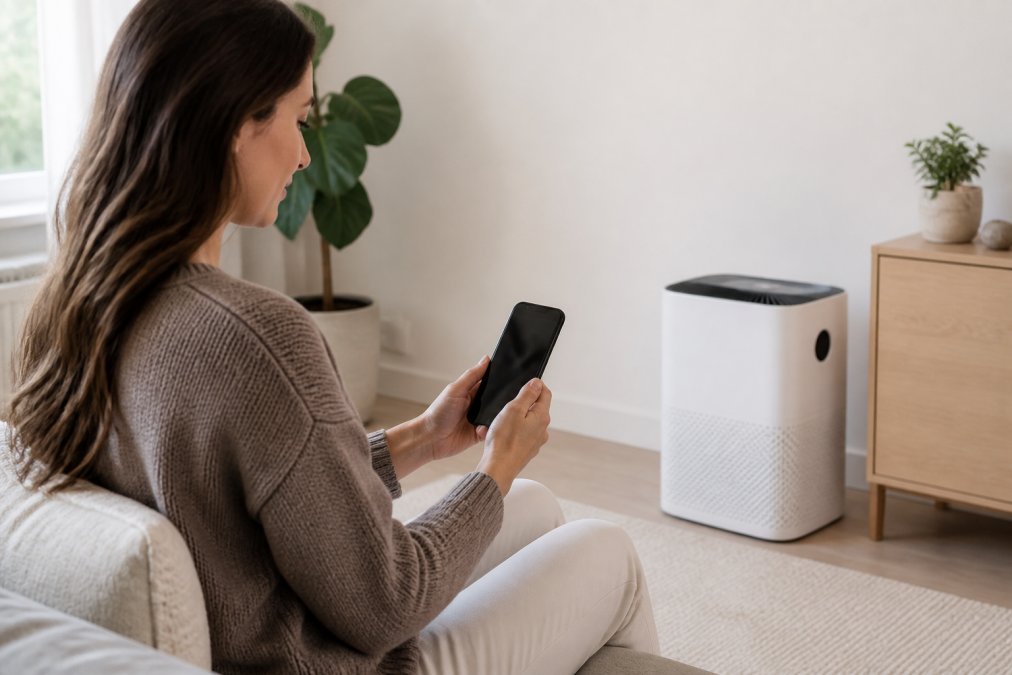
Buyers increasingly ask for proof of performance rather than a blinking light. That shift matters because a purifier is only as good as the pollutants it actually removes from your indoor air quality.
Below, we compare what each feature delivers, where it falls short, and how to spot the ones that quietly raise your long-term costs.
Quick Comparison Table: What Each Feature Delivers
| Feature | What It Does | Worth Paying For? | Watch Out For |
|---|---|---|---|
| CADR rating | Measures clean air output | Yes, always | Room size mismatch |
| Real-time monitoring | Tracks particulate matter live | Yes, if sensors are accurate | Cheap sensors drift |
| App connectivity | Remote access and scheduling | Yes, for most homes | Connectivity dropouts |
| Voice control | Hands-free adjustments | Nice to have | Ecosystem lock-in |
| Auto mode | Adjusts fan by sensor data | Yes, saves energy | Overreacts to humidity |
| Filter alerts | Tracks filter life | Yes, prevents waste | Subscription lock-in |
How We Evaluated These Features
We scored each feature on three criteria: measurable impact on air quality, cost over five years, and how well it works for non-tech users. A feature only earns a “worth it” label if it changes the air you breathe or the money you spend.
Air Purifier CADR Rating Explained: The Spec That Decides Everything
CADR (Clean Air Delivery Rate) is the volume of filtered air a purifier delivers per minute, measured separately for smoke, dust, and pollen. It is the single most important number on the box, and it is the one most buyers skip.
Two practical rules apply here:
- Match CADR to room size, roughly two-thirds of the square footage for smoke.
- Check all three pollutant ratings, not just the highest one.
Run your purifier on high for 30 minutes when you first enter a room, then drop to auto mode. This clears settled particulate matter faster than leaving it on low all day.
Real-Time Monitoring and Sensor Accuracy: Worth the Premium?
Real-time monitoring is worth the premium only when the sensor is accurate. A display that shows a green light regardless of conditions gives false confidence, which is worse than no display at all.
Smart Air Purifier App Connectivity Benefits: Remote Access and Automation
Smart air purifier app connectivity benefits come down to three things: remote access, scheduling, and automation. You can check air quality from work, start a cleaning cycle before you get home, and let the unit respond to sensor data on its own.
- Scheduling that matches your daily routine
- Push notifications for filter replacement alerts
- Data logging so you can spot patterns over weeks
- Firmware updates that improve sensor accuracy
If a purifier depends entirely on the cloud to run its schedule, a router reset or outage can silently stop your cleaning cycle. Confirm local scheduling support before you buy.
Voice Assistant Integration and Smart Home Ecosystem Compatibility
Voice control is genuinely useful in the kitchen or when your hands are full, but it is the least essential smart feature. Ask whether the unit works with the ecosystem you already own before paying extra for it.
HEPA Filter Replacement Cost: The Hidden Long-Term Expense
HEPA filter replacement cost is the expense most buyers ignore until the first alert fires. Filters are consumables, and over five years they can rival the purchase price of the unit itself.
Three cost factors to weigh:
- Filter price and how often replacement is required
- Whether the unit uses proprietary filters with no alternative
- Whether the app pushes a subscription you cannot cancel
Calculate five-year filter cost before you buy. A cheaper unit with expensive proprietary filters often costs more than a premium unit with standard replacements.
Privacy, Data Security, and Accessibility for Non-Tech Users
Privacy and data security are the features competitors rarely mention. A connected purifier collects air quality data, usage patterns, and sometimes location data. That information lives on a server you do not control.
What a connected purifier can actually collect:
- Sensor telemetry. Particulate matter, VOC, temperature, and humidity readings, often at one-minute intervals. Over a year, that is a detailed record of when you cook, when you sleep, and when you leave.
- Usage logs. Fan speed changes, mode switches, and manual overrides. These reveal occupancy patterns even without a camera or microphone.
- Network metadata. IP address, Wi-Fi SSID, and device identifiers. The SSID alone can reveal your approximate location through public Wi-Fi mapping databases.
- Account data. Email, sometimes phone number, and whatever the app requests during onboarding.
The concrete checks to run before you buy:
- Read the privacy policy for three specific clauses. What categories of data are collected; whether data is shared with or sold to third parties; and how long data is retained. If the policy does not state a retention period, assume indefinite.
- Check whether the app works without an account. Some purifiers let you control the device on the local network with no login. That is the strongest privacy posture available in this category.
- Look for encryption in transit. The app should use HTTPS/TLS for all cloud communication. A device that sends sensor data over plain HTTP is trivially interceptable on your own network.
- Check for a local-only mode. Some units let you disable cloud connectivity entirely while keeping app control over Wi-Fi. This is the feature that separates a privacy-conscious design from a marketing claim.
- Check the firmware update mechanism. Signed firmware updates prevent a compromised update server from pushing malicious code to your device. The manufacturer should document that updates are signed and verified.
- Physical controls. The unit should have a full set of on-device buttons, power, fan speed, auto mode, and display toggle, that work without the app. If every function is behind the app, the device is unusable for anyone who does not want a smartphone.
- Readable display. Air quality indicators should be legible from across a room. Color-coded rings help, but they need a numeric or labeled backup for users with color vision deficiency.
- App usability for older adults. Look for large tap targets, high-contrast text, and a home screen that shows current air quality without requiring navigation. A common pattern is an app that buries the one useful reading three taps deep.
- Screen reader support. iOS VoiceOver and Android TalkBack compatibility is rarely advertised. If accessibility matters to your household, test the app before the return window closes.
- Graceful degradation. If Wi-Fi drops or the manufacturer discontinues the app, the unit should keep running on its last schedule and remain fully controllable from the panel.
Before buying, open the privacy policy and search for the words ‘sell,’ ‘share,’ and ‘retention.’ Then check whether the app requires an account. Those two checks take five minutes and tell you more about the device’s privacy posture than any spec sheet.
Which Smart Air Purifier Features Are Actually Worth It?
The features worth paying for are the ones that change your air or your costs: CADR rating, accurate sensors, reliable app scheduling, and honest filter tracking. Everything else is optional.
- CADR rating: non-negotiable, match it to room size
- Real-time monitoring: worth it if sensors are accurate
- App connectivity: worth it for scheduling and remote access
- Filter alerts: worth it to control long-term cost
- Voice control: nice to have, not a reason to buy
- Decorative extras: skip unless the price is already right
Frequently Asked Questions
Are smart air purifier features actually worth the extra cost?
It depends on which features you use daily. Auto-mode and real-time monitoring earn their keep because they adjust fan speed to actual pollutant levels, cutting energy consumption when air is clean. App connectivity helps if you travel or want scheduling. Skip features you will not touch, like wireless charging pads or decorative displays. Pricing for air purifiers varies widely depending on features and brand. For current pricing and specific model details, it’s best to check the manufacturer’s website.
What should I look for in an air purifier for pet dander and allergies?
Focus on CADR (Clean Air Delivery Rate) matched to your room size, true HEPA filtration, and a pre-filter that captures pet hair before it reaches the main filter. Auto-mode with a particulate sensor helps during allergy season when dander and pollen spike. For households with multiple pets, verify the unit handles a high air exchange rate. The Aero Essence SR100 targets nine pollutant types including pet dander, dust mites, and pollen, with visual confirmation that purification is active.
How much does HEPA filter replacement cost per year?
Annual HEPA filter replacement cost varies depending on the model and filter size. Pre-filters, which capture larger particles, usually need washing or replacing every 2-3 months and cost less. Factor filter cost into your total cost of ownership before buying, since a cheaper purifier with expensive proprietary filters can cost more over five years.
Are app-connected air purifiers reliable for long-term use?
Reliability depends on the manufacturer’s firmware update track record and connectivity stability. Most major brands push firmware updates that fix bugs and improve sensor accuracy. Wi-Fi connectivity can drop during router changes or outages, but the purifier should keep running on its last settings. Check whether the app works offline for basic controls. The Aero Essence SR100 offers app monitoring alongside physical controls, so you are not locked out if the app fails.
Choosing a purifier is really a decision about which features you will actually use and which ones you will pay for twice through filters and subscriptions. Aero Essence LLC designs the SR100 for households that want measurable results: it handles nine kinds of pollutants, targets invisible particles like dander and mold spores, and shows visual confirmation that it is working. Get started with Aero Essence LLC and breathe air you can verify, not just assume.