
7 Signs Your HVAC System Needs Replacement Now
Last Updated: November 10, 2026
Quick Summary
Signs your HVAC system needs replacement include an age of 10 to 15 years or more, repair bills approaching half the system’s original value, rising energy bills, and frequent breakdowns. A quick check is the 50% rule: if a single repair costs close to half of what the system was worth, replacement deserves serious consideration.
- Standard systems typically last 10 to 20 years, so units 10 to 15 years old warrant planning for replacement.
- Under the 50% rule, a $3,200 repair on a $7,000 system is about 46 percent of its original price.
- Several service calls of $400 to $800 can add up to more than one major repair, so log every visit.
- ENERGY STAR cites high energy bills, inconsistent temperatures and noisy operation as key indicators of failure.
- Get itemized written quotes and ask how each contractor sizes the new unit before deciding.
Table of Contents
- Your System Is 10 to 15 Years Old or Older
- Repair Bills Are Climbing: Applying the 50% Rule
- Rising Energy Bills and Uneven Room Temperatures
- Strange Noises, Short Cycling, and Frequent Breakdowns
- Poor Air Quality, Humidity, and Dust Buildup
- R-22 Refrigerant and Outdated Equipment
- What Replacement Really Costs and How to Plan Your Next Step
- Frequently Asked Questions
Your System Is 10 to 15 Years Old or Older
If your HVAC system is 10 to 15 years old or more, it is time to start planning for replacement, since these are classic signs your HVAC system needs replacement. Standard systems typically last 10 to 20 years, according to Carrier’s general guidance on equipment longevity, so an aging unit is a real risk factor. Age alone does not decide the question, but it changes how you should weigh every repair bill.
Many homeowners wait until a system fails completely. A better approach is to treat age as a signal to get a professional evaluation before the next breakdown forces a rushed decision.
Some experts argue that a well-maintained system can keep working efficiently beyond the 10 to 15 year benchmark. Maintenance history matters as much as the calendar. A unit that has been serviced every season may outlast one that has been neglected.
If you are weighing a high-performance replacement, you can compare options in our guide to Daikin alternatives for high performance.
Repair Bills Are Climbing: Applying the 50% Rule
The most practical test is financial. The 50% rule compares the cost of a single repair against the value of the system before it failed. If the repair approaches half of that value, replacement may be worth considering. The rule is a screening tool rather than a verdict, so it works best when you apply it with a few specific numbers instead of a gut feeling.
Start by estimating what the system was worth when it was new. Use the installed price from your original invoice if you still have it. If you do not, a reasonable proxy is the cost of a comparable replacement today, adjusted downward for age. A 12-year-old system is worth far less than a brand-new one, so the original invoice is the more reliable anchor when you can find it.
Next, collect the repair quote and divide it by the system’s estimated value. Here is a simple worked example: suppose a system originally cost $7,000 installed and a technician quotes $3,200 to replace a failed compressor. The repair is 46 percent of the original price, which sits just under the threshold, so the rule alone does not settle the question. Factor in the unit’s age, since an older system may offer only a few more years of service after a major repair.
Repeated smaller repairs need the same scrutiny. Add up every service call from the past 12 months, including parts, labor, and diagnostic fees. Several moderate bills of $400 to $800 can total more than a single major repair, and they tend to signal a system that is wearing out across multiple components at once. Keep a simple log with the date, the failed part, and the cost of each visit. That record shows whether the failures are isolated or part of a pattern.
Use the 50% rule as the first filter, then weigh age, repair frequency, and energy performance together. When the numbers point the same direction, you can decide with confidence rather than reacting to the most recent breakdown.
The 50% rule gives a quick way to test whether a repair is worth paying for, using the figures from the worked example.
| Step | What to do | Note |
|---|---|---|
| Estimate original value | Use the original installed invoice | A reasonable proxy is today’s replacement cost, adjusted for age |
| Get the repair quote | Divide the quote by the system’s value | Compare the result against the 50% threshold |
| Check the worked example | $3,200 repair on a $7,000 system | About 46 percent, just under the rule |
| Log repeated service calls | Add parts, labor and diagnostic fees | Several $400 to $800 bills can exceed one major repair |
| Weigh the factors together | Consider age, repair frequency and energy performance | Use the rule as a first filter, not a verdict |
Rising Energy Bills and Uneven Room Temperatures
Rising utility bills are one of the clearest signs your HVAC system needs replacement, and they often show up before any obvious breakdown. ENERGY STAR’s guidance on heating and cooling replacement identifies high energy bills, inconsistent temperatures, and noisy operation as key indicators that a system may be undersized or failing.
Uneven temperatures from room to room often point to ductwork problems, a unit that is undersized for the home, or a system that can no longer deliver steady airflow. If one bedroom is always warm while the living room feels cold, a professional should evaluate the system before you assume a thermostat change will fix it.
Energy efficiency standards also matter. Updated energy codes raise the efficiency bar for new installations, which means an older unit may fall well below what current equipment delivers. California Energy Commission’s building energy efficiency standards show how these rules shape replacement decisions.
If your home’s air feels stuffy or uneven, our article on how room size affects air purifier energy use explains why room size drives energy demand.
Strange Noises, Short Cycling, and Frequent Breakdowns
Unusual sounds deserve prompt attention. Banging, rattling, and squealing can signal worn components, loose parts, or a fan and compressor struggling to keep up. Short cycling, where the system turns on and off in rapid bursts, is another sign that the unit may be oversized, undersized, or failing.
Frequent breakdowns are the strongest signal of all. When you find yourself calling a technician several times a year, the cumulative repair cost and the lost comfort usually outweigh the benefit of keeping the old system running. Track each service call, its cost, and the date. That record makes the replacement decision much clearer.
Poor Air Quality, Humidity, and Dust Buildup
An aging system often struggles to manage indoor air quality. Dust accumulating on vents, persistent humidity, and musty odors can all indicate that the system is no longer filtering or conditioning air effectively. Pets, allergies, and wildfire smoke make these problems more noticeable.
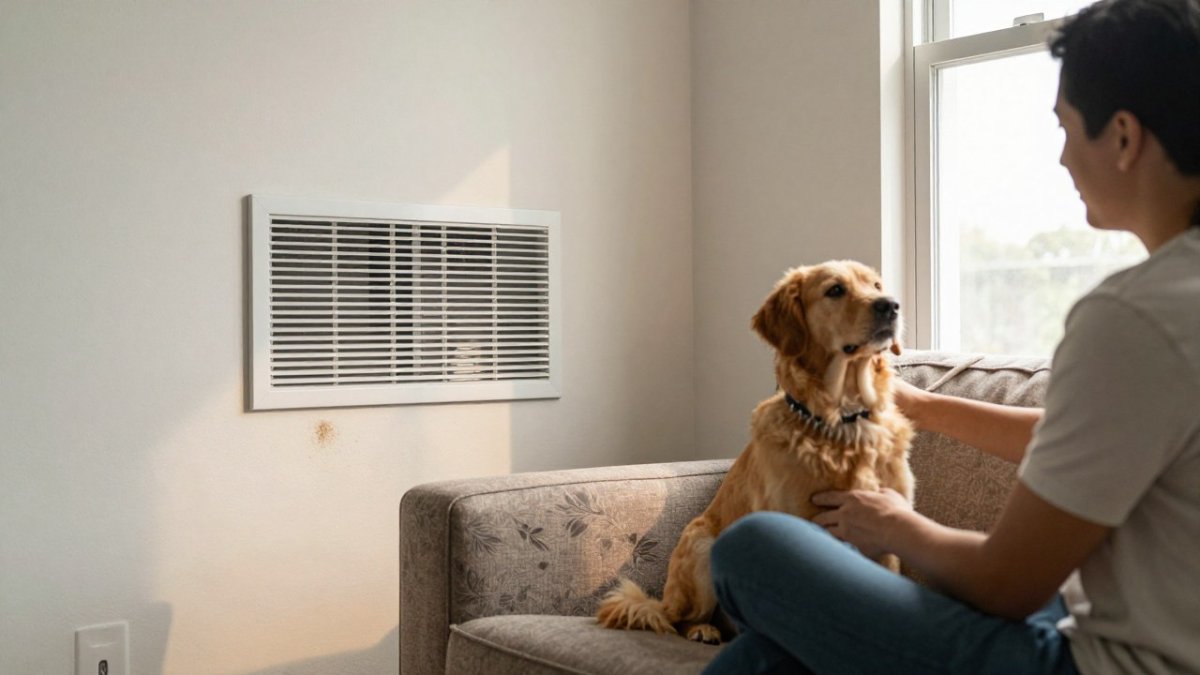
Dust and humidity issues can also come from the way air moves through the home, not just from the unit itself. Still, if the system cannot maintain comfortable humidity or keep filters clean between service visits, replacement may be the more reliable fix.
Air purification is a separate consideration from HVAC replacement. If you are comparing portable options, our article on HEPA filters versus activated carbon for large rooms covers which approach suits bigger spaces. You can also read about real-time air quality monitoring to see how sensors can reveal problems you cannot detect by smell or sight.
R-22 Refrigerant and Outdated Equipment
Systems that use R-22 refrigerant are a major indicator that replacement should be considered.
What Replacement Really Costs and How to Plan Your Next Step
Replacement pricing depends on system size, home layout, ductwork condition, equipment type, and local labor rates. We do not publish prices for HVAC installation, and the figures you see from contractors will vary. Ask for written, itemized quotes so you can compare scope and equipment directly.
Plan ahead when you can. Schedule an evaluation before the system fails, compare quotes, and ask how each one sizes the new unit.
Consider acting on the signs early. Start with a professional assessment, apply the 50% rule to any major repair, and decide on replacement with the full picture in front of you.
Shop the SR100 at Aero Essence LLC: Our SR100 air purifier is built to handle nine kinds of pollutants, including pet dander, dust mites, pollen, mold spores, and smoke. It also gives visual confirmation that it is working. Browse the collection to see whether it fits your space.
Frequently Asked Questions
How do I know if my HVAC system needs to be replaced?
Look for a combination of signs rather than a single symptom. The most reliable indicators are a system 10 to 20 years old, repair costs that approach half the value of the unit, rising energy bills without a change in usage, uneven temperatures between rooms, and frequent breakdowns. If you see two or more of these, schedule a professional evaluation. A technician can measure airflow, check the compressor and refrigerant levels, and compare repair quotes against replacement estimates so you can make a decision based on actual numbers.
What is the 50% rule for HVAC repairs?
The 50% rule is a common financial benchmark: if a repair costs more than half of what a new system would cost, replacement usually makes more financial sense. Some homeowners apply it against the original value of the unit instead. The threshold is often used as a practical starting point, though some note that a well-maintained system can run efficiently beyond the typical 10 to 15 year range, so the repair cost ratio is often a more reliable guide than age alone.
What is the average lifespan of an HVAC system?
HVAC systems often last 10 to 20 years. Heat pumps and furnaces may fall at different points in that range depending on maintenance, climate, and how hard the system runs. Regular filter changes, annual tune-ups, and keeping outdoor condenser coils clean can extend service life. If your system is approaching the upper end of this range and showing repeated problems, planning for replacement is a sensible step.
How can I tell how old my AC unit is?
Check the data plate, usually a metal label on the outdoor condenser or the indoor air handler or furnace. The serial number often encodes the manufacture date, and most manufacturers publish decoding charts on their websites. You can also contact the manufacturer with the model and serial number for confirmation. Knowing the exact age helps you compare the unit against typical lifespan benchmarks and decide whether to repair or replace.
