
Blueair Alternatives for Large Living Spaces
Table of Contents
- Why Homeowners Switch From Blueair to Alternative Air Purifiers
- Best Air Purifier for Open Floor Plan Layouts
- Aero Essence SR100: High-Performance Pollutant Removal for Large Spaces
- High CADR Air Purifier for Large Rooms: Comparison of Top Alternatives
- Air Purifier Pollutant Removal Efficiency: What Matters Most
- Total Cost of Ownership: Filter Replacement and Energy Efficiency
- Which Alternative Works Best for Your Situation
- Conclusion
- Frequently Asked Questions
Last Updated: September 2, 2026
Why Homeowners Switch From Blueair to Alternative Air Purifiers
When homeowners search for blueair alternatives for large living spaces, they’re usually frustrated. Pet dander lingers, seasonal pollen triggers allergies despite constant use, or they’re skeptical the device actually works. The real issue isn’t that Blueair products fail outright, they’re engineered for specific room sizes, and many homes with open floor plans need something designed differently.
At Aero Essence LLC, we’ve analyzed what drives these switches. Homeowners want three things: proof the device is actively working, filtration powerful enough for truly large spaces, and clarity on actual cost of ownership over time. This guide explores why blueair alternatives gain traction, which systems deliver measurable results for expansive layouts, and how to calculate real costs beyond the sticker price.
Best Air Purifier for Open Floor Plan Layouts
Open-concept living demands a different approach than traditional room-by-room filtration. When your kitchen, dining area, and living room merge into one continuous space, a standard air purifier rated for 300 square feet becomes a bottleneck.
The critical measure is CADR (Clean Air Delivery Rate), which tells you how many cubic feet of air the device cleans per minute. For open floor plans, you need CADR ratings that match total square footage, not just the room where the purifier sits. A device with a Smoke CADR of 328 handles larger spaces than one rated at 150, though real-world performance depends on placement, fan speed, and whether you’re running continuously or on auto-mode.
The second factor is air exchange rate. Most purifiers aim for 4-5 air changes per hour in their rated coverage area (ashrae.org). Units designed for large rooms typically achieve 2 air changes per hour across 1,500+ square feet, which is why they’re often the only practical choice for these layouts.
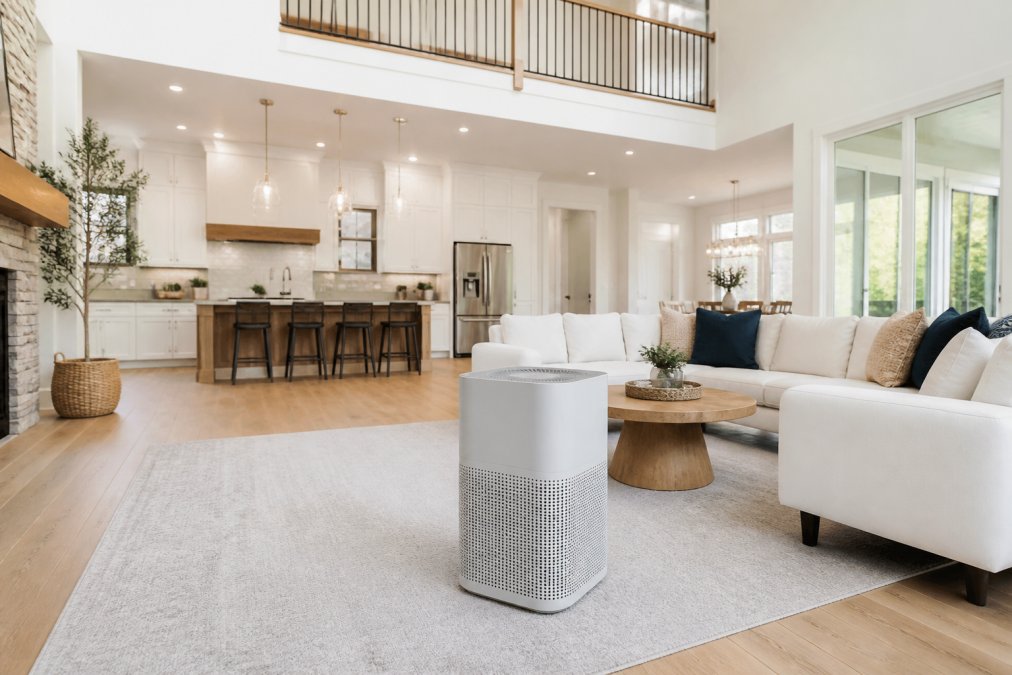
Aero Essence SR100: High-Performance Pollutant Removal for Large Spaces
The Aero Essence SR100 addresses nine distinct types of pollutants in a single filtration system. This matters for homeowners dealing with compound problems, pet dander plus seasonal pollen plus wildfire smoke, or mold spores plus dust mites plus odors. Rather than targeting one pollutant category, the SR100 tackles dust mites, pet dander, pollen, mold spores, and smoke simultaneously through its multi-stage approach.
What sets this device apart for large spaces is visual confirmation of active purification. Many people buy air purifiers and never know if they’re working. The SR100 solves this with a display showing purification happening in real time, addressing a core frustration: skepticism about whether the device justifies its space and energy cost.
Nine-Pollutant Filtration System
A nine-pollutant system uses multiple filtration stages, each targeting different particle sizes and chemical compounds. Dust mites and larger allergens require different capture mechanisms than volatile organic compounds or smoke particles. Pre-filters catch larger debris, HEPA-grade stages capture fine particulates, and activated carbon layers address odors and chemical compounds.
For large spaces, this multi-stage approach prevents filter saturation in any single layer, extending filter longevity compared to single-stage systems. Distributed filtration spreads the load, meaning you replace filters less frequently and maintain consistent performance throughout the filter’s lifespan.
Visual Confirmation of Active Purification
The display showing active purification serves both psychological and practical purposes. It confirms your investment is working and gives you real-time data about indoor air quality. When the display shows high particle counts, you know to run the unit on higher fan speeds or identify pollution sources in your home.
This transparency matters especially for people with respiratory sensitivities, asthma, or COPD. They can correlate display readings with how they feel, building confidence that the device reduces their symptoms.
High CADR Air Purifier for Large Rooms: Comparison of Top Alternatives
When evaluating air purifier pollutant removal efficiency for large spaces, CADR ratings provide the most straightforward comparison. A CADR of 300+ for smoke, dust, and pollen indicates a device can handle expansive rooms. However, CADR alone doesn’t tell the complete story, you also need to consider filter longevity, noise levels, smart features, and total cost of ownership.
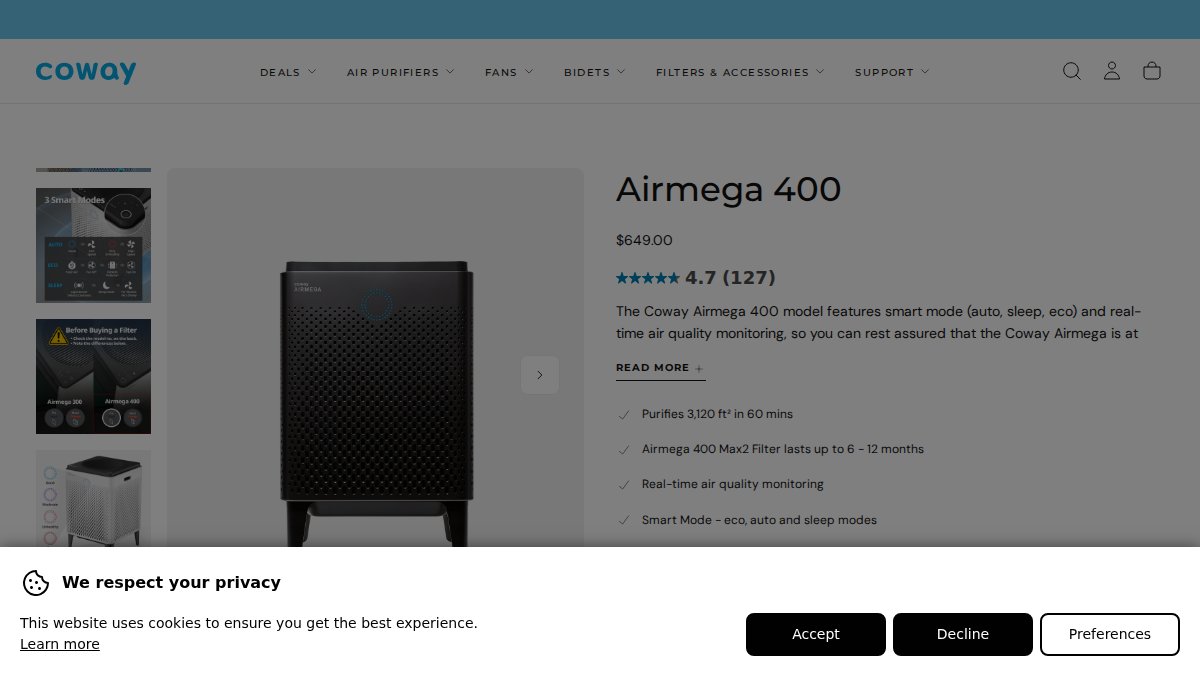
Coway Airmega 400
The Coway Airmega 400 covers up to 1,560 square feet at 2 air changes per hour, or 3,120 square feet at 1 air change per hour (coway.com). CADR ratings are strong: 328 for smoke, 328 for dust, and 400 for pollen.
The device uses a washable pre-filter and Max2 HEPA filter set, reducing replacement frequency. Smart modes, auto, sleep, and eco, adjust fan speed based on air quality, managing energy consumption in large spaces. Real-time air quality monitoring lets you see when air has improved enough to scale back fan speed.
The trade-off is no Wi-Fi or app connectivity. For homeowners who prefer simpler operation and don’t need app features, this is actually an advantage, fewer components mean fewer potential failure points.
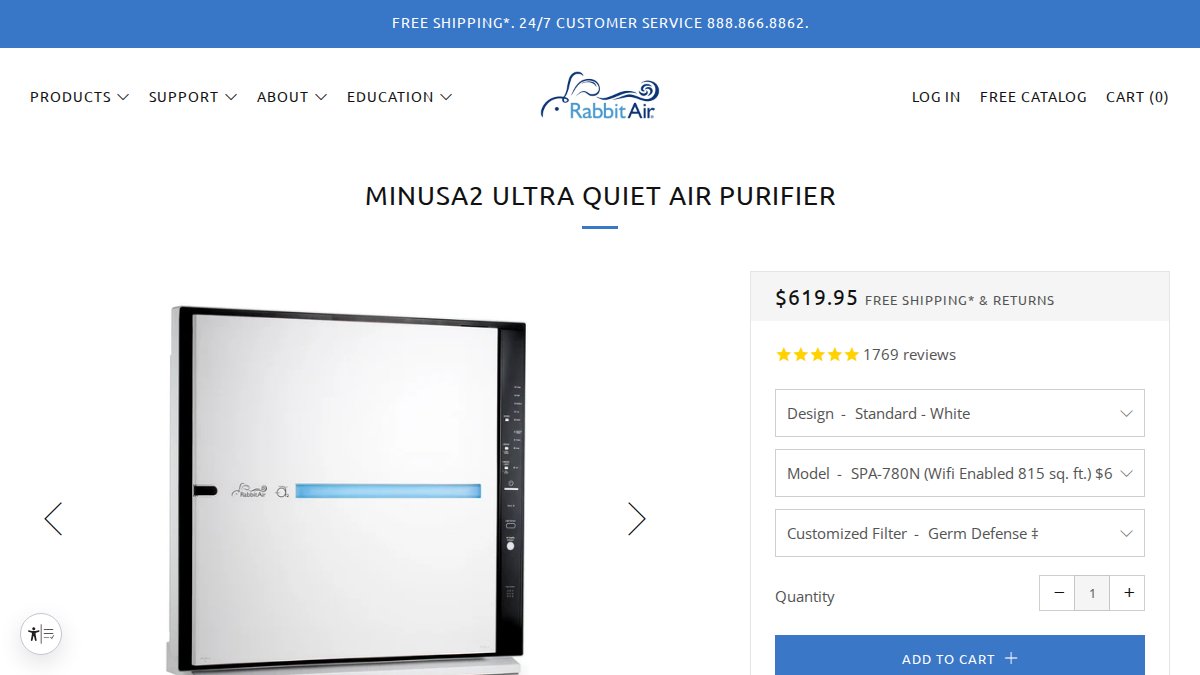
Rabbit Air MinusA2
The Rabbit Air MinusA2 covers up to 815 square feet with a wall-mountable design that saves floor space. The 5-stage filtration system is customizable, letting you select filters targeting your specific pollutants, pet dander, odors, dust, or allergens.
The device operates at 20.8 dB on its lowest setting, making it exceptionally quiet for bedrooms or open living spaces. Wi-Fi control via the Rabbit Air app provides remote operation and scheduling, integrating well into smart home ecosystems. The premium price reflects design and customization options rather than raw filtration power.
Molekule Air Pro
The Molekule Air Pro covers up to 1,000 square feet and uses PECO technology alongside HEPA and carbon filters. PECO (Photoelectrochemical oxidation) claims to destroy organic pollutants rather than just trapping them, theoretically more effective than traditional filtration alone.
The device offers six fan speeds and two auto modes, with real-time air quality tracking via mobile app. The sleek design with touch display appeals to homeowners wanting the purifier to complement décor. However, cost of ownership is notably high, both initial purchase and proprietary filter replacements are expensive compared to standard HEPA alternatives.
Air Purifier Pollutant Removal Efficiency: What Matters Most
Air purifier pollutant removal efficiency isn’t determined by a single metric. It’s the combination of CADR ratings, filter technology, maintenance requirements, and how the device handles your home’s specific pollutants. Understanding these factors prevents overpaying for specs you don’t need or underestimating what you require.
CADR Ratings and Real-World Performance
CADR measures how much clean air a purifier delivers per minute for smoke, dust, and pollen. Higher CADR means faster cleaning of a given space. However, CADR is tested in controlled lab conditions at maximum fan speed. Real-world performance depends on placement, room layout, and fan speed settings.
In open floor plans, CADR becomes more important because air naturally circulates across larger distances. Match CADR to your square footage, then use auto-mode to reduce fan speed when air quality improves, balancing performance with energy consumption.
Filter Technology and Longevity
Filter type directly impacts both effectiveness and replacement frequency. HEPA filters capture 99.97% of particles 0.3 microns or larger, covering most allergens, dust mites, and pollen (the EPA). Pre-filters extend HEPA filter life by capturing larger particles first. Activated carbon layers remove odors and some volatile organic compounds.
The Aero Essence SR100’s nine-pollutant system distributes filtration across multiple stages, preventing any single filter from becoming saturated. This extends filter longevity compared to devices where one HEPA filter handles all particulate capture, resulting in lower replacement costs and more consistent performance.
Smart Features and Air Quality Monitoring
Auto-mode adjusts fan speed based on real-time air quality readings, reducing energy consumption when pollution levels drop. This matters in large spaces where continuous maximum-speed operation would be expensive.
Air quality monitoring displays or app notifications let you see when indoor air quality improves and deteriorates. For people with respiratory sensitivities, this feedback loop is valuable, they can correlate readings with how they feel and adjust fan speed or identify pollution sources.
Total Cost of Ownership: Filter Replacement and Energy Efficiency
The sticker price tells only part of the cost story. Over three to five years, filter replacement and energy consumption often exceed the initial purchase price. A device costing less upfront but requiring frequent expensive filter replacements becomes costlier long-term.
Filter replacement frequency depends on usage hours, air quality in your area, and filtration efficiency. In homes with pets, smokers, or high pollen exposure, filters saturate faster. A device running 24/7 in high-pollution environments might need changes every 3-6 months, while one in cleaner spaces might last 12 months.
Energy consumption varies significantly by device and fan speed. Running a high-CADR purifier at maximum speed continuously costs more than running a lower-CADR device or using auto-mode. For large spaces, energy efficiency becomes a meaningful part of total cost.
Calculating total cost of ownership requires knowing filter replacement costs, replacement frequency for your situation, and energy consumption at typical fan speeds. This reveals whether a premium device with longer filter life actually saves money compared to cheaper options requiring frequent replacements.
Which Alternative Works Best for Your Situation
Choosing the right blueair alternative for large living spaces depends on your specific priorities and constraints. No single device works best for everyone.
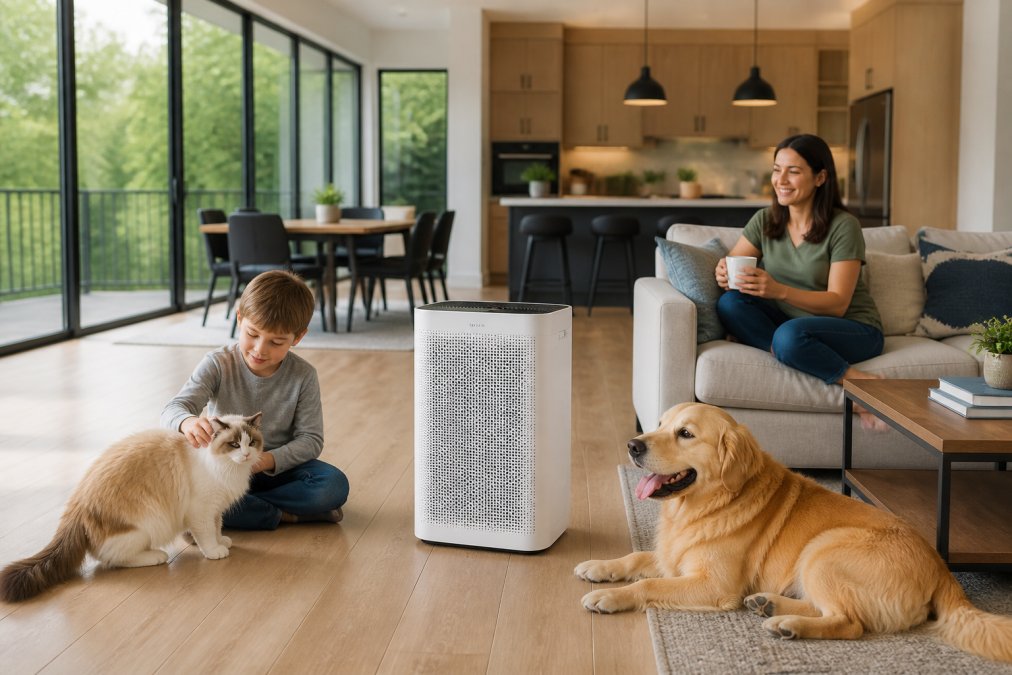
If your primary concern is handling nine types of pollutants in a large space with visual confirmation of performance, the Aero Essence SR100 delivers targeted filtration for dust mites, pet dander, pollen, mold spores, and smoke. The visual display addresses the core frustration many homeowners express: uncertainty about whether the device is actually working.
For very large open-concept homes exceeding 1,500 square feet, the Coway Airmega 400 offers the highest CADR ratings and genuine coverage for expansive layouts. Its washable pre-filter reduces replacement frequency, and smart modes optimize energy consumption.
If aesthetic design and space efficiency matter, the Rabbit Air MinusA2’s wall-mount design and customizable filters address those priorities. The higher price reflects design choices rather than raw filtration power.
For homeowners willing to invest in premium technology, the Molekule Air Pro’s PECO technology and detailed app insights provide maximum transparency. However, cost of ownership is substantially higher.
Conclusion
The shift from Blueair to alternative air purifiers typically reflects a mismatch between device capacity and home layout. Open-concept spaces, pet-heavy households, and regions prone to seasonal pollution or wildfire smoke demand purifiers engineered for those challenges. The Aero Essence SR100 addresses this directly with its nine-pollutant filtration system and visual confirmation of active purification, two features that answer the most common homeowner frustrations about whether air purifiers actually deliver results. Get started with Aero Essence LLC and experience real-time visibility into your indoor air quality while removing dust mites, pet dander, pollen, mold spores, and smoke from your large living spaces.
Frequently Asked Questions
How does the Aero Essence SR100 compare to Blueair for pet dander and allergen removal?
The SR100 targets nine distinct types of pollutants, including pet dander, dust mites, pollen, and mold spores, directly addressing common allergens in homes with pets. Unlike passive systems, it provides visual confirmation that purification is actively working, giving you proof the system is removing invisible particles from your air. This transparency matters when managing pet allergies and respiratory sensitivities.
What CADR rating do I need for a large open-concept living space?
For large open-concept homes, look for CADR ratings of 300 or higher for smoke, dust, and pollen. The Coway Airmega 400 delivers CADR ratings of 328 for smoke and dust, and 400 for pollen, covering up to 3,120 square feet at one air change per hour. Higher CADR means faster pollutant removal and better performance in open floor plans where air circulates freely.
Can an air purifier handle wildfire smoke as well as household dust?
Yes, high-CADR air purifiers with HEPA and activated carbon filtration can manage both wildfire smoke and household dust. The SR100 addresses smoke removal alongside dust and pollen, while alternatives like the Molekule Air Pro use PECO technology to actively destroy organic pollutants. Smoke requires activated carbon filtration, so confirm your chosen model includes this layer for seasonal smoke events.
How often do I need to replace filters, and what’s the real cost over a year?
Filter replacement frequency depends on usage, air quality, and the model. Most high-capacity purifiers require filter changes every 6-12 months. The Coway Airmega 400 uses washable pre-filters (reducing replacement costs) and Max2 HEPA filters. Exact replacement costs vary by model and retailer. Check the manufacturer’s website for current pricing and factor replacement frequency into your total cost of ownership calculation before purchase.
Will one large air purifier work for my entire open-concept home, or do I need multiple units?
A single high-capacity purifier can work for open-concept spaces if it has sufficient CADR and square footage coverage. The Coway Airmega 400 covers up to 3,120 square feet at one air change per hour, making it suitable for many large open layouts. However, if your space exceeds the unit’s coverage area or has multiple distinct zones, you may need a second unit. Check your square footage against the purifier’s rated capacity before deciding.
This article was written using GrandRanker