
How Often to Replace Air Purifier Filters
Table of Contents
- HEPA Filter Replacement Schedule: Standard Intervals
- Signs Your Air Purifier Filter Is Dirty and Needs Replacing
- Factors That Affect How Often You Replace Air Purifier Filters
- How to Extend Air Purifier Filter Life
- Pre-Filter Maintenance and Main Filter Care
- Why You Shouldn’t Clean or Reuse HEPA Filters
- Checking Your Filter Status and Understanding Replacement Indicators
- Conclusion
Last Updated: August 24, 2026
HEPA Filter Replacement Schedule: Standard Intervals
The standard replacement interval for most HEPA filters is every 6 to 12 months, depending on usage and environmental conditions. This timeframe represents when the filter media becomes saturated with particulate matter and loses efficiency in capturing airborne pollutants.
High-performance air purifiers designed to handle nine types of pollutants may need more frequent replacement in areas with heavy pollution or multiple pets. Conversely, light household use in clean environments might extend filter life to 12 months. The key is understanding that HEPA filtration works by trapping particles as air passes through the filter media. Once clogged, airflow restriction increases, forcing the motor to work harder and reducing clean air delivery rate. Most manufacturers recommend checking filter status monthly and replacing it when you notice a visible decline in performance or when your air purifier‘s replacement indicator activates.
Set a calendar reminder for your filter replacement date rather than waiting for a visual cue. Many homeowners forget to replace filters until they notice reduced air circulation, by then the filter has been working at reduced capacity for weeks.
Signs Your Air Purifier Filter Is Dirty and Needs Replacing
A dirty filter shows several unmistakable signs. The most obvious indicator is reduced airflow from your air purifier. If the unit sounds like it’s running but you no longer feel strong air circulation, filter saturation is likely the culprit.
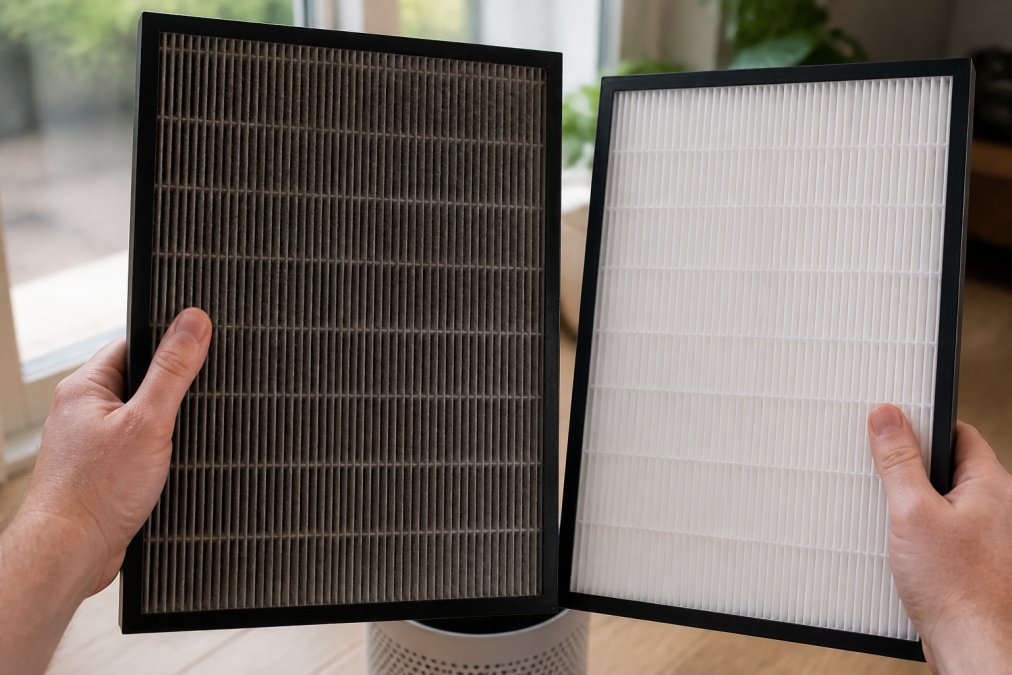
Visual inspection reveals the condition quickly. A clean filter appears bright white or off-white. A filter needing replacement will be noticeably darker, gray, or brown, depending on what pollutants dominate your indoor environment. Pet owners often see filters turn gray from accumulated pet dander.
Another reliable sign is worsening allergic symptoms or respiratory comfort. If you’ve been using an air purifier and your allergies suddenly worsen, or if you notice increased dust settling on surfaces, the filter has likely lost effectiveness. This is especially true for people with asthma or COPD.
Some air purifiers include a replacement indicator light or sensor that alerts you when the filter needs changing. When this indicator appears, trust it, manufacturers calibrate these systems to activate when filter efficiency drops significantly.
Ignoring a clogged filter forces your air purifier’s motor to work harder, consuming more energy and shortening the unit’s lifespan. A filter past its prime costs you in electricity bills and premature equipment failure.
Factors That Affect How Often You Replace Air Purifier Filters
Several variables determine whether your filters need replacing every 6 months or every 12 months.
Environmental stressors and air quality
Your local air quality has the biggest impact on filter life. If you live in an area prone to wildfire smoke, the filter will clog much faster than in regions with clean outdoor air. Seasonal pollen spikes also accelerate filter saturation, particularly in spring and fall.
Indoor mold spores and dust mites accumulate faster in humid environments. Basements and bathrooms create conditions where mold thrives, and an air purifier working in these spaces will see its filter degrade more quickly. According to [EPA guidance on indoor air quality(/how-to-improve-indoor-air-quality/) | epa.gov], particulate matter from outdoor pollution directly affects how quickly filters become saturated. If your area experiences poor air quality days regularly, budget for filter replacements every 3 to 6 months rather than the standard 12-month interval.
Household usage patterns and occupancy
How often your air purifier runs determines filter life. A unit running 24/7 will saturate its filter faster than one running 8 hours daily. The number of people in your household also matters, more occupants mean more dust and particulate matter circulating through your air.
Pet dander and dust accumulation
Pet owners replace filters significantly more often than those without animals. A single cat or dog sheds continuously, and that dander becomes a major component of what your air purifier filters. Multiple pets accelerate the timeline dramatically. Homes with hard flooring and minimal textiles see slower filter degradation.
The single biggest factor determining filter replacement frequency is what’s in your home’s air. Pet dander, dust, and environmental pollutants drive saturation rates far more than the air purifier’s power or design.
How to Extend Air Purifier Filter Life
While you cannot prevent filter saturation entirely, several practices slow the process and maximize the value of each replacement.
Reduce the pollutant load entering your air purifier. Vacuum carpets weekly instead of monthly, wash pet bedding regularly, and use door mats to minimize tracked-in dust. These habits cut the amount of particulate matter your filter must capture by 20 to 30 percent over time (the EPA).
Position your air purifier strategically in high-traffic areas or rooms where you spend the most time. Central placement improves air circulation and ensures the unit processes more of your home’s air.
Run your air purifier continuously during high-pollution periods. During wildfire season or when outdoor air quality is poor, 24/7 operation protects your indoor environment better than part-time use, even though it accelerates filter saturation. The trade-off is worth it for respiratory health.
Maintain humidity levels between 30 and 50 percent (the CDC). High humidity accelerates dust mite populations and mold growth, both of which clog filters faster. Using a dehumidifier in damp areas prevents these conditions and indirectly extends filter life.
Clean or replace pre-filters on schedule. Many air purifiers include a removable pre-filter that captures larger particles before they reach the main HEPA filter. Clean it monthly and replace it every 3 to 6 months. This simple step can double the life of your main filter.
Pre-Filter Maintenance and Main Filter Care
Understanding the difference between pre-filters and main filters helps you maintain both components correctly and predict total maintenance costs.
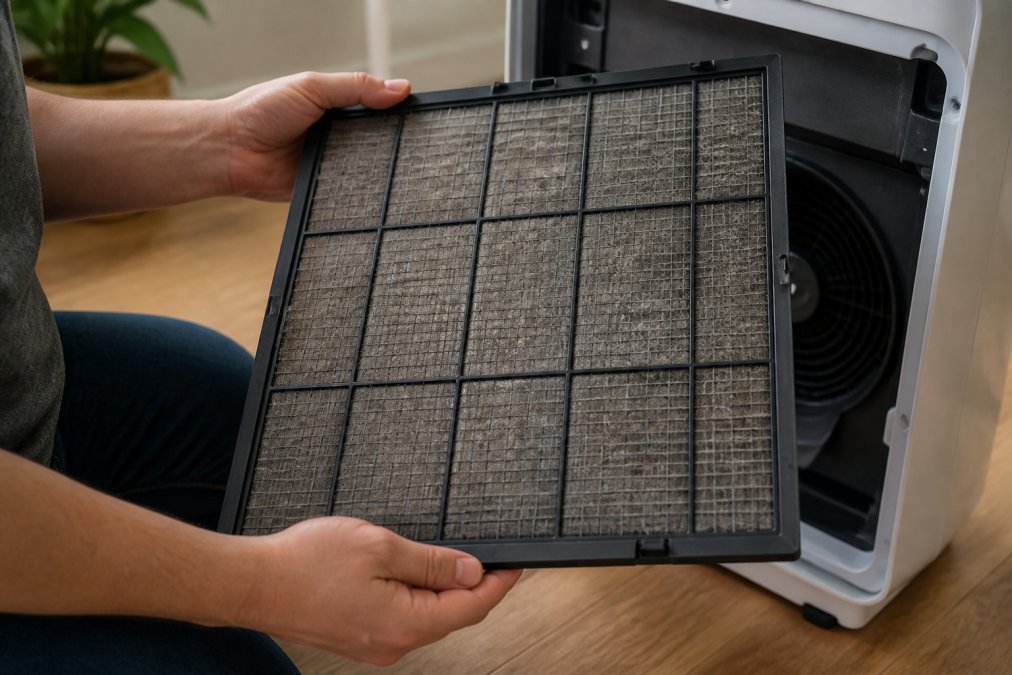
Pre-filters are coarser mesh screens designed to capture large particles like dust, hair, and pet fur before they reach the HEPA filter. They’re typically washable and reusable. Remove your pre-filter monthly and vacuum it with a soft brush attachment or rinse it gently under cool running water. Allow it to dry completely before reinstalling.
Replace your pre-filter every 3 to 6 months, depending on household conditions. Pet owners and those in dusty environments should replace it every 3 months. The pre-filter’s job is to extend the life of your main filter.
The main HEPA filter requires different care. HEPA filters are not washable or reusable, attempting to clean them damages the delicate filter media and reduces effectiveness. Once a HEPA filter reaches saturation, replacement is the only option.
Your air purifier may also include an activated carbon filter layer designed to remove VOCs, odors, and smoke particles. Replace both components on the same schedule for optimal performance.
Why You Shouldn’t Clean or Reuse HEPA Filters
The temptation to extend filter life by cleaning or reusing HEPA filters is understandable, but replacement costs add up. However, attempting to clean or reuse HEPA filters creates more problems than it solves.
HEPA filters work through mechanical filtration, where air passes through extremely fine fibers that trap particles. These fibers are fragile. Washing a HEPA filter with water can collapse the fiber structure, creating gaps that allow unfiltered air to bypass the media entirely. Vacuuming carries similar risks, the suction can tear the delicate media or dislodge fibers from their support structure.
Reusing a saturated filter defeats the entire purpose of air purification. A clogged filter cannot capture new particles effectively. For people with respiratory sensitivities or asthma, a failed filter can mean a return to poor indoor air quality without realizing it.
The cost-benefit analysis is clear: replacing your filter on schedule costs far less than replacing your air purifier due to motor failure from overwork, or paying medical bills from exposure to unfiltered air.
Checking Your Filter Status and Understanding Replacement Indicators
Most modern air purifiers include some form of filter status monitoring, but these systems vary widely.
Electronic replacement indicators use one of two methods: timer-based or sensor-based. Timer-based systems estimate filter life based on hours of operation and activate a light after a set number of hours. Sensor-based indicators measure airflow restriction or particle concentration and trigger an alert when efficiency drops below a threshold. These are more accurate because they respond to actual conditions.
Some air purifiers display air quality index readings that correlate with filter condition. As the filter clogs, the air quality index may worsen even with the fan running at maximum speed.
If your air purifier doesn’t have an electronic indicator, create a manual monitoring system. Note the date you install a new filter and set a calendar reminder for 6 months later. Perform a visual inspection at that time.
For high-performance units like the SR100 designed to handle nine types of pollutants, visual inspection is particularly valuable. Monthly visual checks during peak pollution seasons help you catch filter degradation before performance suffers.
Take a photo of your new filter when you install it. Compare that image to the filter’s current appearance each month. This visual comparison makes it obvious when replacement is due without relying on memory or guesswork.
Conclusion
Replacing your air purifier filter on schedule is the single most important maintenance task for keeping your indoor air clean and your equipment functioning properly. The standard 6 to 12-month interval provides a baseline, but your specific replacement frequency depends on pets, environmental pollution, usage patterns, and humidity levels in your home. Pet owners and those in wildfire-prone or high-dust areas typically need replacements every 3 to 6 months. Regular filter replacement ensures you’re capturing dust mites, pet dander, pollen, mold spores, and smoke particles effectively, especially critical for people with asthma, COPD, or severe allergies.
For homeowners seeking to maximize air purification performance while managing maintenance costs, the Aero Essence LLC SR100 provides visual confirmation of purification performance, helping you understand exactly what your system is filtering from your air. The SR100’s ability to target nine distinct types of pollutants makes consistent filter replacement even more important, you’re protecting your investment and your family’s respiratory health. Shop Now to experience the difference that proper maintenance and high-performance filtration can make in your home’s air quality.
Frequently Asked Questions
Q: How long do air purifier filters actually last?
A: Most HEPA filters last 6 to 12 months under normal residential usage. Pre-filters may need replacement every 3 to 6 months. The exact timeline depends on air quality, household occupancy, and whether you have pets. Homes with pets, smokers, or high dust levels may need replacements every 3 to 6 months. Check your specific model's documentation and monitor the filter replacement indicator for accurate timing.
Q: What happens if you don't change your air purifier filter?
A: A clogged filter reduces airflow and particle capture efficiency, forcing your air purifier to work harder while delivering less clean air. Dust and pollutants accumulate on the saturated media, and the unit may emit stale air back into your home. Over time, a neglected filter can harbor mold spores and bacteria, potentially worsening indoor air quality rather than improving it. Regular replacement maintains peak performance and protects your respiratory health.
Q: Can air purifier filters be washed and reused?
A: HEPA filters are disposable and should never be washed. Water damages the delicate filter media, destroying its ability to capture particles and compromising the HEPA standard. Pre-filters can sometimes be vacuumed gently to remove surface dust, but they still need replacement when saturated. Attempting to clean or reuse HEPA filters wastes money and leaves you with a non-functional unit. Always use replacement filters designed for your model.
Q: How do I know if my air purifier needs a new filter?
A: Most modern air purifiers have a replacement indicator light or sensor that alerts you when the filter is saturated. Visual inspection also works: a clean filter is white or light gray, while a dirty filter appears dark gray or brown. You may notice reduced airflow, weaker clean air delivery, or musty odors. If you live with pets or in a high-dust environment, check the filter monthly. Don't wait for the indicator, proactive replacement keeps your air quality consistent.
This article was written using GrandRanker