
How to Reduce Indoor Dust Mites: 7 Proven Steps
Table of Contents
- What Are Dust Mites and Why They Matter
- Step 1: Control Humidity Levels for Dust Mite Control
- Step 2: How to Clean Your Mattress for Dust Mites
- Step 3: Wash Bedding and Fabrics in Hot Water
- Step 4: Use a Best Air Purifier for Dust Mites
- Step 5: Remove Carpets and Soft Furnishings
- Step 6: Vacuum with HEPA Filters and Maintain Your Space
- Conclusion
Last Updated: August 23, 2026
What Are Dust Mites and Why They Matter
Dust mites are microscopic creatures that thrive in warm, humid indoor environments and feed on dead skin cells. Understanding how to reduce indoor dust mites starts with recognizing what you’re actually fighting: invisible arthropods roughly 0.3 millimeters in size that live in bedding, upholstered furniture, and carpets (peer-reviewed research). They’re not harmful themselves, but their feces contain potent protein allergens that trigger respiratory symptoms in millions of people.
The problem escalates in homes with pets, since pet dander creates additional food sources that fuel dust mite populations. If you have asthma, allergies, or COPD, dust mites become more than an annoyance, they become a daily respiratory challenge. Many people spend thousands on medications and treatments while ignoring the root cause living in their mattress.
The good news: reducing dust mites doesn’t require expensive professional interventions. A systematic approach targeting humidity, cleaning, and air quality can meaningfully decrease allergen levels within weeks. Aero Essence LLC offers solutions for homeowners struggling with pet dander and seasonal allergens, and the consistent finding is that many people don’t realize how dramatically their environment can change with targeted action.
Dust mites thrive at relative humidity above 50%. Keeping your home between 30-50% humidity creates an inhospitable environment that naturally suppresses their reproduction and survival.
Step 1: Control Humidity Levels for Dust Mite Control
The single most effective intervention for dust mite control is managing indoor humidity. Dust mites require moisture to survive and reproduce, making relative humidity the primary lever you can pull to suppress populations.
Target humidity between 30-50% for optimal dust mite control. Below 50%, mite populations decline sharply. Above 60%, they flourish. A basic hygrometer costs under $20 and gives you real-time visibility into whether your environment supports mites or starves them.
Practical methods to lower humidity include running a dehumidifier in bedrooms and basements where moisture accumulates, ensuring proper ventilation in bathrooms and kitchens by running exhaust fans during and after showers, and using air conditioning during warm months, which naturally removes moisture. Many people overlook ventilation, cracking windows on dry days exchanges indoor moisture for drier outside air at zero cost.
If you live in a naturally humid climate or experience seasonal moisture spikes, a dehumidifier becomes essential infrastructure rather than optional. Place it in the bedroom if that’s where your allergen symptoms are worst. Empty the collection tank regularly and keep the unit clean so mold doesn’t colonize the machine itself.
Humidity above 60% creates conditions where dust mites explode in population and mold spores thrive simultaneously. This combination is particularly dangerous for people with asthma or respiratory sensitivities.
Step 2: How to Clean Your Mattress for Dust Mites
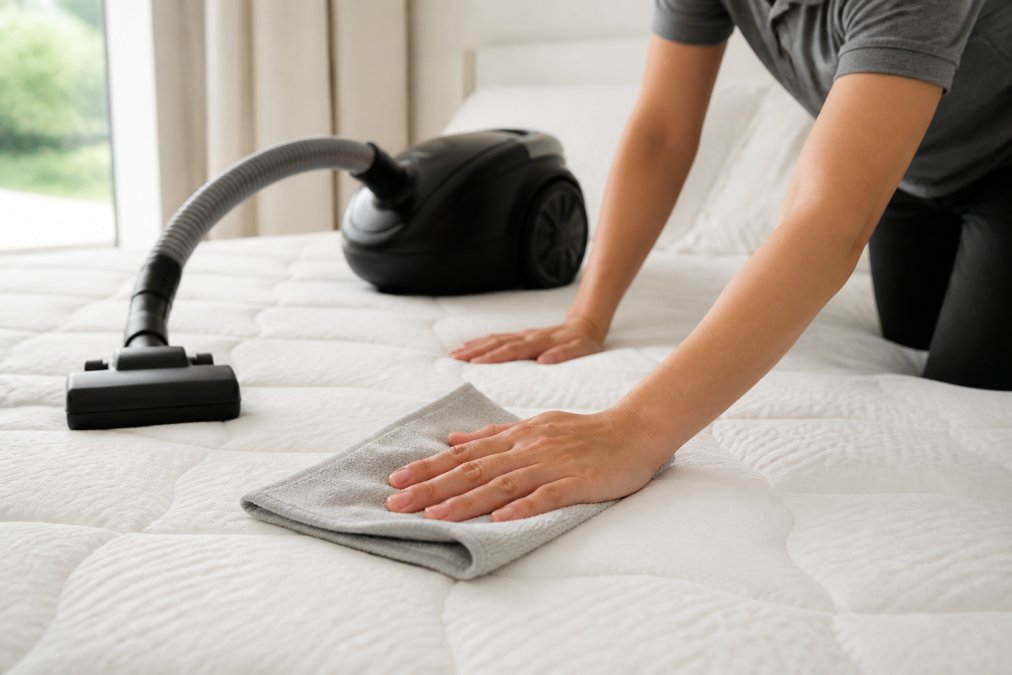
Your mattress is ground zero for dust mite populations. A typical used mattress contains millions of mites and their allergen-laden feces. Cleaning your mattress for dust mites requires a three-part approach: vacuuming, enzymatic treatment, and protective barriers.
Start by vacuuming both sides of your mattress with a HEPA-filter vacuum weekly. HEPA filtration captures particles as small as 0.3 microns, preventing allergens from being recirculated into your breathing air. Standard vacuums without HEPA filters actually spread fine particles deeper into the mattress. Spend 2-3 minutes per side, overlapping passes to ensure coverage.
After vacuuming, sprinkle baking soda across the mattress surface, let it sit for 15 minutes to absorb moisture and odors, then vacuum again thoroughly. This step disrupts the moist microenvironment dust mites need.
The most important long-term strategy is using an allergen-proof mattress encasement, a tightly-woven cover that zips completely around your mattress, creating a physical barrier between you and the millions of mites inside. These covers must have a pore size small enough to block dust mite feces (typically under 1 micron) while remaining breathable enough for comfort. Once sealed, your existing mattress becomes a contained ecosystem where mites cannot escape to your lungs.
Replace the mattress encasement cover if it tears, and wash it every 2-3 months in hot water. Many people buy an encasement and never wash it, defeating half the purpose. The cover itself becomes a dust mite habitat if neglected.
An allergen-proof mattress encasement is the single most effective barrier you can create. It transforms a contaminated mattress into a sealed unit, immediately stopping mite allergens from reaching your respiratory system while you sleep.
Step 3: Wash Bedding and Fabrics in Hot Water
Pillows, sheets, blankets, and comforters are secondary dust mite habitats that require aggressive washing protocols. Hot water kills dust mites and denatures their protein allergens, making this step non-negotiable for allergy management.
Wash all bedding in water at 130°F or hotter at least weekly (the CDC). If your water heater doesn’t reach this temperature, use the hottest setting available and consider raising your water heater to 120°F minimum (a common household setting). Many people wash in lukewarm water thinking it’s sufficient, it’s not. Dust mites survive temperatures below 130°F.
Include pillows in your washing routine. Many people wash sheets but ignore pillows, which are primary mite habitats. Wash pillows monthly in hot water (check the care label first), and consider replacing them every 1-2 years since they accumulate mite populations over time. Hypoallergenic pillow covers provide an extra barrier.
For items that can’t tolerate hot water, delicate fabrics, down comforters, certain blankets, use allergen-blocking covers instead. These create the same physical barrier as mattress encasements, preventing mites from migrating between the core item and your breathing space.
Stuffed toys, if present in bedrooms, should be washed monthly or stored outside the sleeping area. Children’s bedrooms often have the highest dust mite populations because of accumulated soft furnishings.
Freezing items at 0°F for 24 hours kills dust mites but doesn’t remove allergens. Freezing is useful for items that can’t tolerate hot water, but always follow with a wash or encasement to remove the dead mites and their allergens.
Step 4: Use a Best Air Purifier for Dust Mites
While environmental controls reduce dust mite populations at the source, a HEPA air purifier removes airborne particles, including dust mite feces, from your breathing air in real time. This is particularly important in bedrooms and living spaces where you spend hours daily.
A HEPA filter must capture 99.97% of particles at 0.3 microns to meet the standard. Anything less is marketing. Dust mite feces cluster around 10-30 microns, making them visible to HEPA filtration, but the finer protein allergen particles require true HEPA performance.
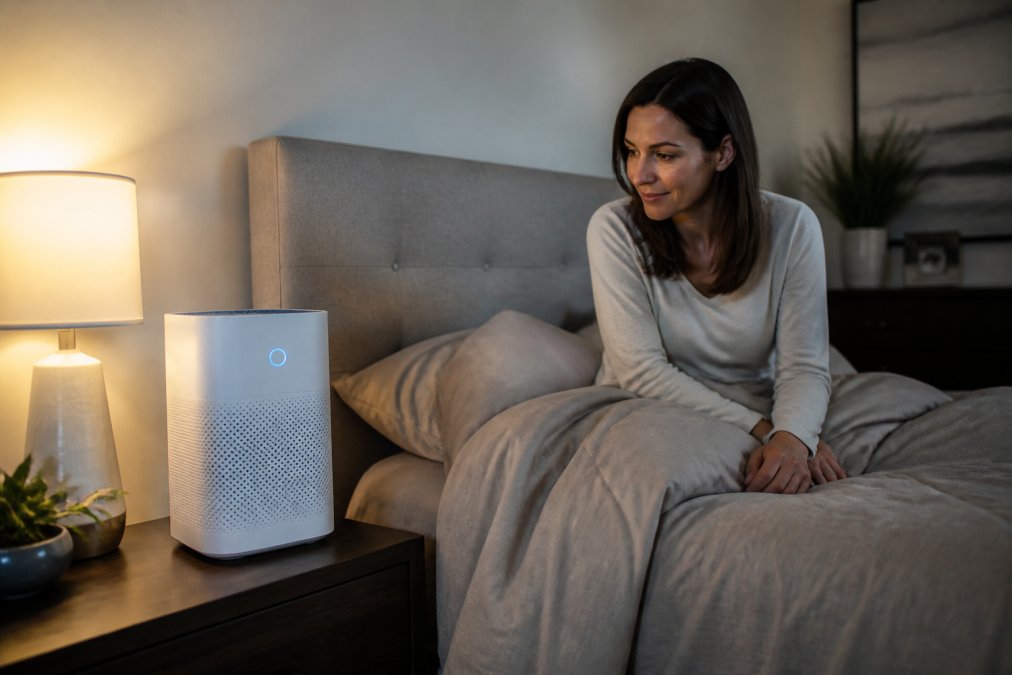
The Aero Essence LLC SR100 addresses this directly with a multi-stage filtration system designed to handle nine types of indoor pollutants, including dust mite allergens, pet dander, pollen, and mold spores. The visual confirmation feature, a light indicator showing active purification, solves a critical problem: most people never know if their air purifier is actually working. Invisible particles mean invisible results, which leads to doubt and abandonment. With the SR100, you see the system actively cleaning your air.
Place your air purifier in the bedroom, ideally near the head of the bed where you spend 8 hours breathing. Run it continuously while sleeping and during waking hours if possible. A single unit covers roughly 300-500 square feet depending on the model, larger open-concept spaces may need multiple units.
Replace HEPA filters according to manufacturer specifications, typically every 6-12 months depending on usage and air quality. A clogged filter reduces effectiveness and forces the motor to work harder, increasing noise and energy consumption.
An air purifier cannot solve a humidity problem. If your home stays above 50% humidity, dust mites will continue reproducing faster than an air purifier can remove them. Use the purifier as a complement to humidity control, not a replacement for it.
Step 5: Remove Carpets and Soft Furnishings
Carpeting is a dust mite reservoir. Carpet fibers trap dead skin cells, dust, pet dander, and moisture, creating ideal conditions for mite colonies to establish and expand. Wall-to-wall carpeting in bedrooms is particularly problematic for allergy sufferers.
If you’re renovating or replacing flooring, hard surfaces like wood, tile, or laminate dramatically reduce dust mite habitat. These surfaces don’t trap particles, can be damp-mopped weekly to remove dust accumulation, and don’t harbor moisture. The transition from carpet to hard flooring typically produces noticeable allergy symptom improvement within 2-4 weeks.
If you can’t remove all carpeting, at minimum remove it from bedrooms. Area rugs can be vacuumed weekly with a HEPA vacuum and washed monthly in hot water, but they’re still secondary to hard flooring.
Upholstered furniture, couches, armchairs, fabric ottomans, similarly accumulates dust mites. If furniture is essential, choose pieces with removable, washable covers. Leather or microfiber upholstery is easier to maintain than fabric since it can be damp-mopped without absorbing moisture into the core.
Heavy drapes and curtains collect dust and harbor mites. Wash curtains monthly in hot water, or replace fabric drapes with washable cellular shades or roller blinds that are easier to clean. Dust accumulates on fabric surfaces, so smooth, wipeable surfaces reduce mite habitat.
Many people delay removing carpets or furniture because of cost. Consider this a phased approach: prioritize the bedroom first, where you spend the most time breathing, then expand to living spaces. Even partial changes produce measurable symptom reduction.
Step 6: Vacuum with HEPA Filters and Maintain Your Space
Weekly vacuuming with a HEPA-filter vacuum is your primary defense against dust accumulation. Standard vacuums without HEPA filtration actually aerosolize fine particles, spreading allergens deeper into your home. If you’re vacuuming without HEPA filtration, you’re making the problem worse.
HEPA vacuum specifications matter. The filter must capture 99.97% of particles at 0.3 microns, and the sealed system must prevent air bypass around the filter. Cheap "HEPA-like" vacuums don’t meet the standard and provide false security.
Establish a maintenance schedule:
- Vacuum bedrooms 2-3 times weekly with HEPA vacuum
- Vacuum living spaces weekly
- Vacuum under furniture and baseboards monthly (dust accumulates in these zones)
- Replace HEPA filters every 6-12 months or when airflow noticeably decreases
- Empty vacuum canisters outside to prevent allergens from recirculating indoors
Damp-mopping hard floors weekly removes dust more effectively than dry sweeping. A microfiber cloth dampened with water or a mild cleaning solution traps particles rather than spreading them. This is particularly important in bedrooms where dust mite allergen concentration is highest.
For soft furnishings you can’t remove, curtains, cushions, decorative pillows, wash them monthly in hot water. Items that can’t tolerate hot water should be sealed in allergen-blocking covers or removed from bedrooms.
The difference between effective dust mite control and wasted effort comes down to consistency. A maintenance schedule followed for 8-12 weeks produces noticeable symptom reduction. Most people abandon efforts after 2-3 weeks when they don’t see immediate results, but dust mite populations take time to decline.
Pet dander compounds the dust mite problem. If you have cats or dogs, bathe them weekly to reduce shedding, brush them outside the home, and keep pets out of bedrooms. Pet dander is a primary dust mite food source, reducing it directly suppresses mite populations. Many people achieve significant allergy improvement simply by removing pets from sleeping areas, even without other interventions.
Reducing dust mites requires addressing multiple vectors simultaneously: humidity, cleaning frequency, protective barriers, and air quality. No single step solves the problem, but the combination creates an indoor environment where mites can’t thrive. The Aero Essence LLC SR100 provides visual confirmation that your air purification is actively working, eliminating the guesswork from invisible particle removal. Start with humidity control and mattress encasement, these two steps produce the fastest results. Add weekly hot-water washing, HEPA vacuuming, and air purification for sustained long-term control. After 8-12 weeks of consistent effort, most people report meaningful reduction in allergic symptoms and respiratory irritation. The American Academy of Allergy, Asthma & Immunology provides evidence-based guidance on dust mite allergen control to support these environmental interventions as a first-line strategy before escalating to medications alone.
Frequently Asked Questions
Q: Can an air purifier help with dust mites?
A: Yes. A HEPA air purifier captures airborne dust mite particles and feces before they settle on surfaces. Look for a purifier with true HEPA filtration and visual confirmation of performance so you know it's actively working. Running one continuously in bedrooms and living spaces reduces allergen concentration over time, especially when combined with other control methods like humidity management and regular vacuuming.
Q: How often should you wash bedding to kill dust mites?
A: Wash sheets, pillowcases, and blankets in hot water (130°F or higher) at least once weekly. Hot water cycles kill dust mites and remove their feces, which trigger allergic reactions. If someone in your home has asthma or severe allergies, washing twice weekly is often recommended. Mattress protectors and pillow covers should be washed every two weeks using the same hot water method.
Q: What humidity level is best to reduce dust mites?
A: Keep relative humidity between 30% and 50%. Dust mites thrive in moisture-rich environments above 50% humidity. Use a dehumidifier in damp areas like basements or bedrooms, and monitor levels with an inexpensive hygrometer. In humid climates, air conditioning helps maintain these levels. Proper ventilation and avoiding excess moisture also prevents mold spores from accumulating alongside dust mite populations.
Q: How do I know if my bedroom has dust mites?
A: You cannot see dust mites with the naked eye, but you can identify their presence through allergy symptoms: morning sneezing, itchy eyes, nasal congestion, or waking with a stuffy nose. Dust mite feces accumulate on bedding and mattresses. If symptoms improve after washing bedding in hot water or after using an an air purifier, dust mites were likely a contributing factor. Professional allergen testing can confirm their presence if symptoms persist.
This article was written using GrandRanker