
Benefits of Activated Carbon Air Purifiers: A 2026 Guide
Table of Contents
- How Activated Carbon Air Purifiers Work
- What Activated Carbon Filters Remove
- Activated Carbon vs HEPA Filters: Key Differences
- Do Air Purifiers Remove Chemical Odors
- How Often to Change Air Purifier Filters
- Health Benefits for Allergy and Respiratory Sufferers
- Limitations and Maintenance Considerations
- Conclusion
Last Updated: August 22, 2026
How Activated Carbon Air Purifiers Work
Activated carbon air purifiers remove invisible gaseous pollutants through adsorption, a process where molecules bond to the carbon’s surface rather than being trapped mechanically like particles.
During activation, carbon is treated with heat and chemicals that create millions of tiny pores throughout its surface. A single gram of activated carbon can have a surface area of up to 3,000 square meters (peer-reviewed research). These microscopic pores are precisely sized to trap volatile organic compounds (VOCs), chemical vapors, and odor molecules.
When air flows through an activated carbon filter, gaseous pollutants encounter this vast porous structure. The carbon’s surface has a natural attraction to these molecules through weak electromagnetic forces. As pollutants contact the pores, they stick to the carbon’s surface in a process called adsorption, a surface phenomenon where molecules cling to the carbon itself, distinctly different from absorption.
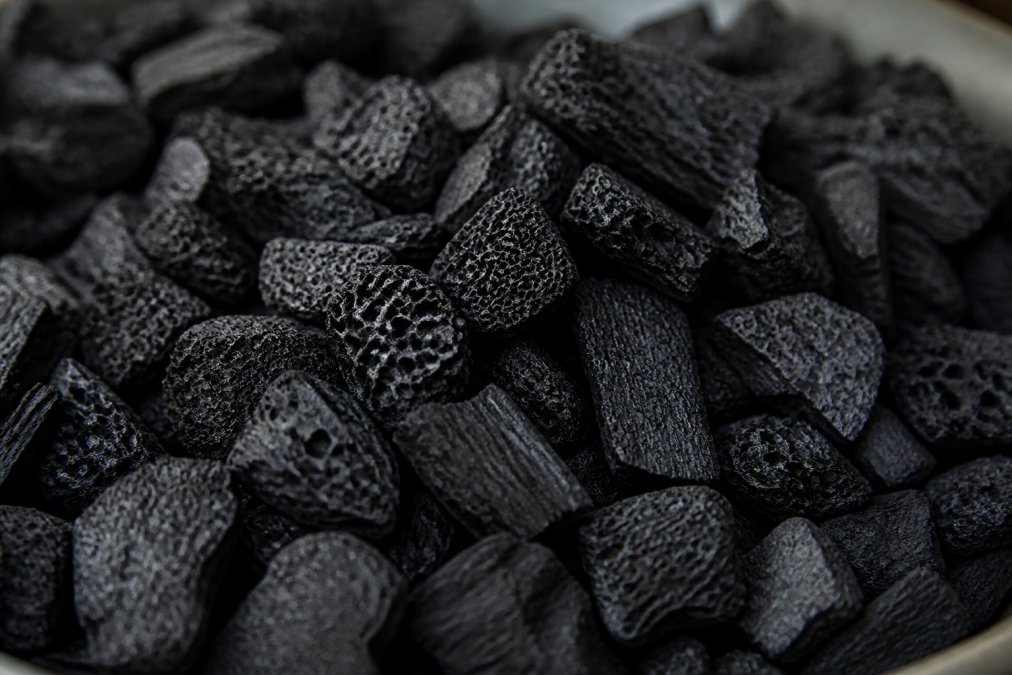
Adsorption and Surface Area
The effectiveness of activated carbon air purifiers depends on two factors: the amount of carbon present and how efficiently it’s structured. More carbon means more surface area available for adsorption, translating directly into greater capacity to remove gaseous pollutants before saturation.
Manufacturers layer activated carbon in specific densities and thicknesses. A high-quality filter might contain several pounds of activated carbon, while budget options use only a few ounces. The difference in performance is substantial. When evaluating purifiers, the weight and volume of carbon in the filter is one of the most reliable indicators of effectiveness and longevity.
The pore structure comes in three sizes: macropores trap larger volatile organic compounds, mesopores handle mid-sized molecules, and micropores capture the tiniest gaseous pollutants. A well-engineered filter balances all three pore sizes to create broad-spectrum removal capability.
Capturing Gaseous Pollutants and VOCs
Volatile organic compounds are gases released from paints, varnishes, cleaning supplies, adhesives, and furniture off-gassing. These include formaldehyde, benzene, and toluene, all of which can accumulate in indoor air. Standard HEPA filters cannot capture these gaseous pollutants because they’re designed to trap particles, not gases.
When activated carbon encounters VOCs, the molecular structure of these compounds creates natural attraction to the carbon’s surface. Formaldehyde molecules bond readily to activated carbon, as do benzene vapors and other chemical off-gassing compounds. The adsorption process continues as long as the carbon has available surface area.
However, once that surface becomes saturated with trapped molecules, the filter loses its ability to remove additional VOCs. This critical limitation is often overlooked. Unlike a particle filter that simply fills with dust, an activated carbon filter reaches a saturation point where the surface is covered with trapped molecules and can no longer adsorb new pollutants. The filter may look clean from the outside but is chemically full.
What Activated Carbon Filters Remove
Activated carbon air purifiers excel at removing specific categories of indoor air pollutants that other filtration methods cannot address. The primary strength is removing gaseous contaminants. Particulate matter like dust, pollen, and pet dander requires mechanical filtration, but volatile organic compounds and gaseous pollutants require chemical bonding at the molecular level.
Volatile Organic Compounds and Chemical Off-Gassing
Your home continuously releases chemical off-gassing. New furniture releases formaldehyde. Paint and varnish emit volatile organic compounds. Cleaning products introduce synthetic chemicals into the air. Adhesives in carpeting and composite materials contribute to indoor air contamination.
Activated carbon removes these compounds through direct molecular bonding. Formaldehyde, one of the most common VOCs in homes, adheres strongly to activated carbon’s surface. Benzene, toluene, and xylene are similarly captured. A high-quality activated carbon air purifier can remove a significant portion of household VOCs, particularly in the first weeks and months of operation when the carbon’s surface area is still largely available. However, removal efficiency decreases over time as the carbon becomes saturated.
Odor Neutralization and Smoke Removal
One of the most noticeable benefits of activated carbon air purifiers is their ability to eliminate household odors. Pet odors, cooking smells, and general mustiness all respond well to activated carbon filtration. The odor molecules bond to the carbon’s surface and are removed from the air.
Smoke removal is another critical application. Whether from cooking, fireplaces, or wildfire smoke, activated carbon captures smoke particles and the gaseous compounds that create smoky odors. This makes activated carbon particularly valuable for homes in wildfire-prone areas where seasonal smoke affects indoor air quality significantly. The carbon removes both visible smoke particles and the invisible gaseous components that standard particle filters miss.
The odor-neutralization capability is immediate and noticeable. Within hours of running an activated carbon air purifier, most people detect a reduction in household odors.
Activated Carbon vs HEPA Filters: Key Differences
The distinction between activated carbon and HEPA filtration is fundamental to understanding which solution addresses your specific air quality needs. These two technologies target completely different types of pollutants and should often be used together rather than as alternatives.
HEPA filters capture particulate matter through mechanical means. A true HEPA filter removes 99.97% of particles 0.3 micrometers or larger, making them essential for anyone with allergies or respiratory sensitivities to particulate pollution (the EPA).
Activated carbon removes gaseous pollutants through chemical bonding. It has minimal effect on particles but excellent effect on VOCs, odors, and chemical vapors. A HEPA filter cannot remove formaldehyde or benzene. An activated carbon filter cannot remove dust or pollen particles.
The most effective air purification strategy combines both technologies. A purifier with HEPA filtration removes particles while activated carbon removes gases. The Aero Essence LLC SR100, for example, uses both mechanical and activated carbon filtration to tackle nine distinct types of pollutants, including particulate matter like dust mites and pet dander alongside gaseous contaminants like smoke and chemical off-gassing.
When evaluating activated carbon air purifiers, identify your specific air quality challenge first. Pet dander and pollen suggest HEPA priority. Odors and chemical smells suggest activated carbon priority. Wildfire smoke, which contains both particles and gaseous compounds, requires both filtration types.
Do Air Purifiers Remove Chemical Odors
Yes, activated carbon air purifiers effectively remove chemical odors by capturing the volatile organic compounds that create those smells. Chemical odors come from volatile organic compounds released by household products, building materials, and furnishings. When these molecules pass through activated carbon, they adsorb to the carbon’s surface and are removed from the air you breathe.
The removal happens quickly. Most people notice a reduction in chemical odors within the first few hours of running an activated carbon air purifier. This immediate result provides clear confirmation that the purifier is working.
However, effectiveness depends on the volume of activated carbon in the filter and how much chemical off-gassing is occurring in your space. A new home with fresh paint, new carpeting, and new furniture releases substantial quantities of VOCs. A well-designed activated carbon filter can remove a significant portion, but it will saturate faster than in a home with minimal off-gassing.
How Often to Change Air Purifier Filters
Most activated carbon filters designed for home use require replacement every 3 to 6 months under normal conditions (the CDC). "Normal conditions" means running the purifier 8-12 hours daily in a home with average air pollution levels. If you run your purifier 24 hours daily, expect to replace filters every 2-3 months. If you run it only a few hours daily, filters might last 6-9 months.
Homes with specific challenges accelerate filter saturation. Wildfire smoke, multiple pets, new construction, or heavy cooking activity will require more frequent filter changes because the air contains higher concentrations of pollutants.
Filter Saturation and Breakthrough Points
Saturation occurs when the activated carbon’s surface becomes covered with trapped molecules and can no longer adsorb new pollutants. This happens gradually, not suddenly. As saturation increases, the filter’s removal efficiency decreases steadily.
The saturation process for activated carbon is invisible. The filter may look clean from the outside, but the carbon inside is gradually becoming chemically full. This is why manufacturers recommend replacement on a schedule rather than waiting for obvious signs of failure.
A "breakthrough point" occurs when the filter’s capacity is so depleted that pollutants begin passing through without being captured. For activated carbon filters, breakthrough typically occurs around 60-80% saturation, depending on the specific pollutants involved.
Signs Your Carbon Filter Needs Replacement
Odors that the purifier previously eliminated start returning. This is the most reliable indicator. If chemical smells, pet odors, or cooking odors are back after being gone, your activated carbon is likely saturated.
Reduced air flow through the purifier can indicate that the mechanical pre-filter has accumulated particles or that the carbon filter is becoming clogged. Many modern activated carbon air purifiers include filter replacement indicators. The Aero Essence LLC SR100 provides visual confirmation of purification performance, helping you monitor when maintenance is needed.
The most practical approach is to follow the manufacturer’s recommended replacement schedule and adjust based on your specific conditions. If you live in a high-pollution area, have multiple pets, or run the purifier continuously, replace filters at the shorter end of the recommended interval.
Health Benefits for Allergy and Respiratory Sufferers
Activated carbon air purifiers offer meaningful health benefits for people with allergies and respiratory sensitivities, particularly when combined with mechanical filtration. The health improvements come from removing both particulate triggers and gaseous irritants.
For allergy sufferers, the benefit comes primarily from mechanical filtration removing dust, pollen, pet dander, and mold spores. However, activated carbon adds an important secondary benefit by removing odors and chemical irritants that can trigger or worsen allergic reactions.
People with asthma and COPD benefit from reduced airborne irritants. Particulate matter triggers respiratory distress in these populations. Gaseous pollutants, including VOCs and smoke, also provoke airway inflammation and breathing difficulty. A comprehensive air purification system addressing both particle and gas removal provides more complete relief.
For homes with wildfire smoke, activated carbon becomes particularly valuable. Smoke contains both particulate matter and gaseous compounds. The particulates trigger respiratory distress directly, while the gaseous components cause inflammation and irritation. Activated carbon removes the gaseous portion that mechanical filters miss entirely.
Limitations and Maintenance Considerations
Activated carbon air purifiers have real limitations you should understand before purchasing. The most significant limitation is that activated carbon cannot remove particulate matter. If your primary concern is dust, pollen, or pet dander, you need mechanical filtration. Activated carbon alone won’t address these common allergens.
Activated carbon filters have a finite lifespan. Unlike mechanical filters that can sometimes be cleaned, activated carbon cannot be regenerated or reused once saturated. The saturation process is invisible, which means you might be running a purifier that looks functional but is no longer removing pollutants effectively.
The cost of filter replacement deserves consideration. Quality activated carbon filters aren’t inexpensive, and if you need to replace them every 3-6 months, the annual maintenance cost is significant. Calculate your total cost of ownership before purchasing any activated carbon air purifier.
Activated carbon filters also have specific moisture and temperature sensitivities. Extremely humid environments can reduce the effectiveness of activated carbon filtration.
Environmental Impact of Filter Disposal
Used activated carbon filters present an environmental disposal challenge. The filters contain trapped pollutants and volatile organic compounds that have been removed from your air. These saturated filters cannot simply go into regular trash.
Many municipalities have hazardous waste disposal programs that accept used air filters. Check with your local waste management authority for proper disposal options. Some retailers that sell air purifiers also offer take-back programs for used filters. For guidance on proper disposal methods for Aero Essence LLC filters, please refer to the product manual or contact customer support.
The environmental consideration is real but shouldn’t paralyze decision-making. The health benefits of removing indoor air pollutants typically outweigh the disposal challenge, particularly for people with allergies or respiratory conditions.
Maintaining healthy indoor air quality is challenging when your home contains invisible pollutants, volatile organic compounds, pet dander, mold spores, and smoke. Activated carbon air purifiers address the gaseous portion of this problem by capturing chemical odors and VOCs that mechanical filters cannot touch. When combined with HEPA filtration, they provide comprehensive air purification that addresses both particles and gases. The Aero Essence LLC SR100 combines both technologies to remove nine distinct types of pollutants while providing visual confirmation of purification performance. Shop Now to create a cleaner, healthier indoor environment for your family.
Frequently Asked Questions
What exactly do activated carbon air purifiers remove?
Activated carbon air purifiers remove volatile organic compounds (VOCs), chemical odors, smoke, formaldehyde, benzene, and other gaseous pollutants through adsorption. They work by trapping molecules on the carbon's porous surface. However, they do not capture particulate matter like dust, pet dander, or pollen, that's where HEPA filtration comes in. Many effective systems combine both technologies to address gaseous and particulate contaminants.
How often should you replace activated carbon filters?
Most activated carbon filters need replacement every 3 to 6 months, depending on air quality, usage intensity, and pollutant load. In high-pollution environments like wildfire smoke areas or homes with pets, replacement may be needed every 2 to 3 months. Once carbon reaches saturation, it stops adsorbing new contaminants and can experience breakthrough, allowing odors and VOCs to pass through. Check your purifier's performance and odor presence as indicators that replacement is due.
Do air purifiers with activated carbon remove chemical odors?
Yes, activated carbon air purifiers are highly effective at removing chemical odors through odor neutralization. They trap molecules responsible for household odors, pet smells, cooking odors, and off-gassing from new furniture or paint. The activated charcoal's high surface area and porosity allow it to capture these chemical vapors. For best results, pair carbon filtration with proper ventilation and address the source of the odor when possible.
Is activated carbon filtration worth the extra cost compared to standard filters?
For households dealing with chemical odors, VOCs, smoke, or respiratory sensitivities, activated carbon filtration provides measurable value by improving indoor air quality in ways standard filters cannot. The cost depends on your specific air quality challenges, pet owners, those near wildfire zones, or people with asthma often see clear benefits. Compare the filter replacement cycle costs and the health impact on your household to determine if the investment aligns with your needs.
This article was written using GrandRanker