
Best Air Purifier for Basement Mold: 2026 Guide
Table of Contents
- Quick Comparison Table
- How Air Purifiers Help With Mold Spores
- HEPA Filter Effectiveness for Mold Spores
- Air Purifier vs Dehumidifier for Mold
- Top Air Purifiers for Basement Mold
- 1. Aero Essence SR100: Visual Confirmation You Can Trust
- 2. Alen BreatheSmart 75i: Maximum Coverage for Large Basements
- 3. Medify MA-40: Medical-Grade HEPA for Serious Mold Issues
- 4. Rabbit Air MinusA2: Customizable Filtration and Ultra-Quiet Operation
- 5. Coway Airmega 200M: Smart Monitoring on a Budget
- 6. GermGuardian AC4825: Affordable Entry-Level Option
- Mold Spore Removal Best Practices
- Key Features to Look for in a Mold-Focused Air Purifier
- Which Air Purifier Should You Choose?
Last Updated: August 21, 2026
Quick Comparison Table
| Air Purifier | Coverage Area | Filter Type | Best For | Key Strength |
|---|---|---|---|---|
| Aero Essence SR100 | Multiple room sizes | Multi-stage HEPA | Comprehensive mold removal | Visual confirmation of operation |
| Alen BreatheSmart 75i | Up to 2,800 sq ft | True HEPA (H13) | Large basements | Whisper-quiet performance |
| Medify MA-40 | Up to 1,793 sq ft | H13 True HEPA | Medical-grade filtration | 99.9% particle capture |
| Rabbit Air MinusA2 | Up to 810 sq ft | 6-stage customizable | Odor and mold concerns | Ultra-quiet wall-mount design |
| Coway Airmega 200M | Up to 361 sq ft | 4-stage with ionizer | Smart monitoring | Real-time air quality display |
| GermGuardian AC4825 | Medium rooms | True HEPA + UV-C | Budget-conscious buyers | Germ-killing UV-C light |
How Air Purifiers Help With Mold Spores
HEPA-equipped air purifiers capture mold spores before they settle on surfaces or get inhaled. The mechanical filtration traps spores in the filter media, preventing them from circulating back into your breathing space.
Mold thrives in damp basements where spores float freely in humid air. Air purifiers remove spores throughout the day and night, addressing this invisible threat before it enters your lungs.
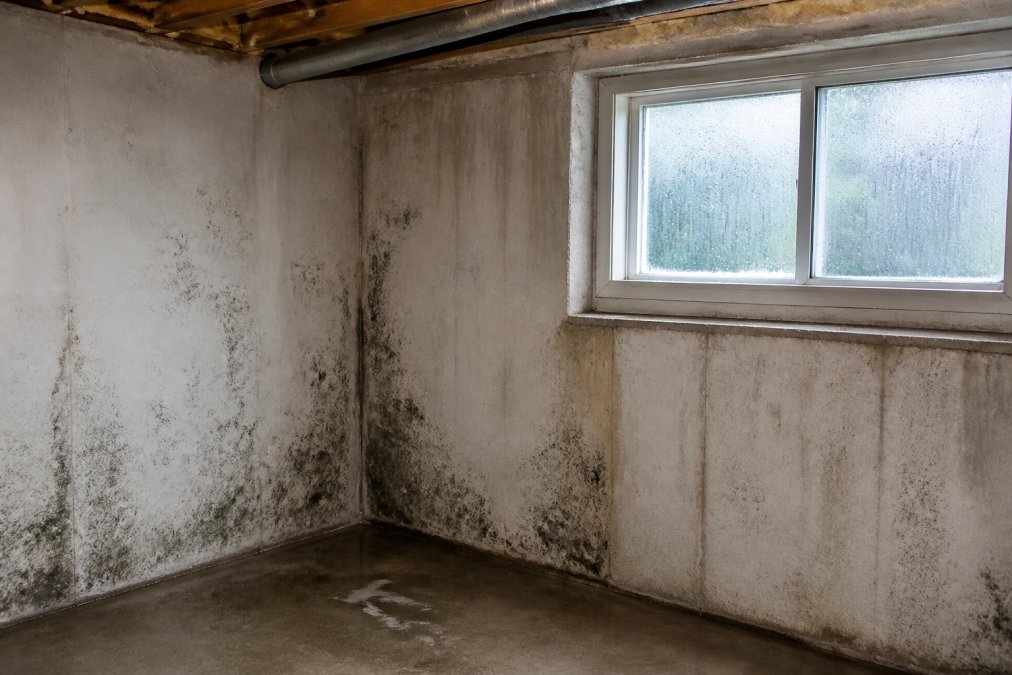
The best approach combines two strategies: reduce humidity with a dehumidifier, then capture remaining spores with an air purifier. This combination works better than either solution alone.
HEPA Filter Effectiveness for Mold Spores
HEPA filtration captures particles down to 0.1 microns (the FDA). Mold spores typically range from 3 to 40 microns, making them well within HEPA’s capture range. True HEPA filters capture 99.97% of particles at 0.3 microns, while H13 HEPA filters capture 99.9% down to 0.1 microns, offering superior performance (peer-reviewed research).
Effectiveness depends on airflow and filter surface area. CADR (Clean Air Delivery Rate) measures how much clean air the unit actually delivers per minute. Activated carbon filters complement HEPA by removing odors and volatile organic compounds associated with mold.
Filter lifespan matters in moldy basements. High spore loads mean filters clog faster, a filter lasting 6 months in a clean home might need replacement every 3-4 months in a basement with active mold.
Check filter replacement cost before buying. Some air purifiers have expensive proprietary filters that cost more annually than the unit itself. Budget-friendly options like the GermGuardian AC4825 use standard replacement filters available everywhere, reducing long-term ownership costs.
Air Purifier vs Dehumidifier for Mold
A dehumidifier removes moisture from the air, addressing the root cause of mold growth. Mold cannot thrive without humidity above 50-60%. However, dehumidifiers do nothing about spores already floating in the air.
An air purifier removes spores from the air but does nothing to reduce humidity. It’s a treatment, not a prevention. Together, they create an environment where mold cannot establish or spread.
Most homeowners need both. Start with humidity measurement. If your basement reads above 60% relative humidity, add a dehumidifier first. Then add an air purifier to handle existing spore loads.
Top Air Purifiers for Basement Mold
1. Aero Essence SR100: Visual Confirmation You Can Trust
The Aero Essence SR100 shows you exactly what it’s capturing through transparent design elements that confirm active operation. This visual feedback addresses a common frustration: homeowners buy air purifiers and never know if they’re actually working.
The unit handles nine distinct types of pollutants, including mold spores, dust mites, pet dander, pollen, and smoke. For homeowners skeptical about air purifier effectiveness, the SR100 removes that doubt.
2. Alen BreatheSmart 75i: Maximum Coverage for Large Basements
The BreatheSmart 75i covers up to 2,800 square feet in one hour, making it ideal for sprawling basement spaces. True H13 HEPA filtration captures 99.9% of particles down to 0.1 microns.
The standout feature is whisper-quiet operation using pink noise technology to mask fan noise. Energy Star certification indicates strict efficiency standards and lower electricity costs. The lifetime warranty signals confidence in build quality.
Cons: The high price point and bulky design require dedicated floor space. Filter replacement costs accumulate over time.
3. Medify MA-40: Medical-Grade HEPA for Serious Mold Issues
The Medify MA-40 brings medical-grade filtration to residential basements. The H13 True HEPA filter captures 99.9% of particles down to 0.1 microns, matching professional-grade standards.
Three-stage filtration includes a pre-filter for large particles, the H13 HEPA stage for spores and allergens, and an activated carbon filter for odors. Coverage reaches 1,793 square feet in one hour with a tempered glass touchscreen and three fan speeds.
Cons: Filter replacement every 4-5 months in a moldy basement means ongoing costs. The unit reaches 66 decibels on higher fan speeds.
4. Rabbit Air MinusA2: Customizable Filtration and Ultra-Quiet Operation
The MinusA2 uses customizable filter modules to target specific pollutants. For mold-focused use, select the Odor Remover or Germ Defense module alongside the standard HEPA filter.
Six-stage filtration addresses mold spores and musty odors. Ultra-quiet operation and wall-mountable design save floor space. Coverage reaches 810 square feet, suitable for medium-sized basement rooms.
Cons: Higher price point and expensive replacement filters mean significant long-term costs. Limited coverage area requires multiple units for large basements.
5. Coway Airmega 200M: Smart Monitoring on a Budget
The Airmega 200M brings real-time air quality monitoring to an affordable price point. The color-coded indicator shows air quality at a glance: green means clean, yellow indicates moderate pollution, red signals poor air quality.
Four-stage filtration includes a pre-filter, deodorization filter, True HEPA filter, and bipolar ionizer. Automatic speed control adjusts fan speed based on detected air particles. Coverage reaches 361 square feet with a filter change indicator.
Cons: The bipolar ionizer produces ozone, which some air quality experts view with concern. Smaller coverage area means larger basements need multiple units.
6. GermGuardian AC4825: Affordable Entry-Level Option
The AC4825 offers a practical entry point for homeowners uncertain about air purifier investment. Three-in-one filtration combines True HEPA (capturing 99.97% of particles at 0.3 microns), activated charcoal for odor reduction, and UV-C light for germ reduction.
The tower design maximizes air circulation while taking up minimal floor space. Cons: This unit may not be powerful enough for serious, active mold problems. The smaller coverage area and lower CADR rating mean slower air cleaning.
Mold Spore Removal Best Practices
Position your air purifier centrally in the basement, not in a corner. Corner placement creates dead zones where air doesn’t circulate effectively. In larger basements, multiple units positioned strategically work better than one powerful unit.
Run the air purifier continuously, not just when you’re using the basement. Mold spores are released 24/7 as long as mold is present.
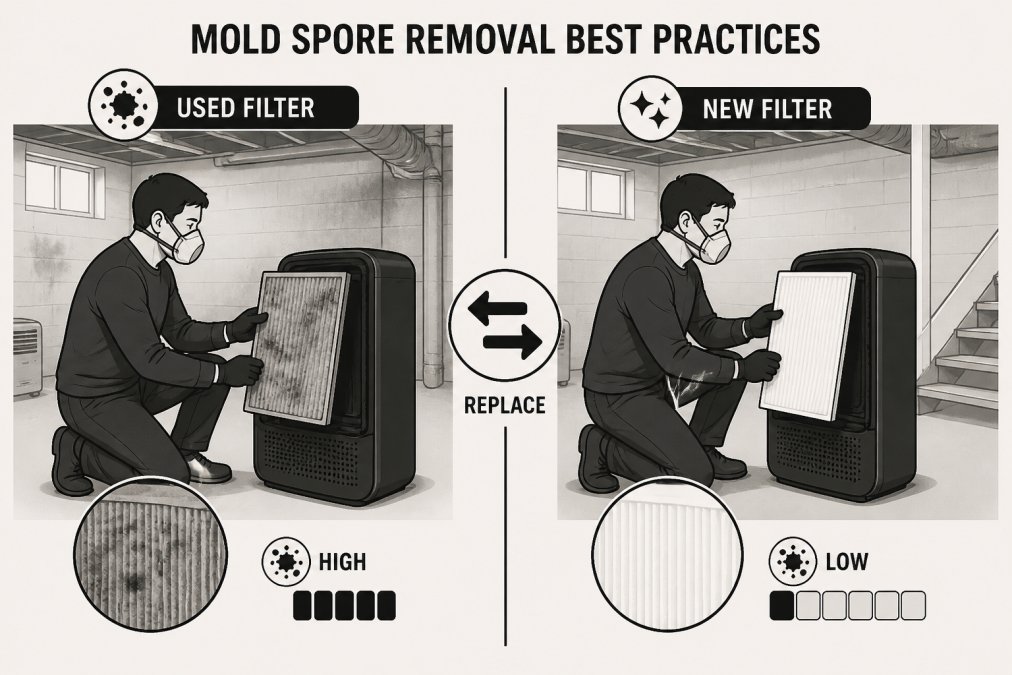
Replace filters on schedule, not by appearance. Follow manufacturer recommendations, which typically range from 3-6 months depending on spore load. Pair air purification with humidity control and ventilation. Open basement windows when weather permits to exchange stale, spore-laden air with fresh outside air. Address moisture sources directly, leaky pipes, groundwater seepage, and condensation all contribute to basement dampness.
Monitor air quality indicators if your unit includes them. Real-time feedback shows whether your current setup is adequate.
Never neglect filter replacement in moldy basements. Filters clogged with mold spores stop working effectively and can become a secondary mold growth site. Replace filters more frequently in high-spore environments.
Key Features to Look for in a Mold-Focused Air Purifier
HEPA filtration is non-negotiable. Look for True HEPA certification, which guarantees 99.97% capture of particles at 0.3 microns. H13 HEPA filters offer even better performance at 99.9% capture down to 0.1 microns.
CADR (Clean Air Delivery Rate) indicates actual air cleaning performance. For basement mold, look for CADR values above 300 for reasonable coverage.
Coverage area determines whether a single unit suffices or you need multiple units. Noise levels matter if your basement is near living spaces, units exceeding 65 decibels become noticeable during extended operation.
Filter longevity and replacement cost directly impact ownership expenses. Calculate annual filter costs before purchasing. Activated carbon filtration addresses musty odors associated with mold. Smart features like real-time air quality sensors and automatic speed adjustment add convenience. Warranty coverage indicates manufacturer confidence in durability.
Which Air Purifier Should You Choose?
Choose the Aero Essence SR100 if you need visual confirmation that it’s working. The transparent design directly addresses concerns about whether your investment actually functions.
Choose the Alen BreatheSmart 75i for sprawling basements over 2,000 square feet. The whisper-quiet operation and H13 HEPA filtration justify the premium price for serious mold problems.
Choose the Medify MA-40 if you need medical-grade filtration for severe mold issues without the highest price tag. The H13 HEPA filter performs identically to more expensive units.
Choose the Rabbit Air MinusA2 if you have a smaller basement and prioritize ultra-quiet operation and space-saving wall-mount design.
Choose the Coway Airmega 200M if budget is your primary concern and you want smart air quality monitoring.
Choose the GermGuardian AC4825 if you’re testing whether air purification helps before committing to expensive equipment.
Basement mold requires a comprehensive approach, and air purification is one critical piece. The best air purifier for your situation depends on your specific basement size, mold severity, and budget constraints. Start by measuring humidity and addressing moisture sources, then add an air purifier sized appropriately for your space. The Aero Essence SR100 combines comprehensive pollutant removal with visual confirmation of operation, giving you peace of mind that your investment is actually working. Visit Aero Essence LLC’s website to explore how the SR100 tackles nine distinct pollutant types including mold spores, dust mites, pet dander, and smoke. For homeowners serious about basement air quality, the SR100’s approach to visible purification performance sets a new standard for what you should expect from your air purification investment.
Frequently Asked Questions
Do air purifiers actually remove mold spores from the air?
Yes, air purifiers with True HEPA filtration capture mold spores effectively. HEPA filters trap 99.9% of particles as small as 0.1 microns, which includes mold spores. However, air purifiers only clean airborne spores, they don't stop mold from growing on surfaces. For complete mold control, combine air purification with humidity management and moisture removal from walls and floors.
What's the difference between an air purifier and dehumidifier for basement mold?
Air purifiers remove mold spores already in the air, while dehumidifiers reduce moisture that allows mold to grow. For basement mold, use both: a dehumidifier keeps relative humidity below 50% to prevent new mold growth, and an air purifier removes spores you're breathing. Together, they address the problem from two angles, prevention and removal.
How often should I replace the HEPA filter in a mold-prone basement?
In mold-prone basements, plan to replace HEPA filters every 3-5 months instead of the standard 6-12 months. Heavy mold spore loads clog filters faster. Check your filter monthly by holding it to light, if it looks gray or brown, replace it sooner. Frequent replacement maintains airflow and filtration efficiency, and prevents filter mold growth.
Can an air purifier stop mold from growing on basement walls?
No. Air purifiers remove airborne spores but cannot prevent surface mold growth. Mold grows on walls when moisture and temperature conditions are right. To stop wall mold, address the root cause: control humidity with a dehumidifier, fix water leaks, and improve ventilation. Air purifiers complement these efforts by cleaning the air, but they're not a mold remediation solution on their own.
This article was written using GrandRanker