
Signs of Hidden Mold in Home Walls: A Detection Guide
Table of Contents
- Common Signs of Mold in a Home
- Musty Smell in House but No Visible Mold
- Mold Behind Drywall Signs You Should Know
- How to Detect Mold Behind Walls Without Opening Them
- Health Symptoms Associated with Mold Exposure
- How to Prevent Mold in a House
- What to Do After Finding Evidence of Hidden Mold
- Frequently Asked Questions
Last Updated: October 10, 2026
Common Signs of Mold in a Home
Mold thrives in damp environments and often hides where you can’t see it. The signs of hidden mold in home walls range from obvious visual clues to subtle indicators that require closer inspection.
At Aero Essence LLC, we understand how mold affects indoor air quality and your family’s health. Our SR100 air purifier removes mold spores from the air, but detecting where mold is growing is the first critical step.
Visible mold spots and discoloration
Look for dark spots, black spots, or greenish patches on walls, ceilings, and floors, especially in corners, along baseboards, or near windows where moisture persists.
Mold spots may feel slimy or fuzzy to the touch. Persistent dark spots warrant investigation, though discoloration can sometimes be staining rather than mold.
Peeling, bubbling, or damaged paint and wallpaper
Peeling paint, bubbling surfaces, or wallpaper pulling away from the wall signals excess moisture and often appears before visible mold growth.
When paint bubbles or peels, moisture has compromised the surface and mold may be growing on the drywall behind the damaged coating.
Water leaks and past water damage
Any history of water leaks creates a pathway for mold. Check under sinks, around toilets, and along the foundation for signs of past water intrusion.
Water stains on ceilings or walls indicate moisture has entered. Yellow or brown discoloration is one of the strongest predictors of hidden mold problems.
Musty Smell in House but No Visible Mold
A musty smell is often your first warning sign, indicating mold spores are present even before visible growth appears.
Why mold odor appears without visible growth
Mold releases volatile organic compounds (VOCs) that create a distinctive musty smell, traveling through your home’s air and ventilation system long before visible growth appears.
Hidden mold behind walls, inside insulation, or within HVAC systems produces odor without visible evidence, alerting you to investigate further.
Tracing the source of stale and damp odors
Identify where the smell is strongest, the odor often intensifies near moisture sources like bathrooms, basements, or kitchens.
Check your HVAC system and air filters; a moldy smell from vents suggests mold is growing inside ductwork or on the blower. Open windows to improve ventilation and see if the odor decreases.
Mold Behind Drywall Signs You Should Know
Drywall absorbs moisture readily, making it an ideal environment for mold. Many warning signs of hidden wall mold overlap with other moisture problems, so understanding which clues specifically point to mold inside walls helps you prioritize investigation.
Signs that specifically suggest hidden mold in wall cavities
Soft or spongy drywall (high confidence indicator): If drywall feels soft, yields to gentle pressure, or has a spongy texture, water has penetrated the wall and mold may be growing within.
Discoloration or staining that follows a vertical or horizontal line (moderate confidence): Vertical brown or black lines on drywall may indicate water running down studs behind the surface.
Signs that may indicate moisture but not necessarily hidden wall mold
High indoor humidity or condensation on windows (low-to-moderate confidence for wall mold): High humidity and condensation indicate excess moisture favorable for mold, but do not point to hidden wall mold specifically.
Cool or clammy walls in winter (low confidence for active mold): Cool exterior walls may feel damp due to condensation, especially in bedrooms and bathrooms.
Peeling paint or bubbling wallpaper (moderate confidence, investigate further): Peeling paint and bubbling wallpaper indicate moisture but may be from condensation, surface leaks, or old damage.
How to assess the strength of evidence
Single sign present: One warning sign (such as high humidity or peeling paint) suggests moisture may be present but does not confirm hidden wall mold.
Signs combined with visible water damage history: If the wall is near a past leak and you observe soft drywall or persistent odor, mold is very likely present.
Hidden mold inside wall cavities and insulation
Insulation traps moisture and provides perfect conditions for mold, which spreads quickly through the cavity. Warning signs exist even though growth is hidden.
Spongy drywall or soft spots indicate water damage and likely mold growth in the wall cavity. Insulation may be compromised and require replacement. Seek professional evaluation promptly.
Distinguishing wall mold from other moisture sources
Plumbing leaks: Soft drywall or dampness directly below a bathroom or kitchen suggests a plumbing leak. Once repaired, monitor the wall for drying.
Exterior water intrusion: Dampness on exterior walls after rain suggests water is entering from outside. Check for foundation cracks, window gaps, or poor drainage.
Condensation: Interior condensation is a humidity problem that resolves when humidity is reduced via exhaust fans, dehumidifiers, or improved ventilation. Addressing humidity prevents mold progression.
How to Detect Mold Behind Walls Without Opening Them
Several non-invasive methods help assess moisture and conditions that favor hidden mold. These tools provide useful clues but have important limitations, a single reading or image does not confirm mold exists. Understanding what each tool can and cannot establish helps you avoid unnecessary alarm or missed problems.
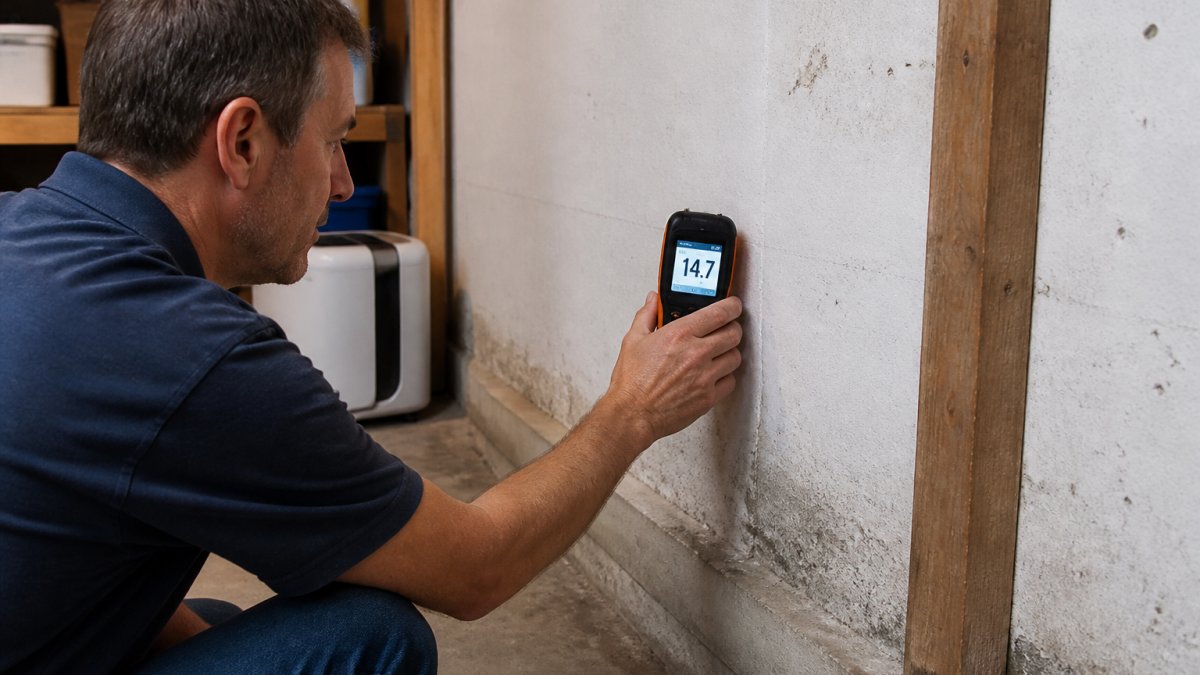
Using a moisture meter for non-invasive detection
A moisture meter measures water content in drywall by inserting pins or using a non-invasive pad.
What a moisture reading does not tell you: A meter cannot distinguish between recent condensation and old leaks, confirm mold is present, or identify the moisture source.
How to use readings effectively: Take multiple readings across the suspected area. Consistently elevated readings (above 16%) combined with musty odor or visible dampness warrant investigation.
Thermal imaging and what temperature patterns mean
Thermal imaging cameras detect temperature differences on wall surfaces. Cooler areas often indicate moisture accumulation because water conducts heat differently than dry material.
What thermal imaging tells you: A cold spot suggests moisture may be present. Thermal patterns help you narrow down where to take moisture-meter readings.
How to use thermal imaging effectively: Use a thermal camera to scan wall areas and identify cooler zones.
Air testing and what spore counts indicate
Air testing collects samples and analyzes them for mold spore counts, revealing whether mold spores are actively being released into your living space.
What air testing tells you: High spore counts suggest mold is actively growing.
What air testing does not tell you: A spore count does not identify where mold is growing or what type it is.
Cost and timing: Air testing costs $300-$800 per sample and takes 3-7 days for results.
When to call a professional instead of testing further
If you observe any of the following, professional inspection is more cost-effective and reliable than additional homeowner testing:
- Visible mold or water damage: A professional can assess extent and source without delay. Testing adds time and cost without changing the need for remediation.
- Musty odor that persists despite ventilation: A mold inspector can trace the source using experience and specialized tools. Homeowner air testing may not pinpoint the location.
- Moisture readings consistently above 16% in the same area: This warrants professional moisture-source investigation. A plumber or inspector can identify whether the cause is a hidden leak, condensation, or exterior water intrusion.
- Symptoms in household members that correlate with time spent indoors: A professional can assess whether mold is a likely cause and recommend next steps. Air testing alone does not establish causation.
- Recent water damage (roof leak, burst pipe, flooding): Even if surfaces appear dry, hidden mold may be developing inside walls or insulation. Professional inspection is justified within 48-72 hours of the event.
Professional mold inspectors use moisture meters, thermal imaging, and air testing as part of a comprehensive assessment. They also visually inspect HVAC systems, crawl spaces, and attics, areas homeowners often cannot safely access. Their training and experience allow them to interpret findings in context and recommend whether remediation, moisture-source repair, or monitoring is appropriate.
Health Symptoms Associated with Mold Exposure
Mold exposure affects people differently. Understanding common reactions helps you recognize when mold may be affecting your household.
Respiratory irritation and breathing difficulties
Mold spores irritate the respiratory system, causing difficulty breathing, chest tightness, and persistent coughing (the CDC). People with asthma experience more severe symptoms.
If respiratory symptoms improve when you leave home and return when you come back, mold exposure may be the cause.
Allergy symptoms, sinus issues, and headaches
Mold triggers allergic reactions in sensitive individuals, causing sinus issues, nasal congestion, post-nasal drip, itchy eyes, and throat irritation.
Headaches may develop or worsen in moldy spaces and typically improve once the mold problem is addressed.
How to Prevent Mold in a House
Prevention is far more effective than remediation. Controlling moisture, improving ventilation, and reducing mold spores stops problems before they start.
Control moisture and humidity levels
Keep indoor humidity between 30% and 50% using dehumidifiers in damp areas and exhaust fans during and after showers (the CDC).
Fix leaks promptly and dry wet areas within 24 to 48 hours (the EPA). Standing water should never remain in your home.
Improve ventilation and address water intrusion
Proper air circulation prevents moisture accumulation. Open windows when weather permits and use ceiling fans to keep air moving.
Seal cracks in foundations and exterior walls. Ensure gutters direct water away and grade soil to slope away from the foundation.
Reduce mold spores with air quality management
An air purifier removes mold spores from the air you breathe. The Aero Essence LLC SR100 captures nine types of pollutants, including mold spores, with visual confirmation of active operation.
Regular filter replacement maintains air purification performance. Combined with moisture control, air purification significantly reduces mold-related health risks.
What to Do After Finding Evidence of Hidden Mold
Acting quickly on hidden mold discovery prevents the problem from spreading.
Identify and eliminate the moisture source. Address leaks, improve ventilation, and reduce humidity immediately.
For larger areas or extensive hidden mold, professional remediation is necessary. Mold specialists locate all affected areas and remove contamination safely.
After remediation, install air purification to prevent recurrence. The SR100 from Aero Essence LLC removes mold spores continuously. Monitor humidity levels and maintain good ventilation.
Finding signs of hidden mold in home walls early prevents serious damage and health problems. Aero Essence LLC’s SR100 air purifier removes mold spores from your home’s air, providing visual confirmation that your indoor air quality is improving.
Frequently Asked Questions
Can a musty smell mean there is mold behind a wall?
Yes. A musty or stale odor is often the first sign of hidden mold in walls, especially when no visible growth is present. Mold spores and compounds they release can travel through air and wall cavities before visible colonies form. If you notice a persistent damp odor in a specific room or area, particularly near bathrooms, basements, or rooms with past water damage, investigate for moisture and hidden mold growth behind walls or inside insulation.
How can I tell if there’s mold behind my drywall?
Look for water stains, peeling or bubbling paint, and soft spots on walls. A moisture meter can detect excess humidity inside walls without opening them. Check for condensation on windows, musty odors, and visible mold at wall edges or corners. If you find water damage history or notice allergy symptoms worsening in one room, those are strong indicators of mold behind drywall. Professional air testing or thermal imaging can confirm hidden mold, but a moisture reading above 16% typically signals a problem.
How can I prevent mold from growing inside walls?
Control indoor humidity by keeping levels between 30-50% using a dehumidifier if needed. Fix water leaks immediately and ensure proper ventilation in bathrooms and kitchens. Insulate pipes to prevent condensation, seal air leaks around windows and doors, and direct water away from your foundation. Clean gutters regularly and maintain proper grading around your home. Managing moisture and humidity prevents the conditions mold spores need to grow in wall cavities and insulation.
When should I call a mold inspection professional?
Call a professional if you find persistent moisture readings above 16%, visible mold growth, significant water damage, or ongoing musty odors despite your efforts. If household members have respiratory symptoms, asthma, or allergies that worsen indoors, professional testing can identify hidden mold and air quality issues. Professionals use thermal imaging and air testing to detect mold spores and locate sources you cannot see, helping you avoid costly guesswork or incomplete fixes.