
Medical Grade Air Purifier for Viruses: 2026 Guide
Table of Contents
- What Makes a Medical Grade Air Purifier for Viruses Different
- HEPA Air Purifier for Viruses: Filtration Standards Explained
- Air Purifier CADR for Room Size and Coverage
- FDA-Cleared Air Purifier: What the Designation Really Means
- Air Purifier Filter Replacement and Total Cost of Ownership
- Top Medical Grade Air Purifiers Compared
- Choosing the Right Medical Grade Air Purifier for Your Needs
- Frequently Asked Questions
Last Updated: October 10, 2026
What Makes a Medical Grade Air Purifier for Viruses Different
A medical grade air purifier for viruses uses HEPA or ULPA filters to capture airborne pathogens, viruses, and bacteria as small as 0.1 microns, where respiratory viruses reside. Unlike standard consumer purifiers focused on dust and allergens, medical-grade models employ hospital-grade filtration standards verified through independent testing against actual pathogens.
A medical grade air purifier for viruses combines high-efficiency filtration with adequate airflow to clean a room multiple times per hour, addressing respiratory concerns, pet allergies, wildfire smoke, and mold exposure. Standard purifiers lack the filtration grade or airflow capacity to meaningfully reduce viral transmission risk or handle heavy smoke loads.
Critical specifications include HEPA or ULPA certification, CADR ratings matched to room size, and third-party testing documentation. Medical facilities rely on these purifiers because they’ve been validated against real-world pathogen loads.
HEPA Air Purifier for Viruses: Filtration Standards Explained
HEPA filtration is the foundation of any medical grade air purifier for viruses. HEPA stands for High-Efficiency Particulate Air, and the standard requires that a filter capture at least 99.97% of particles 0.3 microns or larger (the EPA). This efficiency rating is verified through independent laboratory testing and is the same standard used in operating rooms and isolation units. When you see “HEPA” on a purifier label, it means the filter has been tested and certified to meet this specific performance threshold.
H13 and ULPA Filtration Grades
H13 HEPA filters capture 99.95% of particles at 0.3 microns, exceeding standard HEPA requirements. Commonly found in medical-grade residential purifiers and healthcare facilities, H13 offers better performance than H11 without ULPA’s cost premium.
ULPA filters capture 99.999% of particles at 0.12 microns. Standard in pharmaceutical and healthcare settings, ULPA is overkill for most homes but suitable for severely immunocompromised individuals or extremely contaminated environments.
Particle Capture Efficiency and Micron Ratings
Respiratory viruses travel in droplets and aerosol particles ranging from 0.5 to 100 microns. A HEPA filter rated for 0.3 microns captures the vast majority of virus-carrying particles.
For a medical grade air purifier for viruses, filtration should be rated to at least 0.3 microns. H13 catches 99.95% of virus-laden particles; ULPA catches 99.999%. For most homes, H13 provides excellent protection without ULPA’s higher cost and frequent replacement.
Air Purifier CADR for Room Size and Coverage
CADR (Clean Air Delivery Rate), measured in cubic feet per minute, determines whether a purifier can clean your room. High CADR ratings refresh air more frequently, directly impacting how quickly airborne viruses are removed.
A purifier should achieve at least 4 to 5 air changes per hour (ACH). For a 300-square-foot room with 8-foot ceilings, this requires approximately 160 CFM.
For virus removal, focus on smoke CADR ratings, as smoke particles are similar in size to virus-laden aerosols. A smoke CADR of 200+ suits rooms up to 300 square feet; 300+ handles 400-500 square feet.
FDA-Cleared Air Purifier: What the Designation Really Means
FDA clearance means the Food and Drug Administration reviewed and approved the purifier for a specific use, typically virus and bacteria removal in healthcare facilities. The manufacturer submitted test data demonstrating pathogen reduction under controlled laboratory conditions.
FDA clearance is based on laboratory performance, not clinical outcomes. A purifier cleared for healthcare use may perform differently in homes with variable humidity, temperature, and air circulation. The designation shows rigorous testing but doesn’t guarantee protection in your specific environment. Maintaining a sterile indoor atmosphere often requires supplementing mechanical filtration with chemical-free home disinfectants to address surface-bound pathogens that bypass airborne capture.
When evaluating an FDA-cleared medical grade air purifier for viruses, check the clearance statement for what was tested (virus, bacteria, or both) and review test conditions. A purifier cleared for a 500-square-foot hospital room may underperform in a 1,000-square-foot home.
Air Purifier Filter Replacement and Total Cost of Ownership
HEPA and ULPA filters must be replaced every 6 to 12 months depending on air quality. In areas with heavy smoke, dust, or pet dander, replacement may be needed every 3 to 6 months.
Replacement filter costs vary. Over five years, filter costs can exceed the unit’s purchase price.
Total cost of ownership = purchase price + (annual filter cost × lifespan).
Top Medical Grade Air Purifiers Compared
| Model | Filter Type | Best For | Key Consideration |
|---|---|---|---|
| Aero Essence SR100 | Medical-grade HEPA | Pet owners, allergy sufferers | Handles nine pollutant types with visual confirmation |
| IQAir HealthPro Plus | H13 HEPA | Residential healthcare needs | Highest-grade HEPA for home use |
| Austin Air HealthMate Plus HM450 | Medical-grade HEPA | Virus and bacteria reduction | 99% removal claim for aerosolized pathogens |
| Molekule Air Purifiers | FDA-cleared filtration | Healthcare facility use | Designed for clinical environments |
| Alen BreatheSmart 75i | Essential medical-grade HEPA | Larger spaces, allergen control | 99.9% capture of allergens, dust, and viruses |
Aero Essence SR100
The Aero Essence SR100 addresses nine indoor air pollutants including dust mites, pet dander, pollen, mold spores, and smoke. This medical grade air purifier for viruses combines high-efficiency filtration with visual confirmation of active operation, particularly effective for pet and allergy households.
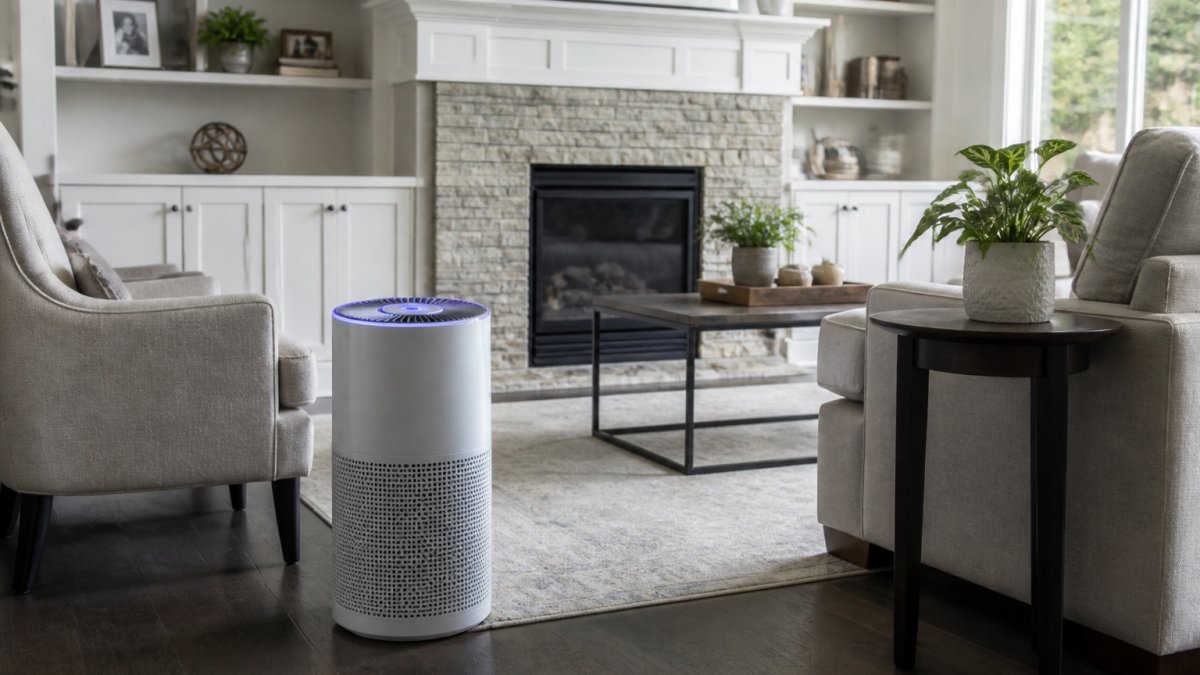
The SR100 provides visual confirmation that the system is capturing particles and delivering clean air, building confidence for skeptical homeowners.
The SR100’s ability to target nine pollutant types means you avoid the common mistake of buying a purifier optimized for one problem (say, pollen) only to discover it’s ineffective against another (pet dander). Comprehensive filtration saves you from needing multiple units.
IQAir HealthPro Plus
The tradeoff is cost; replacement filters are expensive, making it difficult to justify unless virus reduction is your top priority.
Austin Air HealthMate Plus HM450
The limitation is coverage area; it’s rated for smaller to medium rooms.
Families with respiratory sensitivities or asthma who need a purifier specifically validated for virus and bacteria removal without the premium pricing of the HealthPro Plus.
Molekule Air Purifiers (Healthcare-Grade)
The drawback is that healthcare-grade equipment often comes with healthcare-grade pricing and may be oversized for typical residential spaces. The specifications and pricing are not always transparent for residential customers, making it harder to evaluate value.
Alen BreatheSmart 75i with Medical-Grade Filter
The Essential filter upgrade carries an additional cost, and replacement filters are priced accordingly. However, the option to upgrade incrementally appeals to homeowners who want flexibility in their air quality investment.
Choosing the Right Medical Grade Air Purifier for Your Needs
Selecting the right medical grade air purifier for viruses depends on your specific air quality challenge, room size, and budget. The best unit for a household with pets and allergies differs from the best choice for someone dealing with wildfire smoke or mold. Your decision should start with identifying your primary pollutant concern and your room’s dimensions.
For Homes with Pets and Allergies
Pet dander and pollen are among the most stubborn household air contaminants. A medical grade air purifier for viruses designed for pet owners needs strong HEPA filtration, adequate CADR for your room size, and ideally, activated carbon to address odors. The Aero Essence SR100 is particularly effective because it targets nine pollutant types, including pet dander specifically. If you have multiple pets or severe allergies, prioritize CADR ratings of 200 or higher to ensure adequate air changes per hour.
Activated carbon filtration is an often-overlooked feature that matters for pet owners. HEPA alone removes particles but not odors. A purifier with both HEPA and activated carbon layers addresses both the visible and invisible aspects of pet-related air quality problems. Replace filters more frequently in pet households, typically every 3 to 6 months rather than annually, because dander clogs filters faster.
For Wildfire Smoke and Seasonal Pollution
Wildfire smoke presents a unique challenge because smoke particles are extremely fine and can penetrate standard HEPA filters quickly. During heavy smoke events, you need a medical grade air purifier for viruses with exceptionally high CADR and frequent filter monitoring. Smoke CADR ratings should be 250 or higher for meaningful performance during peak pollution events.
In wildfire-prone areas, consider running your purifier continuously during smoke season, which means filter replacement may be necessary every 1 to 3 months rather than annually. Budget for this increased consumable cost upfront.
For Respiratory Conditions and Asthma
Individuals with asthma or COPD benefit most from a medical grade air purifier for viruses that removes both viruses and allergens. The combination matters because respiratory patients are often sensitive to multiple triggers. Prioritize units with H13 HEPA filtration (99.95% efficiency) and CADR ratings that support at least 4 air changes per hour in your bedroom.
Additionally, consider placement: a purifier in the bedroom where you sleep provides more direct benefit than a unit in a common area. Some respiratory specialists recommend a combination approach, a high-performance purifier in the bedroom plus a secondary unit in the main living space.
Choosing a medical grade air purifier for viruses means investing in equipment that actually performs as claimed. The difference between a standard consumer purifier and a medical-grade unit is measurable: higher filtration efficiency, validated CADR ratings, and third-party testing that confirms virus and bacteria reduction. The Aero Essence SR100 delivers medical-grade performance with the added benefit of visual confirmation that the system is actively protecting your home. With nine distinct pollutant types addressed and transparent performance feedback, the SR100 gives you the confidence that your investment in air quality is working. Shop now and experience the difference that genuine medical-grade filtration makes for your family’s respiratory health.
Frequently Asked Questions
Do medical-grade air purifiers actually remove viruses from the air?
Yes, medical-grade air purifiers with HEPA or ULPA filtration can capture virus-containing particles. HEPA filters remove 99.97% of particles 0.3 microns and larger, including respiratory viruses and aerosols. However, a purifier works best as part of a combined strategy that includes ventilation and air changes per hour. No single device eliminates transmission risk entirely, but it significantly reduces airborne pathogen exposure in your home.
What does FDA-cleared mean for an air purifier?
FDA-cleared indicates the device has been reviewed and authorized for specific claims, typically for use in healthcare facilities to eliminate viruses and bacteria from air. This designation is more rigorous than general marketing claims. However, most residential air purifiers are not FDA-cleared; they operate under general product categories. When shopping for a medical-grade air purifier for viruses, look for HEPA certification and independent testing data rather than assuming FDA clearance applies to all models.
How do I know what CADR rating I need for my room size?
CADR measures clean air delivery in cubic feet per minute. A general rule: multiply your room’s square footage by 0.3 to find the minimum CADR needed for four air changes per hour. For a 300-square-foot bedroom, you need a CADR of at least 90. For larger open-concept spaces, choose a purifier with higher CADR or place multiple units strategically. Check the manufacturer’s coverage area and match it to your room dimensions before purchasing.
How often should I replace my air purifier filter, and what will it cost?
HEPA filter replacement typically occurs every 6 to 12 months, depending on air quality and usage. Activated carbon filters may need replacement every 3 to 6 months. Replacement costs vary by model; contact the manufacturer or check their website for current pricing on filters specific to your purifier. Budget for annual filter costs when calculating total cost of ownership, as this represents an ongoing expense beyond the initial purchase.
Will a medical-grade air purifier help with pet dander and mold spores?
Yes, HEPA filters effectively capture pet dander and mold spores, both of which are larger particles that HEPA filtration handles well. For homes with multiple pets or mold concerns, a purifier with a HEPA filter plus activated carbon layer provides additional odor and volatile organic compound removal. Pair the purifier with humidity control and regular cleaning to address mold at its source. The SR100 specifically targets dust mites, pet dander, and mold spores among its nine pollutant types.