
HEPA Filter vs Activated Carbon for Large Rooms
Table of Contents
- HEPA Filter vs Activated Carbon in a Large Room: The Short Answer
- HEPA Filter vs Activated Carbon: What Each One Removes
- Air Purifier CADR and Room Size: Sizing for Large Spaces
- HEPA Filter for Smoke: What It Captures and What It Leaves Behind
- Activated Carbon Filter for Odors: Bed Depth and Carbon Quantity Matter
- HEPA and Carbon Filter Combination: Why One Filter Type Is Not Enough
- Large Room Operating Costs and Filter Replacement Frequency
- Which Setup Fits Your Large Room?
- Frequently Asked Questions
Last Updated: October 8, 2026
HEPA Filter vs Activated Carbon in a Large Room: The Short Answer
Neither filter wins outright. In a large room, large room filters come down to a HEPA filter vs activated carbon comparison, which is really a question of what you need removed: HEPA captures particles, activated carbon captures gases and odors, and a room-sized space usually contains both.
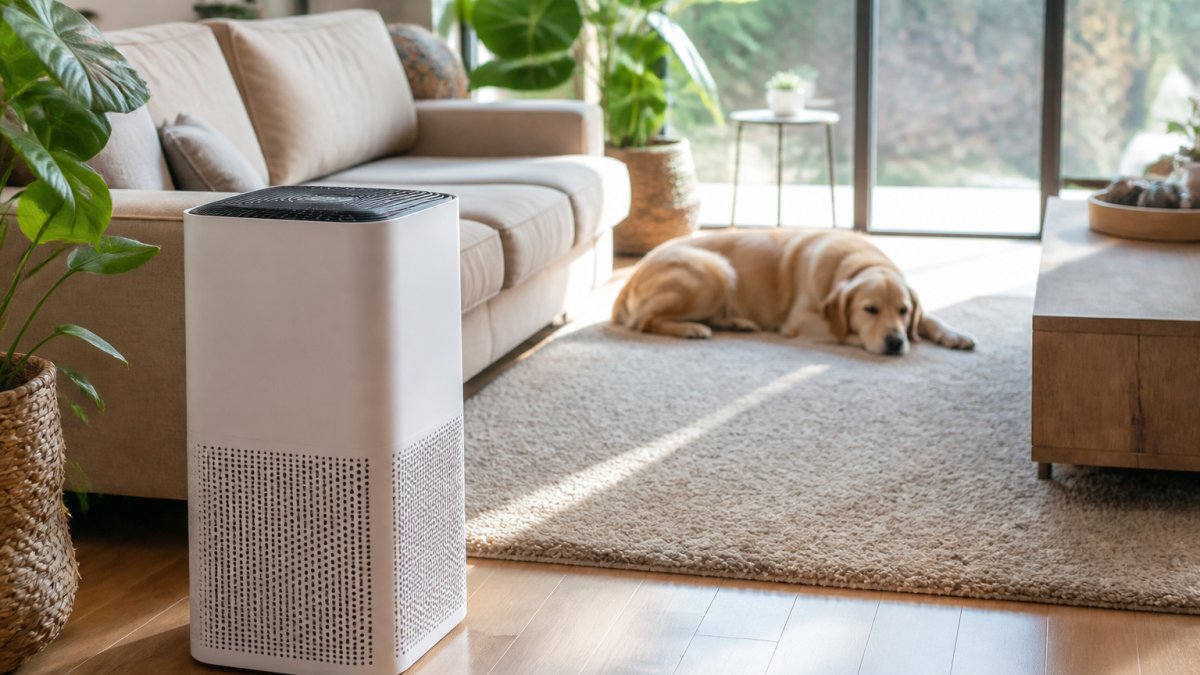
Here is the short version:
- HEPA removes dust, pollen, pet dander, mold spores, and smoke particles.
- Activated carbon removes odors, cooking fumes, and gaseous pollutants.
- Large rooms need both, plus enough clean air delivery to actually turn the room over.
The table below summarizes where each filter type wins.
| Filter Type | Removes | Misses | Best For |
|---|---|---|---|
| HEPA | Dust, pollen, dander, smoke particles | Odors, gases, VOCs | Allergy and asthma relief |
| Activated carbon | Odors, VOCs, gaseous pollutants | Fine particles | Smoke smell, cooking fumes |
| Combined HEPA + carbon | Both particles and gases | Nothing major, if sized right | Large rooms with mixed pollutants |
In a large room, the filter type matters less than whether the unit can move enough clean air through both filter stages. A big carbon bed on a weak fan does very little.
HEPA Filter vs Activated Carbon: What Each One Removes
Each filter targets a different category of pollutant, so comparing them head to head is like comparing a vacuum to a dehumidifier.
Particles: Dust, Pollen, Pet Dander, and Allergens
HEPA media captures solid particles and liquid aerosols. A true HEPA filter is rated to capture 99.97% of particles at 0.3 microns, covering most allergy triggers: dust, pollen, pet dander, and mold spores. For households with pets or seasonal pollen, HEPA does the heavy lifting.
Gases, Odors, VOCs, and Smoke Particles
Activated carbon works by adsorption, not capture. Gas molecules stick to the carbon’s vast internal surface area, which is why it handles odors, cooking fumes, and VOCs that HEPA lets through. Smoke is both: fine particles HEPA traps and odor compounds only carbon removes. That split is why a single-filter purifier struggles with wildfire smoke.
Air Purifier CADR and Room Size: Sizing for Large Spaces
CADR, or clean air delivery rate, tells you how much filtered air a purifier delivers, measured in cubic feet per minute (CFM). For a large room, CADR decides whether a purifier keeps up, and it is the number most listings bury or inflate.
The square-footage shortcut hides this: CADR is measured at the highest fan speed, with a clean filter, in a controlled chamber. Real-world performance at a quieter speed is always lower.
The volume math, not the floor-area shortcut
The common guideline, CADR in CFM roughly equal to room square footage at an 8-foot ceiling, works only because it assumes standard height. The real driver is air volume: length × width × height.
- A 400-square-foot room with an 8-foot ceiling holds about 3,200 cubic feet of air.
- The same 400 square feet under a 12-foot ceiling holds about 4,800 cubic feet, 50% more air to clean.
- A vaulted or two-story open-plan space can easily double or triple the volume the unit must process.
When ceiling height climbs, the square-footage shortcut understates the load. Size up, or run the unit on a higher speed and accept the noise.
Air changes per hour: the target that actually matters
Air changes per hour (ACH) is how many times the purifier cycles the room’s full air volume in one hour. Estimate it with:
ACH ≈ (CADR in CFM × 60) ÷ room volume in cubic feet
Run the numbers on a 400-square-foot room with an 8-foot ceiling (3,200 cubic feet) and a purifier rated at 400 CFM:
- 400 × 60 = 24,000 cubic feet of clean air per hour
- 24,000 ÷ 3,200 = about 7.5 air changes per hour
That comfortably clears the 4-to-5 ACH target most practitioners use for allergy and particle control. Now drop the same purifier into a 1,000-square-foot open-plan space with a 10-foot ceiling (10,000 cubic feet): 24,000 ÷ 10,000 = 2.4 ACH. The purifier did not change; the room outgrew it.
Filter type cannot rescue an undersized unit
A true HEPA filter rated to capture 99.97% of particles at 0.3 microns is only as good as the air that reaches it.
So size the unit to the room’s volume first, then confirm the filter stages. Buying a premium HEPA-and-carbon unit rated for a bedroom and dropping it into an open-plan living area is the most common large-room mistake.
Match CADR to air volume, not floor area. Compute ACH with (CADR × 60) ÷ room volume, aim for 4-5 ACH for allergy control, and remember that a great filter on an undersized fan cannot fix a room that is too big for the unit.
HEPA Filter for Smoke: What It Captures and What It Leaves Behind
A HEPA filter for smoke captures the particulate half of the problem and none of the smell. Wildfire smoke is a mix of fine particles and gases; HEPA handles the particles but cannot remove the odor compounds or gaseous pollutants riding along.
If smoke is your main concern, you need both stages running at once. The EPA guidance on wildfire smoke and indoor air recommends reducing indoor particle levels with filtration while also managing the gaseous components where possible.
Running a HEPA-only purifier during a smoke event will clear particles but leave the odor and many gaseous compounds behind. If the smell lingers, the carbon stage is missing or already saturated.
Activated Carbon Filter for Odors: Bed Depth and Carbon Quantity Matter
An activated carbon filter for odors only works if there is enough carbon to do the job, the detail most listings hide. A thin carbon “pre-filter” sprayed onto a mesh pad holds a tiny fraction of the carbon in a deep bed and saturates fast.
What to look for:
- Weight of carbon. More carbon means more capacity and a longer service life.
- Bed depth. A thick, deep carbon bed exposes air to more carbon than a thin layer does.
- Type of carbon. Granular or pelletized carbon generally outperforms thin coated media.
The practical takeaway: if odor control is a priority, check the carbon quantity, not just the word “carbon” on the box. A large room with pets, cooking, or smoke needs a genuinely substantial carbon stage.
HEPA and Carbon Filter Combination: Why One Filter Type Is Not Enough
A HEPA and carbon filter combination addresses both pollutant categories at once, which is why combined filtration is standard for large rooms. Real indoor air is a mix: pet dander, VOCs from cleaning products, smoke from outside, cooking odors.
Combined units run air through a pre-filter, then carbon, then HEPA, or some variation of that order. The American Lung Association’s overview of air purifiers and filtration notes that effective filtration depends on matching the device to the pollutants you actually have.
When comparing combined units, look at the order of the filter stages. Carbon placed after HEPA protects the carbon from being clogged by particles, which extends its life. That layout detail matters more than most spec sheets admit.
Large Room Operating Costs and Filter Replacement Frequency
The purchase price is only part of the cost, and in a large room the recurring expense is where budgets break. A purifier sized for a large space moves more air, loads large room filters faster, and runs longer than a bedroom unit, so every stage gets replaced sooner.
Why carbon and HEPA age on different clocks
The two stages fail for different reasons, which drives your replacement schedule:
- HEPA filters load with particles. Their life is driven by how much particulate the unit pulls in, pollen season, pets, cooking, and wildfire smoke all accelerate it. A HEPA filter typically lasts longer than carbon in a clean home, but a large room with heavy particle load shortens that window.
- Activated carbon saturates with gas, not hours. Carbon adsorbs odors, VOCs, and gaseous pollutants until its binding sites fill. The clock is set by gas load, not runtime. A home with cooking fumes, pets, or wildfire smoke can exhaust a carbon stage in weeks, while the same filter in a low-odor home lasts months.
- Pre-filters are the cheapest line item. Washable pre-filters cost nothing to maintain beyond water and time; disposable ones are inexpensive and protect the two stages behind them.
This is why a large-room owner should expect to replace carbon more often than HEPA, and why “replace every 6-12 months” on a box is a starting point, not a promise.
The cost structure, stage by stage
Filter replacement is the dominant ongoing cost, and it scales with carbon quantity. A deep carbon bed holds more media, lasts longer, and costs more per replacement, but delivers more odor capacity per dollar than a thin coated pad that saturates in weeks.
| Stage | What Drives Replacement | Relative Cost | Large-Room Frequency |
|---|---|---|---|
| Pre-filter | Visible debris load | Lowest | Wash monthly; replace when worn |
| Activated carbon | Gas and odor load | Moderate to high, scales with carbon weight | Weeks to months in heavy-odor homes |
| HEPA | Particle load and airflow drop | Moderate | Longer than carbon, shorter in smoky or dusty homes |
Energy use is the second ongoing cost. A larger unit moving more air draws more power, and a clogged filter makes the fan work harder for the same result, so a loaded HEPA stage raises electricity use over time.
A practical large-room maintenance rhythm
- Monthly: inspect the pre-filter and the HEPA face for discoloration; vacuum or wash the pre-filter.
- Whenever odors return: treat that as the carbon saturation signal, not a calendar date. Odor breakthrough is the most reliable indicator that the carbon stage is spent.
- Whenever airflow drops or the HEPA looks gray: replace the HEPA stage; reduced airflow is the tell.
A saturated carbon filter does not just stop working, it can release previously adsorbed odors back into the room as new gases compete for binding sites. If the smell returns before the replacement interval, replace the carbon immediately.
EPA guidance on indoor air quality and filtration reinforces that filter maintenance is a performance issue, not just a cost one: a loaded stage reduces both the air the unit moves and the pollutants it removes.
Which Setup Fits Your Large Room?
For most large rooms, a combined HEPA-and-carbon purifier sized to the space is the right answer. Match CADR to the room, aim for four to five air changes per hour, and make sure the carbon stage is substantial enough to handle odors and gases, not a token layer.
This is where the SR100 from Aero Essence LLC fits. It handles nine kinds of pollutants, targeting the invisible particles behind most indoor air complaints: dust mites, pet dander, pollen, mold spores, and smoke. It also gives visual confirmation that purification is working.
Frequently Asked Questions
Is HEPA or activated carbon better for a large room?
Neither wins alone. HEPA captures 99.97% of particles at 0.3 microns, handling dust, pollen, pet dander, and smoke particles. Activated carbon adsorbs gases, odors, and VOCs that HEPA lets through. In a large room, you need both filter types working together, plus enough CADR and air changes per hour to actually cycle the volume of air.
Can an air purifier use both HEPA and activated carbon filters?
Yes. Combined HEPA and carbon filter units stack a true HEPA layer behind a carbon bed so air passes through both in one cycle. Carbon quantity and bed depth determine how long odor control lasts. Thin carbon sheets in budget units saturate quickly, while deeper carbon beds hold up longer in large rooms with pets or smoke.
Does a HEPA filter remove smoke and odors?
HEPA captures smoke particles, which is why it helps during wildfire season. It does not remove the gases and odors that come with smoke. Activated carbon handles those gaseous pollutants through adsorption. For wildfire smoke in a large room, a HEPA filter for smoke plus a substantial carbon stage gives you the most complete coverage.
How often should HEPA and activated carbon filters be replaced?
HEPA filters typically last 6 to 12 months depending on dust load and runtime. Carbon filters often need replacement sooner, every 3 to 6 months, because carbon saturates as it adsorbs gases. In a large room running 24/7 with pets or smoke exposure, expect the shorter end of both ranges and budget for ongoing replacement costs.
Does activated carbon remove dust, pollen, and pet dander?
No. Activated carbon targets gases, odors, and VOCs, not solid particles. Dust, pollen, and pet dander pass through carbon media. A HEPA stage is required to trap those particles. This is why manufacturers pair HEPA and carbon together, and why a carbon-only purifier will not solve allergy symptoms driven by airborne particles.
Sizing a purifier for a large room is where most people get it wrong: they buy on filter type alone and end up with a unit that cannot keep up with the space. Aero Essence LLC built the SR100 to close that gap, with filtration for nine pollutant types, coverage for the particles that trigger allergies, and visual confirmation so you can see it working. Get started with Aero Essence LLC and give your large room the clean air it needs.