
Quietest Air Purifier for Bedroom: 2026 Reviews
Table of Contents
- What Makes a Bedroom Air Purifier Truly Quiet
- Air Purifier Decibel Levels Explained
- HEPA Air Purifier Sleep Mode Benefits
- Key Features to Look for in the Quietest Air Purifier for Bedroom Use
- Top Quiet Air Purifiers for Bedroom Performance
- Placement Optimization for Noise Reduction
- Frequently Asked Questions
Last Updated: September 23, 2026
What Makes a Bedroom Air Purifier Truly Quiet
The quietest air purifier bedroom models balance effective air cleaning with minimal sound disruption. The key is understanding that whisper-quiet operation doesn’t mean sacrificing performance. Many people assume that the quietest models lack power, but that’s where they get it wrong.
The real difference comes down to motor design, fan blade geometry, and how the unit channels airflow. A well-engineered quiet air purifier uses multiple strategies: sound dampening materials, optimized fan speeds, and acoustic engineering that reduces vibration transmission to surrounding surfaces. The best bedroom models operate at noise levels that won’t wake you or interrupt sleep, even on higher fan speeds.
What separates a bedroom air purifier from a general-purpose unit is intentional design for low-noise operation. This means larger motors running at slower speeds, better insulation, and careful attention to airflow dynamics. You’re not just getting a quieter machine, you’re getting one built specifically for spaces where silence matters.
Air Purifier Decibel Levels Explained
Understanding decibel ratings is essential when comparing bedroom air purifiers. A decibel (dB) is a logarithmic measurement of sound intensity, and the scale matters more than you might think. The difference between 30 dB and 50 dB is not just 20 units, it’s roughly four times louder in perceived volume.
For bedroom use, target air purifiers operating between 20-35 dB on low speed and 40-50 dB on medium speed. To put this in perspective, normal conversation measures around 60 dB, while a whisper is approximately 30 dB. Sleep mode functionality typically reduces noise to the quietest range, making it ideal for overnight operation.
The noise floor, the baseline sound a unit produces at its lowest setting, matters as much as peak noise levels. Some purifiers spike in noise when switching modes, while others maintain consistent, predictable sound profiles. Reading reviews that measure decibel levels across different fan speeds gives you the clearest picture of real-world bedroom performance.
Check decibel ratings at multiple fan speeds, not just the lowest setting. Many users run their air purifier on medium speed during the day, so knowing how quiet it stays at that level is practical information.
HEPA Air Purifier Sleep Mode Benefits
Sleep mode functionality transforms a bedroom air purifier from a general appliance into a sleep-optimized device. True sleep mode operates at the lowest possible fan speed while maintaining effective particulate matter removal. This means the unit continues filtering while producing minimal sound, typically 20-30 dB, comparable to a quiet library.
Beyond noise reduction, sleep mode often includes display dimming or complete light shutdown. This prevents the glow from your air purifier’s control panel from disrupting your sleep cycle. Some models offer additional features like scheduled operation, allowing you to set the unit to run quietly during your sleeping hours and ramp up performance during waking hours.
The HEPA filter efficiency doesn’t diminish in sleep mode, it’s the same filtration technology running at a gentler pace. You’re not sacrificing air quality for quiet operation; you’re simply adjusting fan speed to match your actual needs. Many users find that running their purifier in sleep mode overnight and on higher speeds during the day provides the best balance of performance and comfort.
Sleep mode is not a gimmick, it’s a practical feature that lets you maintain continuous air purification without noise disruption. Look for models where sleep mode engages automatically or on a schedule you set.
Key Features to Look for in the Quietest Air Purifier for Bedroom Use
When shopping for the quietest air purifier bedroom option, several features directly impact both noise levels and performance. Auto-mode functionality adjusts fan speed based on air quality sensor readings, meaning the unit runs quietly when pollution is low and speeds up only when needed. This is far more practical than manually switching speeds throughout the day.
An onboard air quality sensor provides real-time feedback on particulate matter levels. This feature matters because it gives you confidence that the quietest air purifier for bedroom use is actually working. You can see when air quality improves rather than guessing whether the silent operation is effective.
Compact design reduces motor size and vibration transmission. Smaller units naturally produce less noise because they require less powerful motors to achieve equivalent air changes per hour. This makes compact designs ideal for bedrooms where space is limited and quiet operation is non-negotiable.
Look for units with optimized fan blade design specifically engineered to reduce noise while maintaining airflow efficiency. Some manufacturers use curved blades or multiple smaller fans instead of one large fan to achieve quieter operation. This technical detail directly translates to a more pleasant sleeping environment.
Room Size Coverage and CADR Ratings
CADR (Clean Air Delivery Rate) measures how effectively a purifier removes specific pollutants, dust, tobacco smoke, and pollen (Using CADR to Improve Indoor Air Quality). A higher CADR means faster air cleaning in a given room size. For bedrooms, match your room’s square footage to the purifier’s CADR rating to ensure adequate coverage without requiring maximum fan speed.
Most bedroom air purifiers handle rooms between 150-400 square feet effectively. Larger master bedrooms may need units rated for bigger spaces or placement optimization to ensure air circulation reaches all areas. Never buy a purifier undersized for your room, you’ll run it at maximum speed constantly, defeating the purpose of quiet operation.
Air changes per hour (ACH) indicates how many times the unit processes your entire room’s air. For bedrooms, aim for at least 4-5 ACH, meaning the air purifier cycles through the room’s air four to five times hourly. This ensures adequate filtration even on lower fan speeds.
Filter Replacement Costs and Maintenance
Filter replacement frequency directly impacts long-term ownership costs. Most bedroom air purifiers require filter changes every 6-12 months, depending on air quality and usage patterns. Homes with pets, smokers, or high pollen exposure need more frequent replacements.
Budget for annual filter costs when evaluating different models. Some purifiers use proprietary filters that cost significantly more than standard HEPA filters. Check the brand’s website for replacement filter pricing before committing to a specific model. A quiet air purifier becomes expensive if replacement filters are hard to find or cost more than the unit itself.
Maintenance beyond filter replacement is minimal for most models.
Energy Efficiency and Operating Costs
Energy consumption varies significantly across quiet bedroom air purifiers. Most modern models use between 30-100 watts on low speed, comparable to a standard lamp. Running a purifier continuously costs roughly $10-30 per month depending on local electricity rates and the specific model’s power consumption. Optimizing these electrical demands alongside bedroom relaxation tips ensures that your nighttime environment remains both cost-effective and conducive to restorative rest.
Top Quiet Air Purifiers for Bedroom Performance
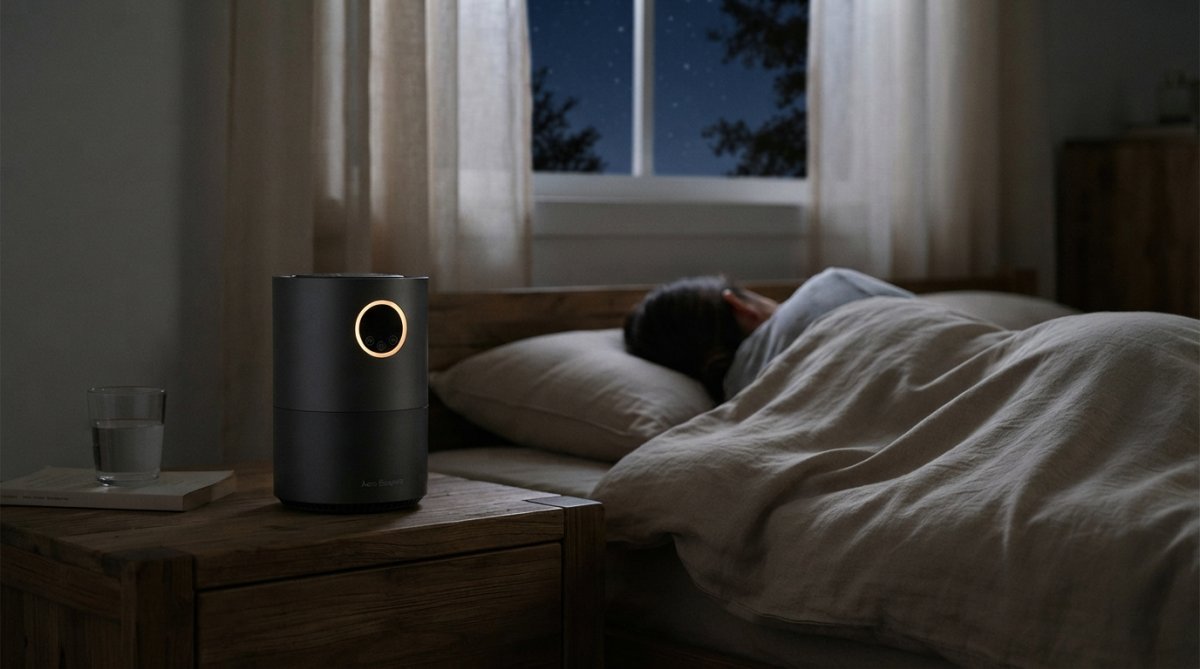
The Aero Essence LLC SR100 is a high-performance unit that tackles nine distinct types of pollutants including dust mites, pet dander, pollen, mold spores, and smoke. What sets it apart is the visual confirmation feature, you can see the purification process working in real time, eliminating the uncertainty that plagues other models. For pet owners with allergies or anyone concerned about invisible particles affecting sleep quality, the SR100 delivers both quiet operation and genuine peace of mind.
| Model | Starting Price | Best For | Noise Level (Low Speed) |
|---|---|---|---|
| Aero Essence LLC SR100 | Contact for pricing | Pet owners, allergy sufferers | Whisper-quiet with visual confirmation |
| Coway Airmega Mighty2 | $229.00 | Budget-conscious buyers | 22-28 dB |
| Windmill Air Purifier | $249.00 | Design-focused users | 24-30 dB |
| Alen BreatheSmart 75i | $749.00 | Large master bedrooms | 25-32 dB |
| AirFanta 3Pro | $159.00 | Maximum quietness priority | 20-26 dB |
| Dyson Purifier Big+Quiet | $1,099.99 | Open-concept spaces | 28-35 dB |
| Alen 35i | $399.00 | Small to medium bedrooms | 23-29 dB |
Placement Optimization for Noise Reduction
Where you position your bedroom air purifier significantly impacts both noise perception and effectiveness. Place the unit at least 3-5 feet from your bed to reduce direct sound transmission. Sound travels differently depending on distance and obstacles, so moving the purifier even a few feet can noticeably reduce perceived noise.
Placing your air purifier directly next to your bed or in a corner amplifies motor vibration and sound reflection. Even the quietest model will seem loud if placement forces it to work harder or concentrates sound toward your sleeping position.
Frequently Asked Questions
How many decibels is considered a quiet air purifier for bedrooms?
Most quiet air purifiers for bedrooms operate between 22 and 35 decibels on low or sleep mode settings. At 22-25 dB, the noise is barely perceptible, comparable to a whisper. Models running at 30-35 dB are still quiet enough for uninterrupted sleep, similar to a soft conversation. Look for purifiers with dedicated sleep mode functionality that prioritizes whisper-quiet operation over maximum airflow. The quietest air purifier for bedroom use typically emphasizes low-speed fan settings and sound-dampening motor design.
What are the benefits of HEPA air purifier sleep mode?
Sleep mode on HEPA air purifiers reduces fan speed to minimize noise while maintaining effective filtration of airborne allergens, pet dander, and dust mites. This feature automatically dims the display light to eliminate light pollution that disrupts sleep cycles. Sleep mode also reduces energy consumption, lowering operating costs over time. The quietest air purifier for bedroom environments typically includes auto-mode sensing that adjusts to air quality changes without requiring manual intervention, allowing you to rest undisturbed while the purifier works continuously.
Can a quiet bedroom air purifier handle pet dander and wildfire smoke effectively?
Yes, whisper-quiet air purifiers with HEPA filtration and activated carbon filters can remove pet dander and smoke particles. HEPA filters capture 99.97% of particles down to 0.3 microns, addressing both allergens and smoke. Activated carbon layers absorb odors and volatile compounds from wildfire smoke. Choose models with high CADR (Clean Air Delivery Rate) ratings for smoke and dust to ensure adequate coverage for your room size. The SR100 handles nine distinct pollutant types, including pet dander, pollen, mold spores, and smoke, providing visual confirmation of active purification performance.
How often do you need to replace filters, and what is the total cost of ownership?
Most bedroom air purifiers require filter replacement every 6-12 months, depending on usage intensity and air quality. Filter costs vary by model but typically range from $40 to $150 per replacement. Calculate annual costs by dividing filter price by months of use, then add electricity costs (most quiet models consume 15-50 watts). Understanding total cost of ownership helps you compare the quietest air purifier for bedroom use against upfront price.